


Page 454 - Hall et al (2015) Principles of Critical Care-McGraw-Hill
P. 454
324     PART 3: Cardiovascular Disorders


                                                                       high degree of reliability. While CTPA protocol is minimally invasive, it
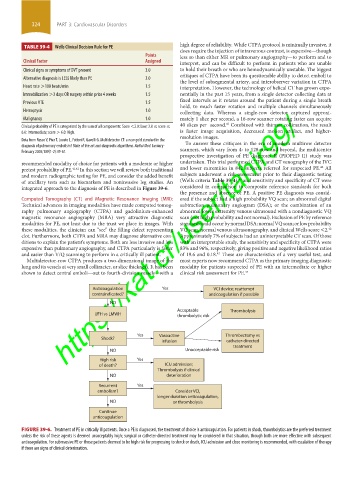
                   TABLE 39-4    Wells Clinical Decision Rule for PE
                                                                       does require the injection of intravenous contrast, is expensive—though
                                                           Points      less so than either MR or pulmonary angiography—to perform and to
                  Clinical Factor                          Assigned    interpret, and can be difficult to perform in patients who are unable
                  Clinical signs or symptoms of DVT present  3.0       to hold their breath or who are hemodynamically unstable. The biggest
                                                                       critiques of CTPA have been its questionable ability to detect emboli to
                  Alternative diagnosis is LESS likely than PE  3.0
                                                                       the level of subsegmental artery, and interobserver variation in CTPA
                  Heart rate >100 beats/min                1.5         interpretation. However, the technology of helical CT has grown expo-
                  Immobilization >3 days OR surgery within prior 4 weeks  1.5  nentially in the past 15 years, from a single detector collecting data at
                                                                       fixed intervals as it rotates around the patient during a single breath
                  Previous VTE                             1.5
                                                                       hold, to much faster  rotation and multiple  channels simultaneously
                                https://kat.cr/user/tahir99/
                  Hemoptysis                               1.0           collecting data. Whereas a single-row detector captured approxi-
                  Malignancy                               1.0         mately 1 slice per second, a 16-row scanner rotating faster can acquire
                                                                                       43
                 Clinical probability of PE is categorized by the sum of all components: Score <2.0: Low; 2.0 ≤ score ≤   40 slices per   second.  Combined with thinner collimation, the result
                 6.0: Intermediate; score > 6.0: High.                 is faster image acquisition, decreased motion artifact, and higher-
                                                                       resolution images.
                 Data from Russo V, Piva T, Lovato L, Fattori R, Gavelli G. Multidetector CT: a new gold standard in the   To answer these critiques in the era of modern multirow detector
                 diagnosis of pulmonary embolism? State of the art and diagnostic algorithms. Radiol Med. January-  scanners, which vary from 4- to 128-row and beyond, the multicenter
                 February 2005;109(1-2):49-61.
                                                                       prospective  investigation  of PE  diagnosis  II (PIOPED  II) study  was
                 recommended modality of choice for patients with a moderate or higher   undertaken. This trial performed CTPA and CT venography of the IVC
                                                                                                                       42
                 pretest probability of PE. 41,42  In this section we will review both traditional   and lower extremities in 842 subjects referred for suspected PE.  All
                 and modern radiographic testing for PE, and consider the added benefit   subjects underwent a risk assessment prior to their diagnostic testing
                                                                                           40
                 of ancillary tests such as biomarkers and noninvasive leg studies. An   (Wells criteria Table 39-4),  and sensitivity and specificity of CT were
                 integrated approach to the diagnosis of PE is described in Figure 39-6.  considered in comparison to composite reference standards for both
                                                                       the presence and absence of PE. A positive PE diagnosis was consid-
                 Computed  Tomography (CT) and Magnetic Resonance Imaging (MRI):    ered if the subject had a high probability VQ scan; an abnormal digital
                 Technical advances in imaging modalities have made computed tomog-    subtraction pulmonary angiogram (DSA); or the combination of an
                 raphy  pulmonary  angiography  (CTPA)  and  gadolinium-enhanced   abnormal lower extremity venous ultrasound with a nondiagnostic VQ
                 magnetic resonance angiography (MRA) very attractive diagnostic   scan (not high probability and not normal). Exclusion of PE by reference
                 modalities for PE, not least due to the trust we place in images. With   standard could occur by normal DSA; normal VQ scan; or low probability
                 these modalities, the clinician can “see” the filling defect representing   VQ scan, normal venous ultrasonography, and clinical Wells score <2.
                                                                                                                          42
                 clot. Furthermore, both CTPA and MRA may diagnose alternative con-  Approximately 7% of subjects had an uninterpretable CT scan. Of those
                 ditions to explain the patient’s symptoms. Both are less invasive and less   with an interpretable study, the sensitivity and specificity of CTPA were
                 expensive than pulmonary angiography, and CTPA particularly is faster   83% and 96%, respectively, giving positive and negative likelihood ratios
                 and easier than V/Q scanning to perform in a critically ill patient.  of 19.6 and 0.18.  These are characteristics of a very useful test, and
                                                                                    42
                   Multidetector-row CTPA produces a two-dimensional image of the   most experts now recommend CTPA as the primary imaging diagnostic
                 lung and its vessels at very small collimeter, or slice thickness. It has been   modality for patients suspected of PE with an intermediate or higher
                 shown to detect central emboli—out to fourth-division vessels—with a   clinical risk assessment for PE. 44

                                         Anticoagulation         Yes               VCI device; reattempt
                                         contraindicated?                        anticoagulation if possible
                                               NO
                                                                      Acceptable        Thrombolysis
                                          UFH vs LMWH                 thrombolytic risk


                                                         Yes    Vasoactive             Thrombectomy vs
                                            Shock?
                                                                 infusion              catheter-directed
                                                                                         treatment
                                               NO                        Unacceptable risk
                                            High risk    Yes
                                            of death?             ICU admission;
                                                                Thrombolysis if clinical
                                               NO                  deterioration
                                           Recurrent     Yes
                                           embolism?                  Consider VCI,
                                                               longer duration anticoagulation,
                                               NO                    or thrombolysis

                                            Continue
                                          anticoagulation
                 FIGURE 39-6.  Treatment of PE in critically ill patients. Once a PE is diagnosed, the treatment of choice is anticoagulation. For patients in shock, thrombolytics are the preferred treatment
                 unless the risk of these agents is deemed unacceptably high; surgical or catheter-directed treatment may be considered in that situation, though both are more effective with subsequent
                 anticoagulation. For submassive PE or those patients deemed to be high risk for progressing to shock or death, ICU admission and close monitoring is recommended, with escalation of therapy
                 if there are signs of clinical deterioration.


            section03.indd   324                                                                                       1/23/2015   2:07:34 PM

