


Page 490 - Hall et al (2015) Principles of Critical Care-McGraw-Hill
P. 490
360     PART 3: Cardiovascular Disorders


                                                                       the left, with no definite clot or embolus found at surgery should be
                                                                       strongly suspected of having a dissection and investigated immediately.
                         A                           C
                                                                       Unfortunately the physical findings classically associated with dissec-
                                                                       tion are present in less than half of all cases, thereby necessitating a high
                                                                       index of suspicion to save these patients. 32
                                                                       INVESTIGATIONS AND DIAGNOSIS
                                                                           ■  LABORATORY


                                                                       Laboratory data are usually within normal limits in patients with acute
                                                                       dissection. The white blood cell count may be slightly elevated to 12,000
                                                                       to 20,000/µL, most likely as a stress response. Electrocardiogram (ECG)
                                                                       interpretation may show left ventricular hypertrophy due to chronic
                                                                       hypertension, but other changes are rare. Acute ischemic changes
                         B                           D
                                                                       should raise the concern of coronary artery involvement by the dissec-
                                                                       tion in the patient with a typical history. Conversely, to avoid the dire
                                                                       consequences of misdiagnosis, any patient presenting to the emergency
                                                                       department with ECG changes suggesting myocardial ischemia (espe-
                                                                       cially with evidence of right coronary artery involvement) should have
                                                                       their history considered carefully before immediately moving to urgent
                                                                       cardiac catheterization to treat the more prevalent condition of athero-
                                                                       sclerotic coronary artery disease (CAD).
                                                                           ■  DIAGNOSTIC IMAGING
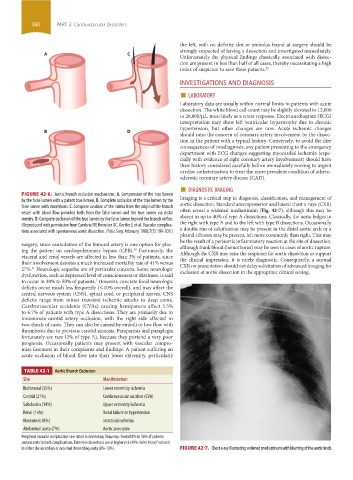
                 FIGURE 42-6.  Aortic branch occlusion mechanisms. A. Compression of the true lumen   Imaging is a critical step in diagnosis, classification, and management of
                 by the false lumen with a patent true lumen. B. Complete occlusion of the true lumen by the
                 false lumen with thrombosis. C. Complete avulsion of the intima from the origin of the branch   aortic dissection. Standard anteroposterior and lateral chest x-rays (CXR)
                                                                       often reveal a widened mediastinum (Fig. 42-7), although this may be
                 vessel with blood flow provided both from the false lumen and the true lumen via distal
                 reentry. D. Complete occlusion of the true lumen by the false lumen beyond the branch orifice.   absent in up to 40% of type A dissections. Classically, the aorta bulges to
                                                                       the right with type A and to the left with type B dissections. Occasionally
                 (Reproduced with permission from Cambria RP, Brewster DC, Gertler J, et al. Vascular complica-
                 tions associated with spontaneous aortic dissection. J Vasc Surg. February 1988;7(2):199-209.)  a double rim of calcification may be present in the distal aortic arch or a
                                                                       pleural effusion may be present, left more commonly than right. This may
                                                                       be the result of a periaortic inflammatory reaction at the site of dissection,
                 surgery, since cannulation of the femoral artery is one option for plac-  although frank blood (hemothorax) may be seen in cases of aortic rupture.
                 ing the patient on cardiopulmonary bypass (CPB).  Fortunately, the   Although the CXR may raise the suspicion for aortic dissection or support
                                                       30
                 visceral and renal vessels are affected in less than 3% of patients, since   the clinical impression, it is rarely diagnostic. Consequently, a normal
                 their involvement denotes a much increased mortality rate of 41% versus   CXR on presentation should not delay solicitation of advanced imaging for
                 27%.  Neurologic sequelae are of particular concern. Some neurologic   exclusion of aortic dissection in the appropriate clinical setting.
                     31
                 dysfunction, such as depressed level of consciousness or dizziness, is said
                 to occur in 30% to 50% of patients.  However, concrete focal neurologic
                                          3
                 deficits occur much less frequently (<10% overall), and may affect the
                 central nervous system (CNS), spinal cord, or peripheral nerves. CNS
                 deficits range  from minor  transient ischemic  attacks  to deep  coma.
                 Cerebrovascular accidents (CVAs) causing hemiparesis affect 5.5%
                 to 6.7% of patients with type A dissections. They are primarily due to
                 innominate-carotid artery occlusion, with the right side affected in
                 two-thirds of cases. They can also be caused by emboli or low flow with
                 thrombosis due to previous carotid stenosis. Paraparesis and paraplegia
                 fortunately are rare (2% of type A), because they portend a very poor
                 prognosis. Occasionally patients may present with vascular compro-
                 mise foremost in their complaints and findings. A patient suffering an
                 acute occlusion of blood flow into their lower extremity, particularly


                   TABLE 42-1    Aortic Branch Occlusion
                  Site                       Manifestation
                  Iliofemoral (35%)          Lower extremity ischemia
                  Carotid (21%)              Cerebrovascular accident (CVA)
                  Subclavian (14%)           Upper extremity ischemia
                  Renal (14%)                Renal failure or hypertension
                  Mesenteric (8%)            Intestinal ischemia
                  Abdominal aorta (7%)       Aortic aneurysm
                 Peripheral vascular complications are listed in decreasing frequency. Overall 8% to 56% of patients
                 sustain aortic branch complications. Extensive dissections are at higher risk (49%-56%) than if isolated
                 to either the ascending or proximal descending aorta (8%-13%).  FIGURE 42-7.  Chest x-ray illustrating widened mediastinum with blunting of the aortic knob.


            section03.indd   360                                                                                       1/23/2015   2:08:22 PM

