


Page 915 - Hall et al (2015) Principles of Critical Care-McGraw-Hill
P. 915
646     PART 5: Infectious Disorders


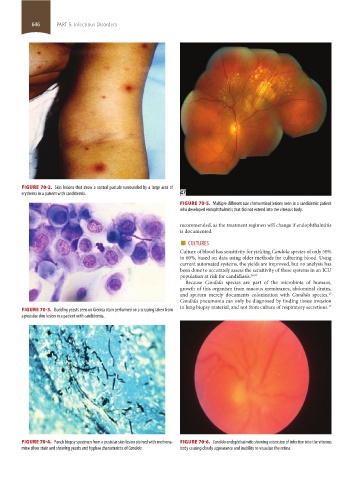
                 FIGURE 70-2.  Skin lesions that show a central pustule surrounded by a large area of
                 erythema in a patient with candidemia.
                                                                       FIGURE 70-5.  Multiple different size chorioretinal lesions seen in a candidemic patient
                                                                       who developed endophthalmitis that did not extend into the vitreous body.


                                                                       recommended, as the treatment regimen will change if endophthalmitis
                                                                       is documented.
                                                                           ■  CULTURES

                                                                       Culture of blood has sensitivity for yielding Candida species of only 50%
                                                                       to 60%, based on data using older methods for culturing blood. Using
                                                                       current automated systems, the yields are improved, but no analysis has
                                                                       been done to accurately assess the sensitivity of these systems in an ICU
                                                                       population at risk for candidiasis. 56,57
                                                                         Because  Candida species are part of the microbiota of humans,
                                                                       growth of this organism from mucous membranes, abdominal drains,
                                                                       and sputum merely documents colonization with  Candida species.
                                                                                                                          17
                                                                       Candida pneumonia can only be diagnosed by finding tissue invasion
                                                                       in lung biopsy material, and not from culture of respiratory secretions.
                                                                                                                          17
                 FIGURE 70-3.  Budding yeasts seen on Giemsa stain performed on a scraping taken from
                 a pustular skin lesion in a patient with candidemia.


                 FIGURE 70-4.  Punch biopsy specimen from a pustular skin lesion stained with methena-  FIGURE 70-6.  Candida endophthalmitis showing extension of infection into the vitreous
                 mine silver stain and showing yeasts and hyphae characteristic of Candida.  body causing cloudy appearance and inability to visualize the retina.


            section05_c61-73.indd   646                                                                                1/23/2015   12:48:31 PM

