


Page 386 - Clinical Anatomy
P. 386
ECA6  7/18/06  6:54 PM  Page 371


                                                                          The cranial nerves   371


                                                                                         Trigeminal
                                                                                         ganglion

                                                                                         Ophthalmic
                                                                                         nerve
                               Chorda
                               tympani (VII)                                              Maxillary
                                                                                          nerve


                                       Chorda
                                       tympani (VII)
                                       Mandibular nerve
                                                                                          Tongue
                                              Lingual nerve

                                              Inferior alveolar nerve


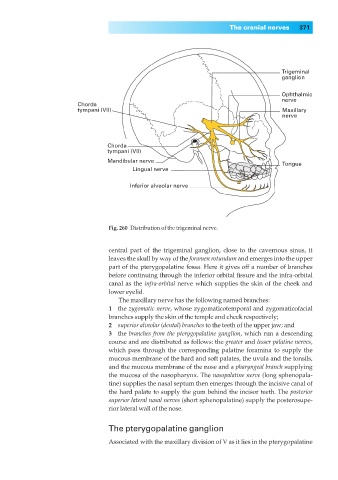
                                        Fig. 260◊Distribution of the trigeminal nerve.


                                        central part of the trigeminal ganglion, close to the cavernous sinus, it
                                        leaves the skull by way of the foramen rotundum and emerges into the upper
                                        part of the pterygopalatine fossa. Here it gives off a number of branches
                                        before continuing through the inferior orbital fissure and the infra-orbital
                                        canal as the infra-orbital nerve which supplies the skin of the cheek and
                                        lower eyelid.
                                          The maxillary nerve has the following named branches:
                                        1◊◊the zygomatic nerve, whose zygomaticotemporal and zygomaticofacial
                                        branches supply the skin of the temple and cheek respectively;
                                        2◊◊superior alveolar (dental) branches to the teeth of the upper jaw; and
                                        3◊◊the branches from the pterygopalatine ganglion, which run a descending
                                        course and are distributed as follows: the greater and lesser palatine nerves,
                                        which pass through the corresponding palatine foramina to supply the
                                        mucous membrane of the hard and soft palates, the uvula and the tonsils,
                                        and the mucous membrane of the nose and a pharyngeal branch supplying
                                        the mucosa of the nasopharynx. The nasopalatine nerve (long sphenopala-
                                        tine) supplies the nasal septum then emerges through the incisive canal of
                                        the hard palate to supply the gum behind the incisor teeth. The posterior
                                        superior lateral nasal nerves (short sphenopalatine) supply the posterosupe-
                                        rior lateral wall of the nose.

                                        The pterygopalatine ganglion

                                        Associated with the maxillary division of V as it lies in the pterygopalatine

