


Page 235 - The Netter Collection of Medical Illustrations - Integumentary System_ Volume 4 ( PDFDrive )
P. 235
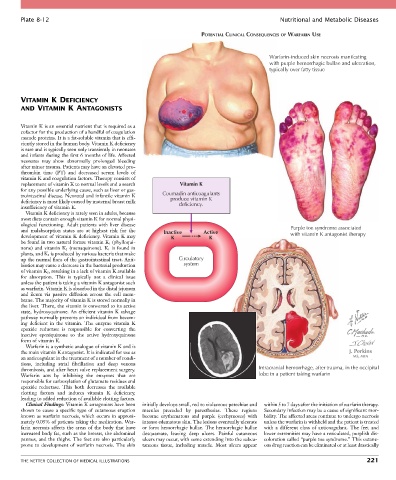
Plate 8-12                                                                                Nutritional and Metabolic Diseases

                                                                       POTENTIAL CLINICAL CONSEQUENCES OF WARFARIN USE


                                                                                              Warfarin-induced skin necrosis manifesting
                                                                                              with purple hemorrhagic bullae and ulceration,
                                                                                              typically over fatty tissue


        VITAMIN K DEFICIENCY
        AND VITAMIN K ANTAGONISTS

        Vitamin K is an essential nutrient that is required as a
        cofactor for the production of a handful of coagulation
        cascade proteins. It is a fat-soluble vitamin that is effi-
        ciently stored in the human body. Vitamin K deficiency
        is rare and is typically seen only transiently in neonates
        and infants during the first 6 months of life. Affected
        neonates  may  show  abnormally  prolonged  bleeding
        after minor trauma. Patients may have an elevated pro-
        thrombin  time  (PT)  and  decreased  serum  levels  of
        vitamin K and coagulation factors. Therapy consists of
        replacement of vitamin K to normal levels and a search   Vitamin K
        for any possible underlying cause, such as liver or gas-
        trointestinal disease. Neonatal and infantile vitamin K   Coumadin anticoagulants
        deficiency is most likely caused by maternal breast milk   produce vitamin K
                                                               deficiency.
        insufficiency of vitamin K.
          Vitamin K deficiency is rarely seen in adults, because
        most diets contain enough vitamin K for normal physi-
        ological  functioning.  Adult  patients  with  liver  disease
        and  malabsorption  states  are  at  highest  risk  for  the   Inactive  Active              Purple toe syndrome associated
        development of vitamin K deficiency. Vitamin K may   K           K                           with vitamin K antagonist therapy
        be found in two natural forms: vitamin K 1  (phylloqui-
        none)  and  vitamin  K 2   (menaquinone).  K 1   is  found  in
        plants, and K 2  is produced by various bacteria that make
        up the normal flora of the gastrointestinal tract. Anti-  Circulatory
        biotics may cause a decrease in the bacterial production   system
        of vitamin K 2 , resulting in a lack of vitamin K available
        for  absorption.  This  is  typically  not  a  clinical  issue
        unless the patient is taking a vitamin K antagonist such
        as warfarin. Vitamin K is absorbed in the distal jejunum
        and  ileum  via  passive  diffusion  across  the  cell  mem-
        brane. The majority of vitamin K is stored normally in
        the liver. There, the vitamin is converted to its active
        state, hydroxyquinone. An efficient vitamin K salvage
        pathway normally prevents an individual from becom-
        ing  deficient  in  the  vitamin.  The  enzyme  vitamin  K
        epoxide  reductase  is  responsible  for  converting  the
        inactive  epoxiquinone  to  the  active  hydroxyquinone
        form of vitamin K.
          Warfarin is a synthetic analogue of vitamin K and is
        the main vitamin K antagonist. It is indicated for use as
        an anticoagulant in the treatment of a number of condi-
        tions,  including  atrial  fibrillation  and  deep  venous
        thrombosis, and after heart valve replacement surgery.                            Intracranial hemorrhage, after trauma, in the occipital
        Warfarin  acts  by  inhibiting  the  enzymes  that  are                           lobe in a patient taking warfarin
        responsible for carboxylation of glutamate residues and
        epoxide  reductase.  This  both  decreases  the  available
        clotting  factors  and  induces  vitamin  K  deficiency,
        leading to added reduction of available clotting factors.
          Clinical Findings: Vitamin K antagonists have been   initially develops small, red to violaceous petechiae and   within 5 to 7 days after the initiation of warfarin therapy.
        shown  to  cause  a  specific  type  of  cutaneous  eruption   macules  preceded  by  paresthesias.  These  regions   Secondary infection may be a cause of significant mor-
        known as warfarin necrosis, which occurs in approxi-  become  erythematous  and  purple  (ecchymoses)  with   bidity. The affected areas continue to undergo necrosis
        mately 0.05% of patients taking the medication. War-  intense edematous skin. The lesions eventually ulcerate   unless the warfarin is withheld and the patient is treated
        farin  necrosis  affects  the  areas  of  the  body  that  have   or form hemorrhagic bullae. The hemorrhagic bullae   with  a  different  class  of  anticoagulant.  The  feet  and
        increased body fat, such as the breasts, the abdominal   desquamate,  leaving  deep  ulcers.  Painful  cutaneous   lower extremities may have a reticulated, purplish dis-
        pannus, and the thighs. The feet are also particularly   ulcers may occur, with some extending into the subcu-  coloration called “purple toe syndrome.” This cutane-
        prone  to  development  of  warfarin  necrosis.  The  skin   taneous  tissue,  including  muscle.  Most  ulcers  appear   ous drug reaction can be eliminated or at least drastically


        THE NETTER COLLECTION OF MEDICAL ILLUSTRATIONS                                                                          221

