


Page 231 - The Netter Collection of Medical Illustrations - Integumentary System_ Volume 4 ( PDFDrive )
P. 231
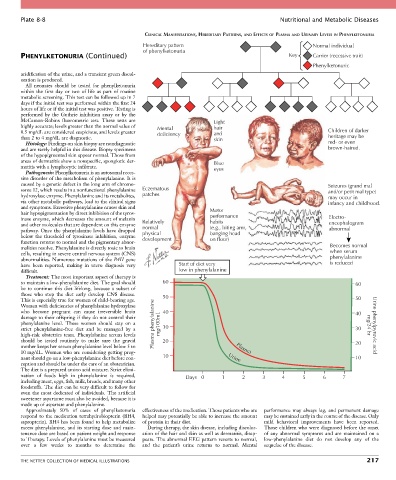
Plate 8-8                                                                                 Nutritional and Metabolic Diseases

                                                   CLINICAL MANIFESTATIONS, HEREDITARY PATTERNS, AND EFFECTS OF PLASMA AND URINARY LEVELS IN PHENYLKETONURIA
                                                  Hereditary pattern                                         Normal individual
                                                  of phenylketonuria
        PHENYLKETONURIA (Continued)                                                                  Key     Carrier (recessive trait)

                                                                                                             Phenylketonuric
        acidification of the urine, and a transient green discol-
        oration is produced.
          All  neonates  should  be  tested  for  phenylketonuria
        within  the  first  day  or  two  of  life  as  part  of  routine
        metabolic screening. This test can be followed up in 7
        days if the initial test was performed within the first 24
        hours of life or if the initial test was positive. Testing is
        performed  by  the  Guthrie  inhibition  assay  or  by  the
        McCamon-Robins  fluorometric  test.  These  tests  are             Light
        highly accurate; levels greater than the normal value of   Mental  hair
        0.5 mg/dL are considered suspicious, and levels greater   deficiency  and                                 Children of darker
        than 2 to 4 mg/dL are diagnostic.                                  skin                                   heritage may be
          Histology: Findings on skin biopsy are nondiagnostic                                                    red- or even
        and are rarely helpful in this disease. Biopsy specimens                                                  brown-haired.
        of the hypopigmented skin appear normal. Those from
        areas of dermatitis show a nonspecific, spongiotic der-            Blue
        matitis with a lymphocytic infiltrate.                             eyes
          Pathogenesis: Phenylketonuria is an autosomal reces-
        sive disorder of the metabolism of phenylalanine. It is
        caused by a genetic defect in the long arm of chromo-                                                     Seizures (grand mal
        some 12, which results in a nonfunctional phenylalanine   Eczematous                                      and/or petit mal type)
        hydroxylase enzyme. Phenylalanine and its metabolites,   patches                                          may occur in
        via other metabolic pathways, lead to the clinical signs                                                  infancy and childhood.
        and symptoms. Excessive phenylalanine causes skin and            Motor
        hair hypopigmentation by direct inhibition of the tyros-         performance
        inase enzyme, which decreases the amount of melanin   Relatively   habits                                  Electro-
        and other molecules that are dependent on this enzyme   normal   (e.g., biting arm,                        encephalogram
        pathway. Once the phenylalanine levels have dropped   physical   banging head                              abnormal
        below  the  threshold  of  tyrosinase  inhibition,  enzyme   development  on floor)
        function returns to normal and the pigmentary abnor-
        malities resolve. Phenylalanine is directly toxic to brain                                                 Becomes normal
        cells, resulting in severe central nervous system (CNS)                                                    when serum
        abnormalities. Numerous mutations of the PAH gene                                                          phenylalanine
        have  been  reported,  making  in  utero  diagnosis  very   Start of diet very                             is reduced
        difficult.                                             low in phenylalanine
          Treatment: The most important aspect of therapy is
        to maintain a low-phenylalanine diet. The goal should   60                                                          60
        be  to  continue  this  diet  lifelong,  because  a  subset  of
        those  who  stop  the  diet  early  develop  CNS  disease.   50
        This is especially true for women of child-bearing age.                                                             50
        Women with deficiencies of phenylalanine hydroxylase
        who  become  pregnant  can  cause  irreversible  brain   40                                                         40
        damage to their offspring if they do not control their
        phenylalanine  level.  These  women  should  stay  on  a   Plasma phenylalanine  mg/100mL                               mg/24 hr  Urine phenylpyruvic acid
        strict  phenylalanine-free  diet  and  be  managed  by  a   30                                                      30
        high-risk  obstetrics  team.  Phenylalanine  serum  levels
        should  be  tested  routinely  to  make  sure  the  gravid   20                                                     20
        mother keeps her serum phenylalanine level below 5 to                      Plasma
        10 mg/dL. Women who are considering getting preg-
        nant should go on a low-phenylalanine diet before con-  10              Urine                                       10
        ception and should be under the care of an obstetrician.
        The diet is a prepared amino acid mixture. Strict elimi-
        nation  of  foods  high  in  phenylalanine  is  required,   Days 0    1      2      3     4       5      6     7
        including meat, eggs, fish, milk, breads, and many other
        foodstuffs. The diet can be very difficult to follow for
        even  the  most  dedicated  of  individuals.  The  artificial
        sweetener aspartame must also be avoided, because it is
        made up of aspartate and phenylalanine.
          Approximately  50%  of  cases  of  phenylketonuria   effectiveness of the medication. Those patients who are   performance  may  always  lag,  and  permanent  damage
        respond to the medication tetrahydrobiopterin (BH4,   helped may potentially be able to increase the amount   may be sustained early in the course of the disease. Only
        sapropterin). BH4 has been found to help metabolize   of protein in their diet.     mild  behavioral  improvements  have  been  reported.
        excess  phenylalanine,  and  its  starting  dose  and  main-  During therapy, the skin disease, including discolor-  Those children who were diagnosed before the onset
        tenance dose are based on patient weight and response   ation of the hair and skin as well as dermatitis, disap-  of  any  abnormal  symptoms  and  are  maintained  on  a
        to Therapy. Levels of phenylalanine must be measured   pears. The abnormal EEG pattern reverts to normal,   low-phenylalanine  diet  do  not  develop  any  of  the
        over  a  few  weeks  to  months  to  determine  the   and  the  patient’s  urine  returns  to  normal.  Mental   sequelae of the disease.


        THE NETTER COLLECTION OF MEDICAL ILLUSTRATIONS                                                                          217

