


Page 230 - The Netter Collection of Medical Illustrations - Integumentary System_ Volume 4 ( PDFDrive )
P. 230
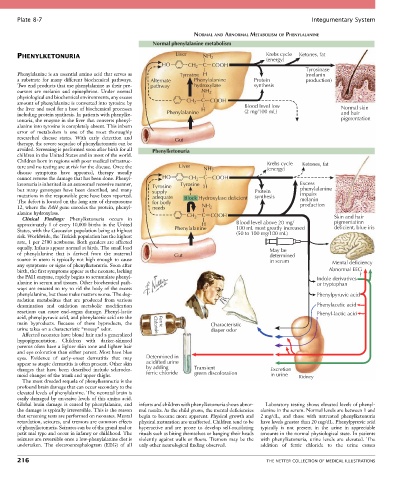
Plate 8-7                                                                                             Integumentary System

                                                                    NORMAL AND ABNORMAL METABOLISM OF PHENYLALANINE
                                                      Normal phenylalanine metabolism
       PHENYLKETONURIA                                        Liver    NH 2                  Krebs cycle  Ketones, fat
                                                                                             (energy)
                                                         HO       CH 2  C  COOH
                                                                                                           Tyrosinase
       Phenylalanine is an essential amino acid that serves as   Tyrosine H                                (melanin
       a  substrate  for  many  different  biochemical  pathways.   Alternate  Phenylalanine  Protein      production)
       Two end products that use phenylalanine as their pre-  pathway  hydroxylase       synthesis
       cursors  are  melanin  and  epinephrine.  Under  normal         NH 2
       physiological and biochemical environments, any excess
       amount of phenylalanine is converted into tyrosine by     CH 2  C  COOH
       the liver and used for a host of biochemical processes          H             Blood level low                   Normal skin
                                                                                     (2 mg/100 mL)
       including protein synthesis. In patients with phenylke-  Phenylalanine                                          and hair
       tonuria, the enzyme in the liver that converts phenyl-                                                          pigmentation
       alanine into tyrosine is completely absent. This inborn
       error  of  metabolism  is  one  of  the  most  thoroughly
       researched  disease  states.  With  early  detection  and   Gut
       therapy, the severe sequelae of phenylketonuria can be
       avoided. Screening is performed soon after birth for all   Phenylketonuria
       children in the United States and in most of the world.
       Children born in regions with poor medical infrastruc-                                Krebs cycle
       ture and no testing are at risk for the disease. Once the   Liver  NH 2               (energy)    Ketones, fat
       disease  symptoms  have  appeared,  therapy  usually
       cannot reverse the damage that has been done. Phenyl-  HO  CH 2  C  COOH
       ketonuria is inherited in an autosomal recessive manner,   Tyrosine  Tyrosine  H                  Excess
       but  many  genotypes  have  been  described,  and  many   supply                  Protein         phenylalanine
       mutations in the responsible gene have been reported.   adequate  Block  Hydroxylase deficient  synthesis  impairs
       The defect is located on the long arm of chromosome   for body                                    melanin
       12, where the PAH gene encodes the protein, phenyl-  needs      NH 2                              production
       alanine hydroxylase.                                            C  COOH
         Clinical  Findings:  Phenylketonuria  occurs  in         CH 2                                              Skin and hair
       approximately 1 of every 10,000 births in the United            H           Blood level above 20 mg/         pigmentation
                                                                                                                    deficient, blue iris
       States, with the Caucasian population being at highest   Phenylalanine      100 mL most greatly increased
                                                                                   (50 to 100 mg/100 mL)
       risk. Worldwide, the Turkish population has the highest
       rate, 1 per 2500 newborns. Both genders are affected
       equally. Infants appear normal at birth. The small load                                May be
       of  phenylalanine  that  is  derived  from  the  maternal   Gut                        determined
       source in utero is typically not high enough to cause                                  in serum
       any symptoms or signs of phenylketonuria. Soon after                                                         Mental deficiency
       birth, the first symptoms appear as the neonate, lacking                                                    Abnormal EEG
       the PAH enzyme, rapidly begins to accumulate phenyl-                                                   Indole derivatives  ?
       alanine in serum and tissues. Other biochemical path-                                                  or tryptophan
       ways are enacted to try to rid the body of the excess
       phenylalanine, but these make matters worse. The deg-                                                  Phenylpyruvic acid
       radation  metabolites  that  are  produced  from  various
       deamination  and  oxidation  metabolic  modification                                                   Phenylacetic acid
       reactions  can  cause  end-organ  damage.  Phenyl-lactic                                               Phenyl-lactic acid
       acid, phenylpyruvic acid, and phenylacetic acid are the
       main  byproducts.  Because  of  these  byproducts,  the   Chloride  Ferric  Characteristic
       urine takes on a characteristic “mousy” odor.                      diaper odor
         Affected neonates have blond hair and a generalized
       hypopigmentation.  Children  with  darker-skinned
       parents often have a lighter skin tone and lighter hair
       and eye coloration than either parent. Most have blue
       eyes.  Evidence  of  early-onset  dermatitis  that  may   Determined in
       appear as atopic dermatitis is often present. Other skin   acidified urine
       changes  that  have  been  described  include  scleroder-  by adding  Transient        Excretion
       moid changes of the trunk and upper thighs.  ferric chloride  green discoloration      in urine  Kidney
         The most dreaded sequela of phenylketonuria is the
       profound brain damage that can occur secondary to the
       elevated levels of phenylalanine. The neonatal brain is
       easily damaged by excessive levels of this amino acid.
       Global brain damage is caused by phenylalanine, and   infants and children with phenylketonuria shows abnor-  Laboratory testing shows elevated levels of phenyl-
       the damage is typically irreversible. This is the reason   mal results. As the child grows, the mental deficiencies   alanine in the serum. Normal levels are between 1 and
       that screening tests are performed on neonates. Mental   begin to become more apparent. Physical growth and   2 mg/dL,  and  those  with  untreated  phenylketonuria
       retardation, seizures, and tremors are common effects   physical maturation are unaffected. Children tend to be   have levels greater than 20 mg/dL. Phenylpyruvic acid
       of phenylketonuria. Seizures can be of the grand mal or   hyperactive  and  are  prone  to  develop  self-mutilating   typically  is  not  present  in  the  urine  in  appreciable
       petit mal type and occur in infancy or childhood. The   rituals such as biting themselves or banging their heads   amounts in the normal physiological state. In patients
       seizures are reversible once a low-phenylalanine diet is   violently  against  walls  or  floors.  Tremors  may  be  the   with  phenylketonuria,  urine  levels  are  elevated.  The
       undertaken.  The  electroencephalogram  (EEG)  of  all   only other neurological finding observed.  addition  of  ferric  chloride  to  the  urine  causes

       216                                                                                   THE NETTER COLLECTION OF MEDICAL ILLUSTRATIONS

