


Page 232 - The Netter Collection of Medical Illustrations - Integumentary System_ Volume 4 ( PDFDrive )
P. 232
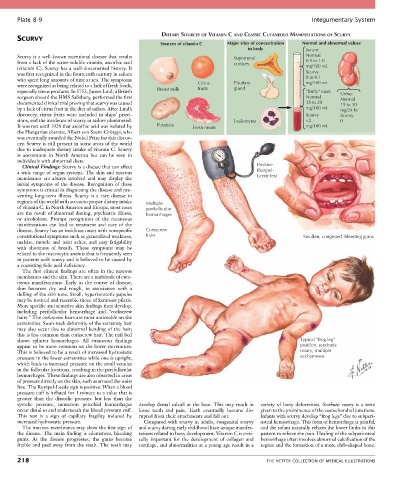
Plate 8-9                                                                                             Integumentary System

                                                         DIETARY SOURCES OF VITAMIN C AND CLASSIC CUTANEOUS MANIFESTATIONS OF SCURVY
       SCURVY
                                                        Sources of vitamin C   Major sites of concentration  Normal and abnormal values
                                                                                       in body             Serum:
       Scurvy is a well-known nutritional disease that results                    Suprarenal               Normal
       from a lack of the water-soluble vitamin, ascorbic acid                    cortices                 0.5 to 1.0
       (vitamin C). Scurvy has a well-documented history. It                                               mg/100 mL
       was first recognized in the fourteenth century in sailors                                           Scurvy
       who spent long amounts of time at sea. The symptoms                                                 0 to 0.1
       were recognized as being related to a lack of fresh foods,    Citrus       Pituitary                mg/100 mL
                                                                                  gland
       especially citrus products. In 1753, James Lind, a British   Breast milk  fruits                    “Buffy“ coat:  Urine:
       surgeon aboard the HMS Salisbury, performed the first                                               Normal      Normal
       documented clinical trial proving that scurvy was caused                                            15 to 25    15 to 30
       by a lack of citrus fruit in the diet of sailors. After Lind’s                                      mg/100 mL   mg/24 hr
       discovery,  citrus  fruits  were  included  in  ships’  provi-                                        Scurvy    Scurvy
       sions, and the incidence of scurvy in sailors plummeted.                   Leukocytes               <2          0
       It was not until 1928 that ascorbic acid was isolated by   Potatoes  Fresh meats                    mg/100 mL
       the Hungarian chemist, Albert von Szent-Grörgyi, who
       was eventually awarded the Nobel Prize for this discov-
       ery. Scurvy is still present in some areas of the world
       due to inadequate dietary intake of vitamin C. Scurvy
       is  uncommon  in  North  America  but  can  be  seen  in
       individuals with abnormal diets.
         Clinical Findings: Scurvy is a disease that can affect                           Positive
       a wide range of organ systems. The skin and mucous                                 Rumpel-
       membranes  are  always  involved  and  may  display  the                           Leede test
       initial  symptoms  of  the  disease.  Recognition  of  these
       symptoms is critical in diagnosing the disease and pre-
       venting  long-term  illness.  Scurvy  is  a  rare  disease  in
       regions of the world with access to proper dietary intake   Multiple
       of vitamin C. In North America and Europe, most cases   perifollicular
       are the result of abnormal dieting, psychiatric illness,   hemorrhages
       or  alcoholism.  Prompt  recognition  of  the  cutaneous
       manifestations  can  lead  to  treatment  and  cure  of  the
       disease. Scurvy has an insidious onset with nonspecific   Corkscrew
       constitutional symptoms such as generalized weakness,   hairs                                      Swollen, congested, bleeding gums
       malaise,  muscle  and  joint  aches,  and  easy  fatigability
       with  shortness  of  breath.  These  symptoms  may  be
       related to the macrocytic anemia that is frequently seen
       in patients with scurvy and is believed to be caused by
       a coexisting folic acid deficiency.
         The  first  clinical  findings  are  often  in  the  mucous
       membranes and the skin. There are a multitude of cuta-
       neous  manifestations.  Early  in  the  course  of  disease,
       skin  becomes  dry  and  rough,  in  association  with  a
       dulling of the skin tone. Small, hyperkeratotic papules
       may be noticed and resemble those of keratosis pilaris.
       More specific and sensitive skin findings then develop,
       including  perifollicular  hemorrhage  and  “corkscrew
       hairs.” The corkscrew hairs are most noticeable on the
       extremities. Swan-neck deformity of the extremity hair
       may also occur due to abnormal bending of the hair;
       this is less common than corkscrew hair. The nail bed
       shows  splinter  hemorrhages.  All  cutaneous  findings                                           Typical “frog leg”
       appear to be more common on the lower extremities.                                                position, scorbutic
       This is believed to be a result of increased hydrostatic                                          rosary, multiple
       pressure in the lower extremities while one is upright,                                           ecchymoses
       which leads to increased pressure on the small venules
       in the follicular locations, resulting in the perifollicular
       hemorrhages. These findings are also observed in areas
       of pressure directly on the skin, such as around the waist
       line. The Rumpel-Leede sign is positive: When a blood
       pressure cuff is inflated for 1 minute to a value that is
       greater  than  the  diastolic  pressure  but  less  than  the
       systolic  pressure,  numerous  petechial  hemorrhages   develop dental calculi at the base. This may result in   variety  of  bony  deformities.  Scorbutic  rosary  is  a  term
       occur distal to and underneath the blood pressure cuff.   loose  teeth  and  pain.  Teeth  eventually  become  dis-  given to the prominence of the costochondral junctions.
       This  test  is  a  sign  of  capillary  fragility  induced  by   rupted from their attachments and fall out.  Infants with scurvy develop “frog legs” due to subperi-
       increased hydrostatic pressure.             Compared  with  scurvy  in  adults,  congenital  scurvy   osteal hemorrhage. This form of hemorrhage is painful,
         The mucous membranes may show the first sign of   and scurvy during early childhood have unique manifes-  and the infant naturally relaxes the lower limbs in this
       the disease. The main finding is edematous, bleeding   tations related to bony development. Vitamin C is criti-  pattern to relieve the pain. Healing of the subperiosteal
       gums.  As  the  disease  progresses,  the  gums  become   cally  important  for  the  development  of  collagen  and   hemorrhage often involves abnormal calcification of the
       friable  and  peel  away  from  the  teeth.  The  teeth  may   cartilage, and abnormalities at a young age result in a   region and the formation of a more club-shaped bone.

       218                                                                                   THE NETTER COLLECTION OF MEDICAL ILLUSTRATIONS

