


Page 233 - The Netter Collection of Medical Illustrations - Integumentary System_ Volume 4 ( PDFDrive )
P. 233
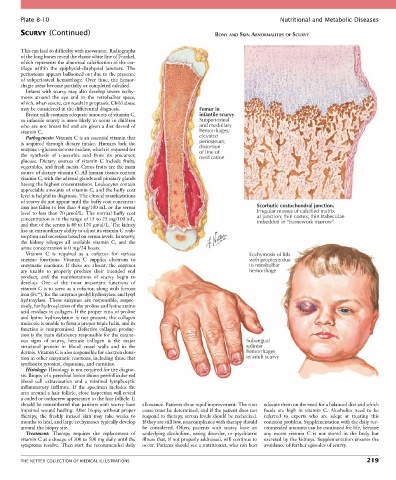
Plate 8-10                                                                                Nutritional and Metabolic Diseases
        SCURVY (Continued)                                                 BONY AND SKIN ABNORMALITIES OF SCURVY


        This can lead to difficulty with movement. Radiographs
        of the long bones reveal the classic white line of Frankel,
        which represents the abnormal calcification of the car-
        tilage  within  the  epiphysial-diaphysial  juncture.  The
        periosteum appears ballooned out due to the presence
        of  subperiosteal  hemorrhage.  Over  time,  the  hemor-
        rhagic areas become partially or completed calcified.
          Infants with scurvy may also develop severe ecchy-
        mosis  around  the  eye  and  in  the  retrobulbar  space,
        which, when severe, can result in proptosis. Child abuse
        may be considered in the differential diagnosis.              Femur in
          Breast milk contains adequate amounts of vitamin C,         infantile scurvy.
        so infantile scurvy is more likely to occur in children       Subperiosteal
        who are not breast fed and are given a diet devoid of         and medullary
        vitamin C.                                                    hemorrhages;
          Pathogenesis: Vitamin C is an essential vitamin that        elevated
        is  acquired  through  dietary  intake.  Humans  lack  the    periosteum;
        enzyme L-gluconolactone oxidase, which is required for        distortion
                                                                      of line of
        the  synthesis  of  L-ascorbic  acid  from  its  precursor,   ossification
        glucose.  Dietary  sources  of  vitamin  C  include  fruits,
        vegetables, and fresh meats. Citrus fruits are the main
        source of dietary vitamin C. All human tissues contain
        vitamin C, with the adrenal glands and pituitary glands
        having the highest concentrations. Leukocytes contain
        appreciable amounts of vitamin C, and the buffy coat
        level is helpful in diagnosis. The clinical manifestations
        of scurvy do not appear until the buffy coat concentra-
        tion has fallen to less than 4 mg/100 mL or the serum                             Scorbutic costochondral junction.
        level  to  less  than  20 µmol/L.  The  normal  buffy  coat                       Irregular masses of calcified matrix
        concentration is in the range of 15 to 25 mg/100 mL,                              at junction; thin cortex; thin trabeculae
                                                                                          imbedded in “framework marrow”
        and that of the serum is 40 to 120 µmol/L. The kidney
        has an extraordinary ability to adjust its vitamin C reab-
        sorption and secretion based on serum levels. In scurvy,
        the  kidney  salvages  all  available  vitamin  C,  and  the
        urine concentration is 0 mg/24 hours.
          Vitamin  C  is  required  as  a  cofactor  for  various                      Ecchymosis of lids
        enzyme  functions.  Vitamin  C  supplies  electrons  to                        with proptosis due
        enzymatic reactions. If these are absent, the enzymes                          to retrobulbar
        are  unable  to  properly  produce  their  intended  end                       hemorrhage
        product,  and  the  manifestations  of  scurvy  begin  to
        develop.  One  of  the  most  important  functions  of
        vitamin C is to serve as a cofactor, along with ferrous
              ++
        iron (Fe ), for the enzymes prolyl hydroxylase and lysyl
        hydroxylase.  These  enzymes  are  responsible,  respec-
        tively, for hydroxylation of the proline and lysine amino
        acid residues in collagen. If the proper ratio of proline
        and  lysine  hydroxylation  is  not  present,  the  collagen
        molecule is unable to form a proper triple helix, and its
        function  is  compromised.  Defective  collagen  produc-
        tion is the main deficiency responsible for the cutane-
        ous  signs  of  scurvy,  because  collagen  is  the  major                    Subungual
        structural  protein  in  blood  vessel  walls  and  in  the                   splinter
        dermis. Vitamin C is also responsible for electron dona-                      hemorrhages
        tion in other enzymatic reactions, including those that                       in adult scurvy
        synthesize tyrosine, dopamine, and carnitine.
          Histology: Histology is not required for the diagno-
        sis. Biopsy of a petechial lesion shows perifollicular red
        blood  cell  extravasation  and  a  minimal  lymphocytic
        inflammatory  infiltrate.  If  the  specimen  includes  the
        area around a hair follicle, close inspection will reveal
        a coiled or corkscrew appearance to the hair follicle. It
        should be remembered that patients with scurvy have   allowance. Patients show rapid improvement. The root   educate them on the need for a balanced diet and which
        impaired wound healing: After biopsy without proper   cause must be determined, and if the patient does not   foods  are  high  in  vitamin  C.  Alcoholics  need  to  be
        therapy,  the  freshly  incised  skin  may  take  weeks  to   respond to therapy, serum levels should be rechecked.   referred  to  experts  who  are  adept  at  treating  this
        months to heal, and large ecchymoses typically develop   If they are still low, noncompliance with therapy should   common problem. Supplementation with the daily rec-
        around the biopsy site.                   be  considered.  Often,  patients  with  scurvy  have  an   ommended amounts can be continued for life, because
          Treatment:  Therapy  requires  the  replacement  of   underlying  alcoholism,  eating  disorder,  or  psychiatric   any  excess  vitamin  C  is  not  stored  in  the  body  but
        vitamin C at a dosage of 300 to 500 mg daily until the   illness that, if not properly addressed, will continue to   excreted by the kidneys. Supplementation ensures the
        symptoms resolve. Then start the recommended daily   occur. Patients should see a nutritionist, who can best   avoidance of further episodes of scurvy.


        THE NETTER COLLECTION OF MEDICAL ILLUSTRATIONS                                                                          219

