


Page 243 - The Netter Collection of Medical Illustrations - Integumentary System_ Volume 4 ( PDFDrive )
P. 243
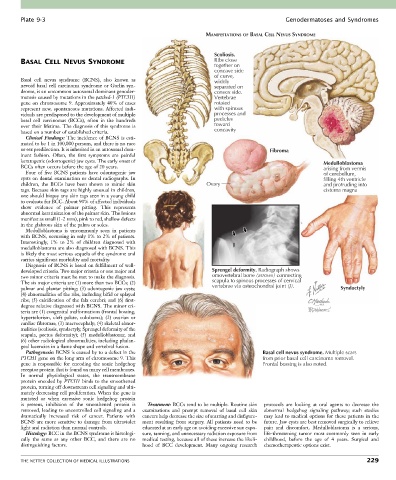
Plate 9-3                                                                                   Genodermatoses and Syndromes

                                                                        MANIFESTATIONS OF BASAL CELL NEVUS SYNDROME


                                                                           Scoliosis.
        BASAL CELL NEVUS SYNDROME                                          Ribs close
                                                                           together on
                                                                           concave side
                                                                           of curve,
        Basal  cell  nevus  syndrome  (BCNS),  also  known  as             widely
        nevoid basal cell carcinoma syndrome or Gorlin syn-                separated on
        drome, is an uncommon autosomal dominant genoder-                  convex side.
        matosis caused by mutations in the patched-1 (PTCH1)               Vertebrae
        gene on chromosome 9. Approximately 40% of cases                   rotated
        represent  new,  spontaneous  mutations.  Affected  indi-          with spinous
        viduals are predisposed to the development of multiple             processes and
        basal  cell  carcinomas  (BCCs),  often  in  the  hundreds         pedicles
        over their lifetime. The diagnosis of this syndrome is             toward
        based on a number of established criteria.                         concavity
          Clinical Findings: The incidence of BCNS is esti-
        mated to be 1 in 100,000 persons, and there is no race
        or sex predilection. It is inherited in an autosomal dom-                             Fibroma
        inant  fashion.  Often,  the  first  symptoms  are  painful
        keratogenic (odontogenic) jaw cysts. The early onset of                                                  Medulloblastoma
        BCCs often occurs before the age of 20 years.                                                            arising from vermis
          Four  of  five  BCNS  patients  have  odontogenic  jaw                                                 of cerebellum,
        cysts on dental examination or dental radiographs. In                                                    filling 4th ventricle
        children,  the  BCCs  have  been  shown  to  mimic  skin        Ovary                                    and protruding into
        tags. Because skin tags are highly unusual in children,                                                  cisterna magna
        one should biopsy any skin tags seen in a young child
        to evaluate for BCC. About 90% of affected individuals
        show  evidence  of  palmar  pitting.  This  represents
        abnormal keratinization of the palmar skin. The lesions
        manifest as small (1-2 mm), pink to red, shallow defects
        in the glabrous skin of the palms or soles.
          Medulloblastoma  is  uncommonly  seen  in  patients
        with BCNS, occurring in only 1% to 2% of patients.
        Interestingly,  1%  to  2%  of  children  diagnosed  with                 J
        medulloblastoma are also diagnosed with BCNS. This
        is likely the most serious sequela of the syndrome and
        carries significant morbidity and mortality.
          Diagnosis of BCNS is based on fulfillment of well-
        developed criteria. Two major criteria or one major and           Sprengel deformity. Radiograph shows
        two minor criteria must be met to make the diagnosis.             omovertebral bone (arrows) connecting
        The six major criteria are (1) more than two BCCs; (2)            scapula to spinous processes of cervical
        palmar and plantar pitting; (3) odontogenic jaw cysts;            vertebrae via osteochondral joint (J).       Syndactyly
        (4) abnormalities of the ribs, including bifid or splayed
        ribs; (5) calcification of the falx cerebri; and (6) first-
        degree relative diagnosed with BCNS. The minor cri-
        teria are (1) congenital malformations (frontal bossing,
        hypertelorism,  cleft  palate,  coloboma);  (2)  ovarian  or
        cardiac fibromas; (3) macrocephaly; (4) skeletal abnor-
        malities (scoliosis, syndactyly, Sprengel deformity of the
        scapula,  pectus  deformity);  (5)  medulloblastoma;  and
        (6) other radiological abnormalities, including phalan-
        geal lucencies in a flame shape and vertebral fusion.
          Pathogenesis: BCNS is caused by to a defect in the                                Basal cell nevus syndrome. Multiple scars
        PTCH1 gene on the long arm of chromosome 9. This                                    from prior basal cell carcinoma removal.
        gene  is  responsible  for  encoding  the  sonic  hedgehog                          Frontal bossing is also noted.
        receptor protein that is found on many cell membranes.
        In  normal  physiological  states,  the  transmembrane
        protein encoded by PTCH1 binds to the smoothened
        protein, turning off downstream cell signaling and ulti-
        mately decreasing cell proliferation. When the gene is
        mutated  or  when  excessive  sonic  hedgehog  protein
        is  present,  inhibition  of  the  smoothened  protein  is   Treatment: BCCs tend to be multiple. Routine skin   protocols  are  looking  at  oral  agents  to  decrease  the
        removed, leading to uncontrolled cell signaling and a   examinations  and  prompt  removal  of  basal  cell  skin   abnormal  hedgehog  signaling  pathway;  such  studies
        dramatically  increased  risk  of  cancer.  Patients  with   cancers help decrease the size of scarring and disfigure-  may lead to medical options for these patients in the
        BCNS are more sensitive to damage from ultraviolet   ment  resulting  from  surgery.  All  patients  need  to  be   future. Jaw cysts are best removed surgically to relieve
        light and radiation than normal controls.  educated at an early age on avoiding excessive sun expo-  pain  and  discomfort.  Medulloblastoma  is  a  serious,
          Histology: BCC in the BCNS syndrome is histologi-  sure, tanning, and unnecessary radiation exposure from   life-threatening  tumor  most  commonly  seen  in  early
        cally  the  same  as  any  other  BCC,  and  there  are  no   medical testing, because all of these increase the likeli-  childhood,  before  the  age  of  4  years.  Surgical  and
        distinguishing factors.                   hood  of  BCC  development.  Many  ongoing  research   chemotherapeutic options exist.


        THE NETTER COLLECTION OF MEDICAL ILLUSTRATIONS                                                                          229

