


Page 246 - The Netter Collection of Medical Illustrations - Integumentary System_ Volume 4 ( PDFDrive )
P. 246
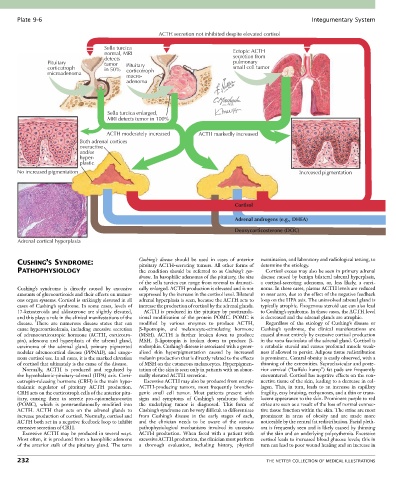
Plate 9-6                                                                                             Integumentary System

                                                        ACTH secretion not inhibited despite elevated cortisol

                                     Sella turcica
                                     normal, MRI                                  Ectopic ACTH
                                     detects                                      secretion from
                 Pituitary           tumor   Pituitary                            pulmonary
                 corticotroph        in 50%  corticotroph                         small cell tumor
                 microadenoma
                                             macro-
                                             adenoma


                                      Sella turcica enlarged,
                                      MRI detects tumor in 100%

                                      ACTH moderately increased       ACTH markedly increased
                             Both adrenal cortices
                             overactive
                             and/or
                             hyper-
                             plastic
       No increased pigmentation                                                                        Increased pigmentation


                                                                                  Cortisol

                                                                                  Adrenal androgens (e.g., DHEA)
                                                                                  Deoxycorticosterone (DOC)
       Adrenal cortical hyperplasia


       CUSHING’S SYNDROME:                       Cushing’s  disease  should  be  used  in  cases  of  anterior   examination, and laboratory and radiological testing, to
                                                 pituitary ACTH-secreting tumors. All other forms of
                                                                                           determine the etiology.
       PATHOPHYSIOLOGY                           the  condition  should  be  referred  to  as  Cushing’s  syn-  Cortisol excess may also be seen in primary adrenal
                                                 drome. In basophilic adenomas of the pituitary, the size   disease caused by benign bilateral adrenal hyperplasia,
                                                 of the sella turcica can range from normal to dramati-  a  cortisol-secreting  adenoma,  or,  less  likely,  a  carci-
       Cushing’s  syndrome  is  directly  caused  by  excessive   cally enlarged. ACTH production is elevated and is not   noma. In these cases, plasma ACTH levels are reduced
       amounts of glucocorticoids and their effects on numer-  suppressed by the increase in the cortisol level. Bilateral   to near zero, due to the effect of the negative feedback
       ous organ systems. Cortisol is strikingly elevated in all   adrenal hyperplasia is seen, because the ACTH acts to   loop on the HPA axis. The uninvolved adrenal gland is
       cases of Cushing’s syndrome. In some cases, levels of   increase the production of cortisol by the adrenal glands.  typically atrophic. Exogenous steroid use can also lead
       17-ketosteroids  and  aldosterone  are  slightly  elevated,   ACTH is produced in the pituitary by posttransla-  to Cushing’s syndrome. In those cases, the ACTH level
       and this plays a role in the clinical manifestations of the   tional  modification  of  the  protein  POMC.  POMC  is   is decreased and the adrenal glands are atrophic.
       disease.  There  are  numerous  disease  states  that  can   modified  by  various  enzymes  to  produce  ACTH,   Regardless  of  the  etiology  of  Cushing’s  disease  or
       cause hypercortisolemia, including excessive secretion   β-lipotropin,  and  melanocyte-stimulating  hormone   Cushing’s  syndrome,  the  clinical  manifestations  are
       of  adrenocorticotropic  hormone  (ACTH,  corticotro-  (MSH).  ACTH  is  further  broken  down  to  produce   caused almost entirely by excessive cortisol production
       pin),  adenoma  and  hyperplasia  of  the  adrenal  gland,   MSH.  β-lipotropin  is  broken  down  to  produce  β-  in the zona fasciculata of the adrenal gland. Cortisol is
       carcinoma  of  the  adrenal  gland,  primary  pigmented   endorphin. Cushing’s disease is associated with a gener-  a catabolic steroid and causes profound muscle weak-
       nodular  adrenocortical  disease  (PPNAD),  and  exoge-  alized  skin  hyperpigmentation  caused  by  increased   ness if allowed to persist. Adipose tissue redistribution
       nous cortisol use. In all cases, it is the marked elevation   melanin production that is directly related to the effects   is prominent. Central obesity is easily observed, with a
       of cortisol that ultimately is the cause of the disease.  of MSH on the cutaneous melanocytes. Hyperpigmen-  thinning of the extremities. Supraclavicular and poste-
         Normally,  ACTH  is  produced  and  regulated  by     tation of the skin is seen only in patients with an abnor-  rior  cervical  (“buffalo  hump”)  fat  pads  are  frequently
       the hypothalamic-pituitary-adrenal (HPA) axis. Corti-  mally elevated ACTH secretion.  encountered. Cortisol has negative effects on the con-
       cotropin-releasing hormone (CRH) is the main hypo-  Excessive ACTH may also be produced from ectopic   nective tissue of the skin, leading to a decrease in col-
       thalamic  regulator  of  pituitary  ACTH  production.   ACTH-producing  tumors,  most  frequently  broncho-  lagen.  This,  in  turn,  leads  to  an  increase  in  capillary
       CRH acts on the corticotroph cells of the anterior pitu-  genic  small  cell  tumor.  Most  patients  present  with     fragility, easy bruising, ecchymoses, and a thin or trans-
       itary,  causing  them  to  secrete  pro-opiomelanocortin   signs  and  symptoms  of  Cushing’s  syndrome  before     lucent appearance to the skin. Prominent purple to red
       (POMC),  which  is  posttranslationally  modified  into   the  underlying  tumor  is  diagnosed.  This  form  of     striae are seen as a result of the loss of normal connec-
       ACTH.  ACTH  then  acts  on  the  adrenal  glands  to   Cushing’s syndrome can be very difficult to differentiate   tive tissue function within the skin. The striae are most
       increase production of cortisol. Normally, cortisol and   from  Cushing’s  disease  in  the  early  stages  of  each,     prominent  in  areas  of  obesity  and  are  made  more
       ACTH both act in a negative feedback loop to inhibit   and  the  clinician  needs  to  be  aware  of  the  various     noticeable by the central fat redistribution. Facial pleth-
       excessive secretion of CRH.               pathophysiological  mechanisms  involved  in  excessive   ora is frequently seen and is likely caused by thinning
         Excessive ACTH may be produced in several ways.   ACTH  production.  When  faced  with  a  patient  with   of the skin and an underlying polycythemia. Excessive
       Most often, it is produced from a basophilic adenoma   excessive ACTH production, the clinician must perform   cortisol leads to increased blood glucose levels; this in
       of the anterior stalk of the pituitary gland. The term   a  thorough  evaluation,  including  history,  physical   turn can lead to poor wound healing and an increase in

       232                                                                                   THE NETTER COLLECTION OF MEDICAL ILLUSTRATIONS

