


Page 244 - The Netter Collection of Medical Illustrations - Integumentary System_ Volume 4 ( PDFDrive )
P. 244
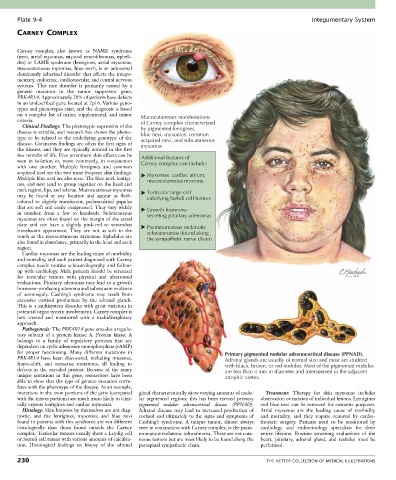
Plate 9-4                                                                                             Integumentary System
       CARNEY COMPLEX


       Carney  complex,  also  known  as  NAME  syndrome
       (nevi, atrial myxomas, myxoid neurofibromas, epheli-
       des)  or  LAMB  syndrome  (lentigines,  atrial  myxomas,
       mucocutaneous myxomas, blue nevi), is an autosomal
       dominantly inherited disorder that affects the integu-
       mentary, endocrine, cardiovascular, and central nervous
       systems.  This  rare  disorder  is  primarily  caused  by  a
       genetic  mutation  in  the  tumor  suppressor  gene,
       PRKAR1A. Approximately 20% of patients have defects
       in an undescribed gene located at 2p16. Various geno-
       types and phenotypes exist, and the diagnosis is based
       on  a  complex  list  of  major,  supplemental,  and  minor   Mucocutaneous manifestations
       criteria.                                  of Carney complex characterized
         Clinical Findings: The phenotypic expression of the
       disease is variable, and research has shown the pheno-  by pigmented lentigines,
                                                  blue nevi, myxomas, common
       type  to  be  related  to  the  underlying  genotype  of  the   acquired nevi, and subcutaneous
       disease. Cutaneous findings are often the first signs of   myxomas
       the disease, and they are typically noticed in the first
       few months of life. Five prominent skin effects can be   Additional features of
       seen  in  isolation  or,  more  commonly,  in  conjunction   Carney complex can include:
       with  one  another.  Multiple  lentigines  and  common
       acquired nevi are the two most frequent skin findings.   Myxomas: cardiac atrium,
       Multiple blue nevi are also seen. The blue nevi, lentigi-  mucocutaneous myxoma
       nes, and nevi tend to group together on the head and
       neck region, lips, and sclerae. Mucocutaneous myxomas   Testicular large-cell
       may  be  found  at  any  location  and  appear  as  flesh-  calcifying Sertoli cell tumors
       colored  to  slightly  translucent,  pedunculated  papules
       that are soft and easily compressed. They vary widely   Growth hormone–
       in  number,  from  a  few  to  hundreds.  Subcutaneous   secreting pituitary adenomas
       myxomas are often found on the margin of the tarsal
       plate  and  can  have  a  slightly  pink-red  to  somewhat   Psammomatous melanotic
       translucent  appearance.  They  are  not  as  soft  to  the   schwannomas (found along
       touch  as  the  mucocutaneous  myxomas.  Ephelides  are   the sympathetic nerve chain)
       also found in abundance, primarily in the head and neck
       region.
         Cardiac myxomas are the leading cause of morbidity
       and mortality, and each patient diagnosed with Carney
       complex  needs  routine  echocardiography  and  follow-
       up with cardiology. Male patients should be screened
       for  testicular  tumors  with  physical  and  ultrasound
       evaluations. Pituitary adenomas may lead to a growth
       hormone–producing adenoma and subsequent evidence
       of  acromegaly.  Cushing’s  syndrome  may  result  from
       excessive  cortisol  production  by  the  adrenal  glands.
       This is a multisystem disorder with great variation in
       potential organ system involvement. Carney complex is
       best  treated  and  monitored  with  a  multidisciplinary
       approach.
         Pathogenesis: The PRKAR1A gene encodes a regula-
       tory  subunit  of  a  protein  kinase  A.  Protein  kinase  A
       belongs  to  a  family  of  regulatory  proteins  that  are
       dependent on cyclic adenosine monophosphate (cAMP)
       for  proper  functioning.  Many  different  mutations  in               Primary pigmented nodular adrenocortical disease (PPNAD).
       PRKAR1A  have  been  discovered,  including  missense,                  Adrenal glands are usually of normal size and most are studded
       frame-shift,  and  nonsense  mutations,  all  leading  to               with black, brown, or red nodules. Most of the pigmented nodules
       defects  in  the  encoded  protein.  Because  of  the  many             are less than 4 mm in diameter and interspersed in the adjacent
       unique mutations in this gene, researchers have been                    atrophic cortex.
       able to show that the type of genetic mutation corre-
       lates with the phenotype of the disease. As an example,
       mutations in the exon portions of the gene (compared   gland characteristically show varying amounts of nodu-  Treatment:  Therapy  for  skin  myxomas  includes
       with the intron portions) are much more likely to clini-  lar  pigmented  regions;  this  has  been  termed  primary   observation or excision of individual lesions. Lentigines
       cally express lentigines and cardiac myxomas.  pigmented  nodular  adrenocortical  disease  (PPNAD).   and blue nevi can be removed for cosmetic purposes.
         Histology: Skin biopsies by themselves are not diag-  Adrenal  disease  may  lead  to  increased  production  of   Atrial  myxomas  are  the  leading  cause  of  morbidity
       nostic,  and  the  lentigines,  myxomas,  and  blue  nevi   cortisol  and  ultimately  to  the  signs  and  symptoms  of   and  mortality,  and  they  require  removal  by  cardio-
       found in patients with this syndrome are not different   Cushing’s  syndrome.  A  unique  tumor,  almost  always   thoracic  surgery.  Patients  need  to  be  monitored  by
       histologically  than  those  found  outside  the  Carney   seen in conjunction with Carney complex, is the psam-  cardiology  and  endocrinology  specialists  for  their
       complex. Testicular tumors usually show a Leydig cell   momatous melanotic schwannoma. These are not cuta-  entire  lifetime.  Routine  screening  evaluations  of  the
       or Sertoli cell tumor with various amounts of calcifica-  neous tumors but are most likely to be found along the   heart,  pituitary,  adrenal  gland,  and  testicles  must  be
       tion.  Histological  findings  on  biopsy  of  the  adrenal   paraspinal sympathetic chain.  performed.

       230                                                                                   THE NETTER COLLECTION OF MEDICAL ILLUSTRATIONS

