


Page 248 - The Netter Collection of Medical Illustrations - Integumentary System_ Volume 4 ( PDFDrive )
P. 248
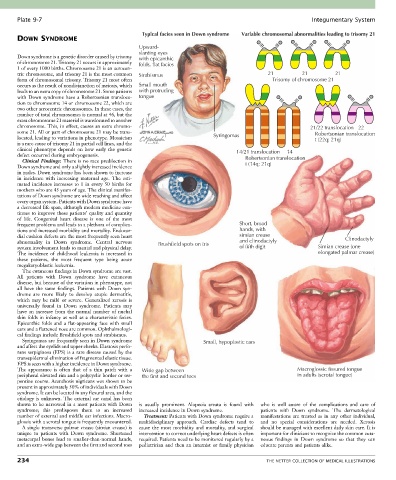
Plate 9-7                                                                                             Integumentary System

                                                  Typical facies seen in Down syndrome  Variable chromosomal abnormalities leading to trisomy 21
       DOWN SYNDROME
                                                 Upward-
                                                 slanting eyes
       Down syndrome is a genetic disorder caused by trisomy   with epicanthic
       of chromosome 21. Trisomy 21 occurs in approximately   folds, flat facies
       1 of every 1000 births. Chromosome 21 is an acrocen-
                                                                                                                     21
       tric chromosome, and trisomy 21 is the most common   Strabismus                        21                        21
       form of chromosomal trisomy. Trisomy 21 most often                                      Trisomy of chromosome 21
       occurs as the result of nondisjunction of meiosis, which   Small mouth
       leads to an extra copy of chromosome 21. Some patients   with protruding
       with Down syndrome have a Robertsonian transloca-  tongue
       tion to chromosome 14 or chromosome 22, which are
       two other acrocentric chromosomes. In these cases, the
       number of total chromosomes is normal at 46, but the
       extra chromosome 21 material is translocated to another
       chromosome. This, in effect, causes an extra chromo-                                                 21/22 translocation 22
       some 21. All or part of chromosome 21 may be trans-                                                    Robertsonian translocation
       located, leading to variations in phenotype. Mosaicism              Syringomas                         t (22q; 21q)
       is a rare cause of trisomy 21 in partial cell lines, and the
       clinical  phenotype  depends  on  how  early  the  genetic                  14/21 translocation        14
       defect occurred during embryogenesis.                                          Robertsonian translocation
         Clinical Findings: There is no race predilection in
       Down syndrome and only a slightly increased incidence                          t (14q; 21q)
       in males. Down syndrome has been shown to increase
       in  incidence  with  increasing  maternal  age.  The  esti-
       mated incidence increases to 1 in every 50 births for
       mothers who are 45 years of age. The clinical manifes-
       tations of Down syndrome are wide reaching and affect
       every organ system. Patients with Down syndrome have
       a decreased life span, although modern medicine con-
       tinues to improve these patients’ quality and quantity
       of  life.  Congenital  heart  disease  is  one  of  the  most
       frequent problems and leads to a plethora of complica-                       Short, broad
       tions and increased morbidity and mortality. Endocar-                        hands, with
       dial cushion defects are the most frequently seen heart                      simian crease                       Clinodactyly
       abnormality  in  Down  syndrome.  Central  nervous   Brushfield spots on iris  and clinodactyly
       system involvement leads to mental and physical delay.                       of fifth digit             Simian crease (one
       The  incidence  of  childhood  leukemia  is  increased  in                                              elongated palmar crease)
       these  patients,  the  most  frequent  type  being  acute
       megakaryoblastic leukemia.
         The cutaneous findings in Down syndrome are vast.
       All  patients  with  Down  syndrome  have  cutaneous
       disease, but because of the variation in phenotype, not
       all  have  the  same  findings.  Patients  with  Down  syn-
       drome  are  more  likely  to  develop  atopic  dermatitis,
       which  may  be  mild  or  severe.  Generalized  xerosis  is
       universally  found  in  Down  syndrome.  Patients  may
       have  an  increase  from  the  normal  number  of  nuchal
       skin folds in infancy as well as a characteristic facies.
       Epicanthic  folds  and  a  flat-appearing  face  with  small
       ears and a flattened nose are common. Ophthalmologi-
       cal findings include Brushfield spots and strabismus.
         Syringomas are frequently seen in Down syndrome               Small, hypoplastic ears
       and affect the eyelids and upper cheeks. Elastosis perfo-
       rans serpiginosa (EPS) is a rare disease caused by the
       transepidermal elimination of fragmented elastic tissue.
       EPS is seen with a higher incidence in Down syndrome.
       The  appearance  is  often  that  of  a  thin  patch  with  a   Wide gap between                 Macroglossic fissured tongue
       peripheral elevated rim and a polycyclic border or ser-  the first and second toes               in adults (scrotal tongue)
       pentine course. Acanthosis nigricans was shown to be
       present in approximately 50% of individuals with Down
       syndrome. It can be located in any flexural area, and the
       etiology is unknown. The external ear canal has been
       shown to be narrowed in a most patients with Down   is  usually  prominent.  Alopecia  areata  is  found  with   who  is  well  aware  of  the  complications  and  care  of
       syndrome;  this  predisposes  them  to  an  increased   increased incidence in Down syndrome.  patients  with  Down  syndrome.  The  dermatological
       number of external and middle ear infections. Macro-  Treatment: Patients with Down syndrome require a   manifestations  are  treated  as  in  any  other  individual,
       glossia with a scrotal tongue is frequently encountered.  multidisciplinary  approach.  Cardiac  defects  tend  to   and  no  special  considerations  are  needed.  Xerosis
         A single transverse palmar crease (simian crease) is   cause  the  most  morbidity  and  mortality,  and  surgical   should be managed with excellent daily skin care. It is
       unique  to  patients  with  Down  syndrome.  Shortened   intervention to correct underlying heart defects is often   important for clinicians to recognize the common cuta-
       metacarpal  bones  lead  to  smaller-than-normal  hands,   required. Patients need to be monitored regularly by a   neous  findings  in  Down  syndrome  so  that  they  can
       and an extra-wide gap between the first and second toes   pediatrician and then an internist or family physician   educate parents and patients alike.

       234                                                                                   THE NETTER COLLECTION OF MEDICAL ILLUSTRATIONS

