


Page 245 - The Netter Collection of Medical Illustrations - Integumentary System_ Volume 4 ( PDFDrive )
P. 245
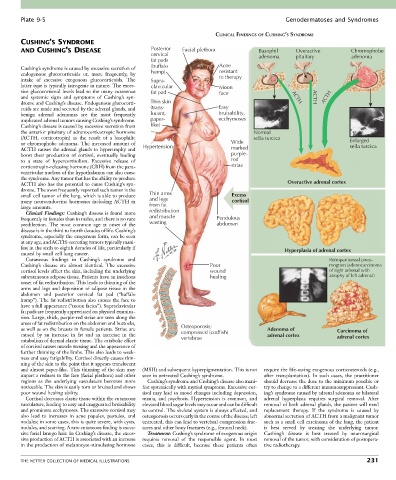
Plate 9-5                                                                                   Genodermatoses and Syndromes

                                                                           CLINICAL FINDINGS OF CUSHING’S SYNDROME
        CUSHING’S SYNDROME
        AND CUSHING’S DISEASE                        Posterior  Facial plethora           Basophil     Overactive         Chromophobe
                                                     cervical                             adenoma      pituitary          adenoma
                                                     fat pads
        Cushing’s syndrome is caused by excessive secretion of   (buffalo    Acne
        endogenous  glucocorticoids  or,  more  frequently,  by   hump)      resistant
        intake  of  excessive  exogenous  glucocorticoids.  The   Supra-     to therapy
        latter type is typically iatrogenic in nature. The exces-  clavicular  Moon
        sive glucocorticoid levels lead to the many cutaneous   fat pad      face
        and  systemic  signs  and  symptoms  of  Cushing’s  syn-                                      ACTH   ACTH  ACTH
        drome and Cushing’s disease. Endogenous glucocorti-  Thin skin
        coids are made and secreted by the adrenal glands, and   (trans-     Easy
        benign  adrenal  adenomas  are  the  most  frequently   lucent,      bruisability,
        implicated adrenal tumors causing Cushing’s syndrome.   paper-       ecchymoses
        Cushing’s disease is caused by excessive secretion from   like)
        the anterior pituitary of adrenocorticotropic hormone                            Normal
        (ACTH,  corticotropin)  as  the  result  of  a  basophilic                       sella turcica                    Enlarged
        or  chromophobe  adenoma.  The  increased  amount  of   Hypertension     Wide                                     sella turcica
        ACTH causes the adrenal glands to hypertrophy and                        marked
        boost  their  production  of  cortisol,  eventually  leading             purple-
        to  a  state  of  hypercortisolism.  Excessive  release  of              red
        corticotropin-releasing hormone (CRH) from the para-                     striae
        ventricular nucleus of the hypothalamus can also cause
        the syndrome. Any tumor that has the ability to produce
        ACTH also has the potential to cause Cushing’s syn-                                         Overactive adrenal cortex
        drome. The most frequently reported such tumor is the
        small cell tumor of the lung, which is able to produce   Thin arms       Excess
        many  neuroendocrine  hormones  including  ACTH  in   and legs           cortisol
        large amounts.                               from fat
          Clinical  Findings: Cushing’s disease is found more   redistribution
        frequently in females than in males, and there is no race   and muscle  Pendulous
        predilection.  The  most  common  age  at  onset  of  the   wasting  abdomen
        disease is in the third to fourth decades of life. Cushing’s
        syndrome, especially the exogenous form, can be seen
        at any age, and ACTH-secreting tumors typically mani-
        fest in the sixth to eighth decades of life, particularly if                               Hyperplasia of adrenal cortex
        caused by small cell lung cancer.
          Cutaneous  findings  in  Cushing’s  syndrome  and                                                        Retroperitoneal pneu-
        Cushing’s  disease  are  almost  identical.  The  excessive       Poor                                     mogram (adenocarcinoma
        cortisol levels affect the skin, including the underlying         wound                                    of right adrenal with
        subcutaneous adipose tissue. Patients have an insidious           healing                                  atrophy of left adrenal)
        onset of fat redistribution. This leads to thinning of the
        arms and legs and deposition of adipose tissue in the
        abdomen  and  posterior  cervical  fat  pad  (“buffalo
        hump”). The fat redistribution also causes the face to
        have a full appearance (“moon facies”). Supraclavicular
        fat pads are frequently appreciated on physical examina-
        tion. Large, thick, purple-red striae are seen along the
        areas of fat redistribution on the abdomen and buttocks,
        as well as on the breasts in female patients. Striae are   Osteoporosis;             Adenoma of              Carcinoma of
        caused  by  an  increase  in  fat  and  an  increase  in  the   compressed (codfish)  adrenal cortex         adrenal cortex
        catabolism of dermal elastic tissue. The catabolic effect   vertebrae
        of cortisol causes muscle wasting and the appearance of
        further thinning of the limbs. This also leads to weak-
        ness and easy fatigability. Cortisol directly causes thin-
        ning of the skin to the point that it appears translucent
        and almost paper-like. This thinning of the skin may   (MSH) and subsequent hyperpigmentation. This is not   require the life-saving exogenous corticosteroids (e.g.,
        impart a redness to the face (facial plethora) and other   seen in untreated Cushing’s syndrome.  after  transplantation).  In  such  cases,  the  practitioner
        regions  as  the  underlying  vasculature  becomes  more   Cushing’s syndrome and Cushing’s disease also mani-  should decrease the dose to the minimum possible or
        noticeable. The skin is easily torn or bruised and shows   fest systemically with myriad symptoms. Excessive cor-  try to change to a different immunosuppressant. Cush-
        poor wound healing ability.               tisol may lead to mood changes including depression,   ing’s syndrome caused by adrenal adenoma or bilateral
          Cortisol decreases elastic tissue within the cutaneous   mania,  and  psychosis.  Hypertension  is  common,  and   adrenal  hyperplasia  requires  surgical  removal.  After
        vasculature, leading to easy and exaggerated bruisability   elevated blood sugar levels may occur and can be difficult   removal of both adrenal glands, the patient will need
        and prominent ecchymoses. The excessive cortisol may   to control. The skeletal system is always affected, and   replacement  therapy.  If  the  syndrome  is  caused  by
        also  lead  to  increases  in  acne  papules,  pustules,  and   osteoporosis occurs early in the course of the disease; left   abnormal secretion of ACTH from a malignant tumor
        nodules; in some cases, this is quite severe, with cysts,   untreated, this can lead to vertebral compression frac-  such as a small cell carcinoma of the lung, the patient
        nodules, and scarring. A rare cutaneous finding is exces-  tures and other bony fractures (e.g., femoral neck).  is  best  served  by  treating  the  underlying  tumor.
        sive facial lanugo hair. In Cushing’s disease, the exces-  Treatment: Cushing’s syndrome of exogenous origin   Cushing’s  disease  is  best  treated  by  neurosurgical
        sive production of ACTH is associated with an increase   requires  removal  of  the  responsible  agent.  In  most   removal of the tumor, with consideration of postopera-
        in the production of melanocyte-stimulating hormone   cases,  this  is  difficult,  because  these  patients  often   tive radiotherapy.


        THE NETTER COLLECTION OF MEDICAL ILLUSTRATIONS                                                                          231

