


Page 66 - The Netter Collection of Medical Illustrations - Integumentary System_ Volume 4 ( PDFDrive )
P. 66
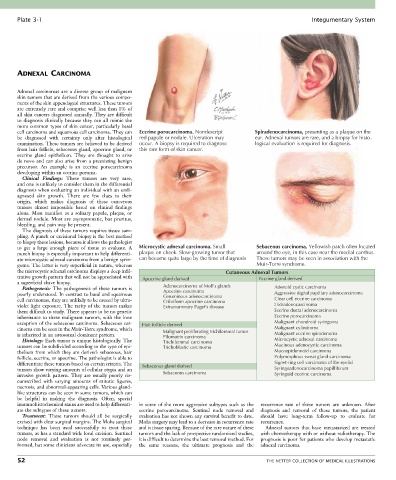
Plate 3-1                                                                                             Integumentary System


       ADNEXAL CARCINOMA


       Adnexal carcinomas are a diverse group of malignant
       skin tumors that are derived from the various compo-
       nents of the skin appendageal structures. These tumors
       are extremely rare and comprise well less than 1% of
       all skin cancers diagnosed annually. They are difficult
       to diagnosis clinically because they can all mimic the
       more common types of skin cancer, particularly basal
       cell carcinoma and squamous cell carcinoma. They can   Eccrine porocarcinoma. Nondescript  Spiradenocarcinoma, presenting as a plaque on the
       be  diagnosed  with  certainty  only  after  histological   red papule or nodule. Ulceration may  ear. Adnexal tumors are rare, and a biopsy for histo-
       examination. These tumors are believed to be derived   occur. A biopsy is required to diagnose  logical evaluation is required for diagnosis.
       from hair follicle, sebaceous gland, apocrine gland, or   this rare form of skin cancer.
       eccrine  gland  epithelium.  They  are  thought  to  arise
       de novo and can also arise from a preexisting benign
       precursor.  An  example  is  an  eccrine  porocarcinoma
       developing within an eccrine poroma.
         Clinical  Findings:  These  tumors  are  very  rare,
       and one is unlikely to consider them in the differential
       diagnosis when evaluating an individual with an undi-
       agnosed  skin  growth.  There  are  few  clues  to  their
       origin,  which  makes  diagnosis  of  these  cancerous
       tumors  almost  impossible  based  on  clinical  findings
       alone.  Most  manifest  as  a  solitary  papule,  plaque,  or
       dermal  nodule.  Most  are  asymptomatic,  but  pruritus,
       bleeding, and pain may be present.
         The diagnosis of these tumors requires tissue sam-
       pling. A punch or excisional biopsy is the best method
       to biopsy these lesions, because it allows the pathologist
       to  get  a  large  enough  piece  of  tissue  to  evaluate.  A   Microcystic adnexal carcinoma. Small  Sebaceous carcinoma. Yellowish patch often located
       punch biopsy is especially important to help differenti-  plaque on cheek. Slow-growing tumor that  around the eye, in this case near the medial canthus.
       ate microcystic adnexal carcinoma from a benign syrin-  can become quite large by the time of diagnosis  These tumors may be seen in association with the
       goma. The latter is very superficial in nature, whereas                            Muir-Torre syndrome.
       the microcystic adnexal carcinoma displays a deep infil-                Cutaneous Adnexal Tumors
       trative growth pattern that will not be appreciated with   Apocrine gland derived   Eccrine gland derived
       a superficial shave biopsy.
         Pathogenesis:  The  pathogenesis  of  these  tumors  is   Adenocarcinoma of Moll’s glands  Adenoid cystic carcinoma
       poorly understood. In contrast to basal and squamous   Apocrine carcinoma                Aggressive digital papillary adenocarcinoma
                                                         Ceruminous adenocarcinoma
       cell carcinomas, they are unlikely to be caused by ultra-  Cribriform apocrine carcinoma  Clear cell eccrine carcinoma
       violet light exposure. The rarity of the tumors makes   Extramammary Paget’s disease     Hidradenocarcinoma
       them difficult to study. There appears to be no genetic                                  Eccrine ductal adenocarcinoma
       inheritance  to  these  malignant  tumors,  with  the  lone                              Eccrine porocarcinoma
       exception of the sebaceous carcinoma. Sebaceous car-  Hair follicle derived              Malignant chondroid syringoma
       cinoma can be seen in the Muir-Torre syndrome, which   Malignant proliferating trichilemmal tumor  Malignant cylindroma
       is inherited in an autosomal dominant pattern.    Pilomatrix carcinoma                   Malignant eccrine spiradenoma
         Histology: Each tumor is unique histologically. The   Trichilemmal carcinoma           Microcystic adnexal carcinoma
       tumors can be subdivided according to the type of epi-  Trichoblastic carcinoma          Mucinous adenocystic carcinoma
       thelium from which they are derived: sebaceous, hair                                     Mucoepidermoid carcinoma
       follicle, eccrine, or apocrine. The pathologist is able to                               Polymorphous sweat gland carcinoma
       differentiate these tumors based on certain criteria. The   Sebaceous gland derived      Signet-ring cell carcinoma of the eyelid
       tumors show varying amounts of cellular atypia and an                                    Syringoadenocarcinoma papilliferum
       invasive  growth  pattern.  They  are  usually  poorly  cir-  Sebaceous carcinoma        Syringoid eccrine carcinoma
       cumscribed  with  varying  amounts  of  mitotic  figures,
       necrosis, and abnormal-appearing cells. Various gland-
       like structures can be seen in some tumors, which can
       be  helpful  in  making  the  diagnosis.  Often,  special
       immunohistochemical stains are used to help differenti-  in  some  of  the  more  aggressive  subtypes  such  as  the   recurrence  rate  of  these  tumors  are  unknown.  After
       ate the subtypes of these tumors.         eccrine  porocarcinoma.  Sentinel  node  removal  and   diagnosis  and  removal  of  these  tumors,  the  patient
         Treatment:  These  tumors  should  all  be  surgically   evaluation has not shown any survival benefit to date.   should  have  long-term  follow-up  to  evaluate  for
       excised with clear surgical margins. The Mohs surgical   Mohs surgery may lead to a decrease in recurrence rate   recurrence.
       technique  has  been  used  successfully  to  treat  these   and is tissue sparing. Because of the rare nature of these   Adnexal  tumors  that  have  metastasized  are  treated
       tumors, as has a standard wide local excision. Sentinel   tumors and the lack of prospective randomized studies,   with chemotherapy with or without radiotherapy. The
       node  removal  and  evaluation  is  not  routinely  per-  it is difficult to determine the best removal method. For   prognosis is poor for patients who develop metastatic
       formed, but some clinicians advocate its use, especially   the  same  reasons,  the  ultimate  prognosis  and  the   adnexal carcinoma.

       52                                                                                    THE NETTER COLLECTION OF MEDICAL ILLUSTRATIONS

