


Page 68 - The Netter Collection of Medical Illustrations - Integumentary System_ Volume 4 ( PDFDrive )
P. 68
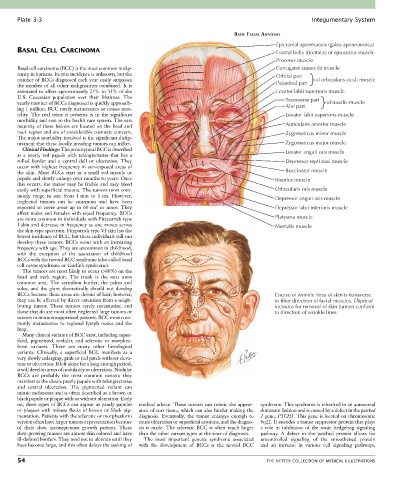
Plate 3-3                                                                                             Integumentary System

                                                                                  BASIC FACIAL ANATOMY
                                                                                                Epicranial aponeurosis (galea aponeurotica)
       BASAL CELL CARCINOMA                                                                     Frontal belly (frontalis) of epicranius muscle
                                                                                                Procerus muscle
       Basal cell carcinoma (BCC) is the most common malig-                                     Corrugator supercilii muscle
       nancy in humans. Its true incidence is unknown, but the                                  Orbital part
       number of BCCs diagnosed each year easily surpasses                                                    of orbicularis oculi muscle
       the number of all other malignancies combined. It is                                     Palpebral part
       estimated to affect approximately 25% to 33% of the                                      Levator labii superioris muscle
       U.S.  Caucasian  population  over  their  lifetimes.  The                                    Transverse part
       yearly number of BCCs diagnosed is quickly approach-                                                       of nasalis muscle
       ing 1 million. BCC rarely metastasizes or causes mor-                                        Alar part
       tality.  The  real  crisis  it  presents  is  in  the  significant                           Levator labii superioris muscle
       morbidity and cost to the health care system. The vast
       majority of these lesions are located on the head and                                        Auricularis anterior muscle
       neck region and are of considerable cosmetic concern.                                        Zygomaticus minor muscle
       The major morbidity involved is the significant disfig-
       urement that these locally invading tumors can inflict.                                      Zygomaticus major muscle
         Clinical Findings: The prototypical BCC is described
       as  a  pearly  red  papule  with  telangiectasias  that  has  a                              Levator anguli oris muscle
       rolled  border  and  a  central  dell  or  ulceration.  They                                 Depressor septi nasi muscle
       occur with highest frequency in sun-exposed areas of
       the  skin.  Most  BCCs  start  as  a  small  red  macule  or                                 Buccinator muscle
       papule and slowly enlarge over months to years. Once                                     Risorius muscle
       this  occurs,  the  tumor  may  be  friable  and  may  bleed
       easily with superficial trauma. The tumors most com-                                     Orbicularis oris muscle
       monly  range  in  size  from  1 mm  to  1 cm.  However,                                  Depressor anguli oris muscle
       neglected  tumors  can  be  enormous  and  have  been
       reported  to  cover  areas  up  to  60 cm   or  more.  They                              Depressor labii inferioris muscle
                                  2
       affect males and females with equal frequency. BCCs
       are more common in individuals with Fitzpatrick type                                     Platysma muscle
       I skin and decrease in frequency as one moves across                                     Mentalis muscle
       the skin type spectrum. Fitzpatrick type VI skin has the
       lowest incidence of BCC, but these individuals still can
       develop these tumors. BCCs occur with an increasing
       frequency with age. They are uncommon in childhood,
       with  the  exception  of  the  association  of  childhood
       BCCs with the nevoid BCC syndrome (also called basal
       cell nevus syndrome or Gorlin’s syndrome).
         The tumors are most likely to occur (>80%) on the
       head  and  neck  region.  The  trunk  is  the  next  most
       common  area.  The  vermilion  border,  the  palms  and
       soles,  and  the  glans  theoretically  should  not  develop
       BCCs because these areas are devoid of hair; however,                                    Course of wrinkle lines of skin is transverse
       they can be affected by direct extension from a neigh-                                   to fiber direction of facial muscles. Elliptical
       boring  tumor.  These  tumors  rarely  metastasize,  and                                 incisions for removal of skin tumors conform
       those that do are most often neglected large tumors or                                   to direction of wrinkle lines.
       tumors in immunosuppressed patients. BCC most com-
       monly  metastasizes  to  regional  lymph  nodes  and  the
       lung.
         Many clinical variants of BCC exist, including super-
       ficial,  pigmented,  nodular,  and  sclerotic  or  morphea-
       form  variants.  There  are  many  other  histological
       variants.  Clinically,  a  superficial  BCC  manifests  as  a
       very slowly enlarging, pink or red patch without eleva-
       tion or ulceration. If left alone for a long enough period,
       it will develop areas of nodularity or ulceration. Nodular
       BCCs  are  probably  the  most  common  variant;  they
       manifest as the classic pearly papule with telangiectasias
       and  central  ulceration.  The  pigmented  variant  can
       mimic melanoma and is often described as a brown or
       black papule or plaque with or without ulceration. Early
       on, these types of BCCs can appear as pearly papules   medical  advice.  These  tumors  can  mimic  the  appear-  syndrome. This syndrome is inherited in an autosomal
       or plaques with minute flecks of brown or black pig-  ance of scar tissue, which can also hinder making the   dominant fashion and is caused by a defect in the patched
       mentation. Patients with the sclerotic or morpheaform   diagnosis.  Eventually,  the  tumor  enlarges  enough  to   1 gene, PTCH1. This gene is located on chromosome
       version often have larger tumors at presentation because   cause ulceration or superficial erosions, and the diagno-  9q22. It encodes a tumor suppressor protein that plays
       of  their  slow,  inconspicuous  growth  pattern.  These   sis  is  made.  The  sclerotic  BCC  is  often  much  larger   a  role  in  inhibition  of  the  sonic  hedgehog  signaling
       slow-growing tumors are almost skin colored and have   than the other variant types at the time of diagnosis.  pathway.  A  defect  in  the  patched  protein  allows  for
       ill-defined borders. They tend not to ulcerate until they   The  most  important  genetic  syndrome  associated   uncontrolled  signaling  of  the  smoothened  protein
       have become large, and this often delays the seeking of   with  the  development  of  BCCs  is  the  nevoid  BCC   and  an  increase  in  various  cell  signaling  pathways,

       54                                                                                    THE NETTER COLLECTION OF MEDICAL ILLUSTRATIONS

