


Page 72 - The Netter Collection of Medical Illustrations - Integumentary System_ Volume 4 ( PDFDrive )
P. 72
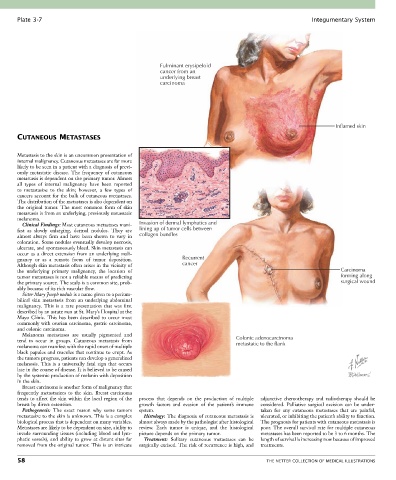
Plate 3-7                                                                                             Integumentary System


                                                        Fulminant erysipeloid
                                                        cancer from an
                                                        underlying breast
                                                        carcinoma


                                                                                                                     Inflamed skin

       CUTANEOUS METASTASES


       Metastasis to the skin is an uncommon presentation of
       internal malignancy. Cutaneous metastases are far more
       likely to be seen in a patient with a diagnosis of previ-
       ously  metastatic  disease.  The  frequency  of  cutaneous
       metastasis is dependent on the primary tumor. Almost
       all  types  of  internal  malignancy  have  been  reported
       to  metastasize  to  the  skin;  however,  a  few  types  of
       cancers account for the bulk of cutaneous metastases.
       The distribution of the metastases is also dependent on
       the  original  tumor.  The  most  common  form  of  skin
       metastasis is from an underlying, previously metastatic
       melanoma.
         Clinical Findings: Most cutaneous metastases mani-  Invasion of dermal lymphatics and
       fest  as  slowly  enlarging,  dermal  nodules.  They  are   lining up of tumor cells between
       almost  always  firm  and  have  been  shown  to  vary  in   collagen bundles
       coloration. Some nodules eventually develop necrosis,
       ulcerate, and spontaneously bleed. Skin metastasis can
       occur  as  a  direct  extension  from  an  underlying  mali-
       gnancy  or  as  a  remote  focus  of  tumor  deposition.   Recurrent
       Although skin metastasis often arises in the vicinity of   cancer
       the  underlying  primary  malignancy,  the  location  of                                                        Carcinoma
       tumor metastases is not a reliable means of predicting                                                          forming along
       the primary source. The scalp is a common site, prob-                                                           surgical wound
       ably because of its rich vascular flow.
         Sister Mary Joseph nodule is a name given to a perium-
       bilical  skin  metastasis  from  an  underlying  abdominal
       malignancy.  This  is  a  rare  presentation  that  was  first
       described by an astute nun at St. Mary’s Hospital at the
       Mayo  Clinic.  This  has  been  described  to  occur  most
       commonly with ovarian carcinoma, gastric carcinoma,
       and colonic carcinoma.
         Melanoma  metastases  are  usually  pigmented  and
       tend  to  occur  in  groups.  Cutaneous  metastasis  from                   Colonic adenocarcinoma
       melanoma can manifest with the rapid onset of multiple                      metastatic to the flank
       black papules and macules that continue to erupt. As
       the tumors progress, patients can develop a generalized
       melanosis.  This  is  a  universally  fatal  sign  that  occurs
       late in the course of disease. It is believed to be caused
       by the systemic production of melanin with deposition
       in the skin.
         Breast carcinoma is another form of malignancy that
       frequently  metastasizes  to  the  skin.  Breast  carcinoma
       tends to affect the skin within the local region of the   process  that  depends  on  the  production  of  multiple   adjunctive  chemotherapy  and  radiotherapy  should  be
       breast by direct extension.               growth  factors  and  evasion  of  the  patient’s  immune   considered.  Palliative  surgical  excision  can  be  under-
         Pathogenesis:  The  exact  reason  why  some  tumors   system.                    taken  for  any  cutaneous  metastases  that  are  painful,
       metastasize to the skin is unknown. This is a complex   Histology: The diagnosis of cutaneous metastasis is   ulcerated, or inhibiting the patient’s ability to function.
       biological process that is dependent on many variables.   almost always made by the pathologist after histological   The prognosis for patients with cutaneous metastasis is
       Metastases are likely to be dependent on size, ability to   review.  Each  tumor  is  unique,  and  the  histological   poor. The overall survival rate for multiple cutaneous
       invade surrounding tissues (including blood and lym-  picture depends on the primary tumor.  metastases has been reported to be 3 to 6 months. The
       phatic vessels), and ability to grow at distant sites far   Treatment:  Solitary  cutaneous  metastases  can  be   length of survival is increasing now because of improved
       removed from the original tumor. This is an intricate   surgically excised. The risk of recurrence is high, and   treatments.

       58                                                                                    THE NETTER COLLECTION OF MEDICAL ILLUSTRATIONS

