


Page 205 - Clinical Application of Mechanical Ventilation
P. 205
Airway Management in Mechanical Ventilation  171


                                                                                 Thumb and Index Finger
                                                                                 Apply Cricoid Pressure
                                                                                   Adam’s Apple


                                                                                                      © Cengage Learning 2014
                                                                                       Thyroid Cartilage


                                                                              Cricoid Cartilage
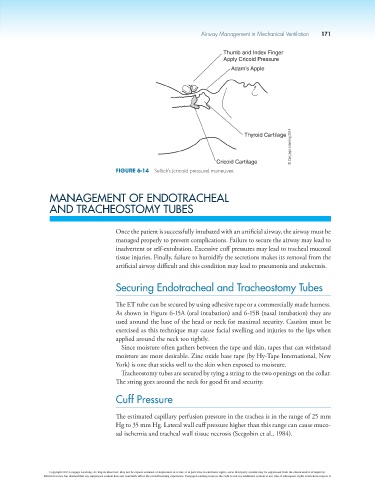
                                             Figure 6-14  Sellick’s (cricoid pressure) maneuver.


                        MANAGEMENT OF ENDOTRACHEAL
                        AND TRACHEOSTOMY TUBES


                                             Once the patient is successfully intubated with an artificial airway, the airway must be
                                             managed properly to prevent complications. Failure to secure the airway may lead to
                                             inadvertent or self-extubation. Excessive cuff pressures may lead to tracheal mucosal
                                             tissue injuries. Finally, failure to humidify the secretions makes its removal from the
                                             artificial airway difficult and this condition may lead to pneumonia and atelectasis.

                                             Securing Endotracheal and Tracheostomy Tubes


                                             The ET tube can be secured by using adhesive tape or a commercially made harness.
                                             As shown in Figure 6-15A (oral intubation) and 6-15B (nasal intubation) they are
                                             used around the base of the head or neck for maximal security. Caution must be
                                             exercised as this technique may cause facial swelling and injuries to the lips when
                                             applied around the neck too tightly.
                                               Since moisture often gathers between the tape and skin, tapes that can withstand
                                             moisture are more desirable. Zinc oxide base tape (by Hy-Tape International, New
                                             York) is one that sticks well to the skin when exposed to moisture.
                                               Tracheostomy tubes are secured by tying a string to the two openings on the collar.
                                             The string goes around the neck for good fit and security.

                                             Cuff Pressure


                                             The estimated capillary perfusion pressure in the trachea is in the range of 25 mm
                                             Hg to 35 mm Hg. Lateral wall cuff pressure higher than this range can cause muco-
                                             sal ischemia and tracheal wall tissue necrosis (Seegobin et al., 1984).


                        Copyright 2013 Cengage Learning. All Rights Reserved. May not be copied, scanned, or duplicated, in whole or in part. Due to electronic rights, some third party content may be suppressed from the eBook and/or eChapter(s).
                      Editorial review has deemed that any suppressed content does not materially affect the overall learning experience. Cengage Learning reserves the right to remove additional content at any time if subsequent rights restrictions require it.

