


Page 206 - Clinical Application of Mechanical Ventilation
P. 206
172    Chapter 6


                                                                                                            © Cengage Learning 2014


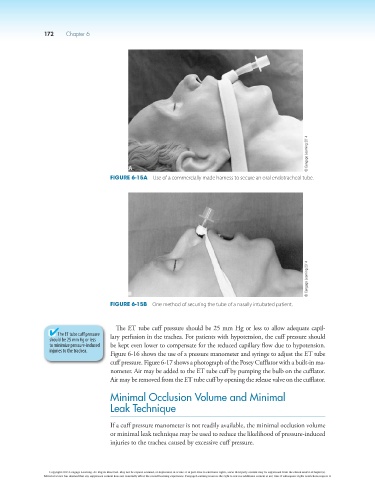
                                            Figure 6-15A  Use of a commercially made harness to secure an oral endotracheal tube.


                                                                                                            © Cengage Learning 2014


                                            Figure 6-15B  One method of securing the tube of a nasally intubated patient.


                                             The ET tube cuff pressure should be 25 mm Hg or less to allow adequate capil-
                          The ET tube cuff pressure   lary perfusion in the trachea. For patients with hypotension, the cuff pressure should
                        should be 25 mm Hg or less
                        to minimize pressure-induced   be kept even lower to compensate for the reduced capillary flow due to hypotension.
                        injuries to the trachea.  Figure 6-16 shows the use of a pressure manometer and syringe to adjust the ET tube
                                            cuff pressure. Figure 6-17 shows a photograph of the Posey Cufflator with a built-in ma-
                                            nometer. Air may be added to the ET tube cuff by pumping the bulb on the cufflator.
                                            Air may be removed from the ET tube cuff by opening the release valve on the cufflator.

                                            Minimal Occlusion Volume and Minimal
                                            Leak Technique


                                            If a cuff pressure manometer is not readily available, the minimal occlusion volume
                                            or minimal leak technique may be used to reduce the likelihood of pressure-induced
                                            injuries to the trachea caused by excessive cuff pressure.


                        Copyright 2013 Cengage Learning. All Rights Reserved. May not be copied, scanned, or duplicated, in whole or in part. Due to electronic rights, some third party content may be suppressed from the eBook and/or eChapter(s).
                      Editorial review has deemed that any suppressed content does not materially affect the overall learning experience. Cengage Learning reserves the right to remove additional content at any time if subsequent rights restrictions require it.

