


Page 314 - Clinical Application of Mechanical Ventilation
P. 314
280    Chapter 10


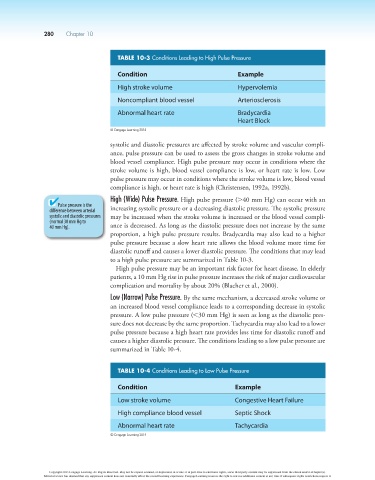
                                              TABLE 10-3 Conditions Leading to High Pulse Pressure

                                              Condition                              Example

                                              High stroke volume                     Hypervolemia

                                              Noncompliant blood vessel              Arteriosclerosis
                                              Abnormal heart rate                    Bradycardia
                                                                                     Heart Block
                                            © Cengage Learning 2014

                                            systolic and diastolic pressures are affected by stroke volume and vascular compli-
                                            ance, pulse pressure can be used to assess the gross changes in stroke volume and
                                            blood vessel compliance. High pulse pressure may occur in conditions where the
                                            stroke volume is high, blood vessel compliance is low, or heart rate is low. Low
                                            pulse pressure may occur in conditions where the stroke volume is low, blood vessel
                                            compliance is high, or heart rate is high (Christensen, 1992a, 1992b).
                                            High (Wide) Pulse Pressure. High pulse pressure (.40 mm Hg) can occur with an
                          Pulse pressure is the
                        difference between arterial   increasing systolic pressure or a decreasing diastolic pressure. The systolic pressure
                        systolic and diastolic pressures   may be increased when the stroke volume is increased or the blood vessel compli-
                        (normal 30 mm Hg to
                        40 mm Hg).          ance is decreased. As long as the diastolic pressure does not increase by the same
                                            proportion, a high pulse pressure results. Bradycardia may also lead to a higher
                                            pulse pressure because a slow heart rate allows the blood volume more time for
                                            diastolic runoff and causes a lower diastolic pressure. The conditions that may lead
                                            to a high pulse pressure are summarized in Table 10-3.
                                             High pulse pressure may be an important risk factor for heart disease. In elderly
                                            patients, a 10 mm Hg rise in pulse pressure increases the risk of major cardiovascular
                                            complication and mortality by about 20% (Blacher et al., 2000).
                                            Low (Narrow) Pulse Pressure. By the same mechanism, a decreased stroke volume or
                                            an increased blood vessel compliance leads to a corresponding decrease in systolic
                                            pressure. A low pulse pressure (,30 mm Hg) is seen as long as the diastolic pres-
                                            sure does not decrease by the same proportion. Tachycardia may also lead to a lower
                                            pulse pressure because a high heart rate provides less time for diastolic runoff and
                                            causes a higher diastolic pressure. The conditions leading to a low pulse pressure are
                                            summarized in Table 10-4.


                                              TABLE 10-4 Conditions Leading to Low Pulse Pressure

                                              Condition                             Example

                                              Low stroke volume                     Congestive Heart Failure

                                              High compliance blood vessel          Septic Shock
                                              Abnormal heart rate                   Tachycardia
                                            © Cengage Learning 2014


                        Copyright 2013 Cengage Learning. All Rights Reserved. May not be copied, scanned, or duplicated, in whole or in part. Due to electronic rights, some third party content may be suppressed from the eBook and/or eChapter(s).
                      Editorial review has deemed that any suppressed content does not materially affect the overall learning experience. Cengage Learning reserves the right to remove additional content at any time if subsequent rights restrictions require it.

