


Page 465 - Clinical Application of Mechanical Ventilation
P. 465
Pharmacotherapy for Mechanical Ventilation  431


                                                                                       MDI

                                                                                                   Ventilator
                                                                                                   Inspiratory
                                                                                                   Tubing


                                                                                                              © Cengage Learning 2014
                                                                                     Spacer


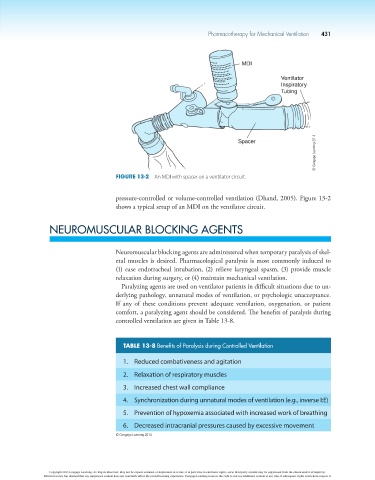
                                             Figure 13-2  An MDI with spacer on a ventilator circuit.


                                             pressure-controlled or volume-controlled ventilation (Dhand, 2005). Figure 13-2
                                             shows a typical setup of an MDI on the ventilator circuit.


                        NEUROMUSCULAR BLOCKING AGENTS


                                             Neuromuscular blocking agents are administered when temporary paralysis of skel-
                                             etal muscles is desired. Pharmacological paralysis is most commonly induced to
                                             (1) ease endotracheal intubation, (2) relieve laryngeal spasm, (3) provide muscle
                                             relaxation during surgery, or (4) maintain mechanical ventilation.
                                               Paralyzing agents are used on ventilator patients in difficult situations due to un-
                                             derlying pathology, unnatural modes of ventilation, or psychologic unacceptance.
                                             If any of these conditions prevent adequate ventilation, oxygenation, or patient
                                             comfort, a paralyzing agent should be considered. The benefits of paralysis during
                                             controlled ventilation are given in Table 13-8.


                                                TABLE 13-8 Benefits of Paralysis during Controlled Ventilation

                                                1.  Reduced combativeness and agitation

                                                2.  Relaxation of respiratory muscles
                                                3.  Increased chest wall compliance

                                                4.  Synchronization during unnatural modes of ventilation (e.g., inverse I:E)

                                                5.  Prevention of hypoxemia associated with increased work of breathing
                                                6.  Decreased intracranial pressures caused by excessive movement
                                             © Cengage Learning 2014


                        Copyright 2013 Cengage Learning. All Rights Reserved. May not be copied, scanned, or duplicated, in whole or in part. Due to electronic rights, some third party content may be suppressed from the eBook and/or eChapter(s).
                      Editorial review has deemed that any suppressed content does not materially affect the overall learning experience. Cengage Learning reserves the right to remove additional content at any time if subsequent rights restrictions require it.

