


Page 67 - Clinical Application of Mechanical Ventilation
P. 67
Effects of Positive Pressure Ventilation  33


                                                   A                            B


                                                                                                              © Cengage Learning 2014


                                                  RT                     LT       RT                   LT


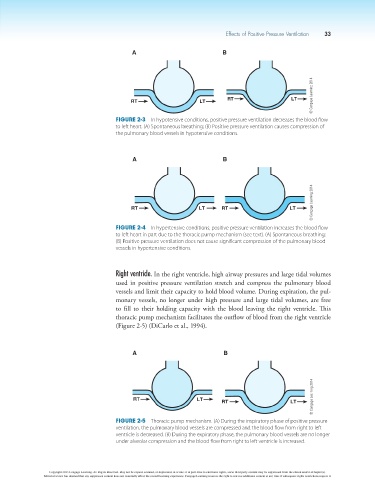
                                             Figure 2-3  In hypotensive conditions, positive pressure ventilation decreases the blood flow
                                             to left heart. (A) Spontaneous breathing; (B) Positive pressure ventilation causes compression of
                                             the pulmonary blood vessels in hypotensive conditions.


                                                   A                            B


                                                                                                              © Cengage Learning 2014


                                                  RT                     LT     RT                    LT


                                             Figure 2-4  In hypertensive conditions, positive pressure ventilation increases the blood flow
                                             to left heart in part due to the thoracic pump mechanism (see text). (A) Spontaneous breathing;
                                             (B) Positive pressure ventilation does not cause significant compression of the pulmonary blood
                                             vessels in hypertensive conditions.


                                             Right ventricle. In the right ventricle, high airway pressures and large tidal volumes
                                             used in positive pressure ventilation stretch and compress the pulmonary blood
                                             vessels and limit their capacity to hold blood volume. During expiration, the pul-
                                             monary vessels, no longer under high pressure and large tidal volumes, are free
                                             to fill to their holding capacity with the blood leaving the right ventricle. This
                                             thoracic pump mechanism facilitates the outflow of blood from the right ventricle
                                             (Figure 2-5) (DiCarlo et al., 1994).


                                                   A                             B


                                                                                                              © Cengage Learning 2014


                                                   RT                   LT      RT                    LT


                                             Figure 2-5  Thoracic pump mechanism. (A) During the inspiratory phase of positive pressure
                                             ventilation, the pulmonary blood vessels are compressed and the blood flow from right to left
                                             ventricle is decreased. (B) During the expiratory phase, the pulmonary blood vessels are no longer
                                             under alveolar compression and the blood flow from right to left ventricle is increased.


                        Copyright 2013 Cengage Learning. All Rights Reserved. May not be copied, scanned, or duplicated, in whole or in part. Due to electronic rights, some third party content may be suppressed from the eBook and/or eChapter(s).
                      Editorial review has deemed that any suppressed content does not materially affect the overall learning experience. Cengage Learning reserves the right to remove additional content at any time if subsequent rights restrictions require it.

