


Page 66 - Clinical Application of Mechanical Ventilation
P. 66
32     Chapter 2


                                                                            Positive
                                                                           Pressure
                                                                           Ventilation


                                                                           Increase
                                                                         in Intrathoracic
                                                                           Pressure

                                                                         Compression
                                                                         of Pulmonary
                                                                            Vessels

                                                                           Reduction
                                                                           in Stroke
                                                                            Volume

                                                                      Reduction of Cardiac
                                                                          Output and
                                                                      Pulmonary Blood Flow


                                                                      (High) V/Q Mismatch


                                                                          Hypoxemia


                                                                           Decrease
                                                                            in O
                                                                                2
                                                                            Content

                                                                           Decrease           © Cengage Learning 2014
                                                                             in O 2
                                                                           Delivery
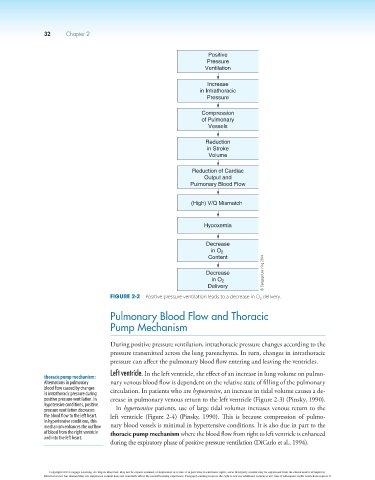
                                            Figure 2-2  Positive pressure ventilation leads to a decrease in O 2  delivery.

                                            Pulmonary Blood Flow and Thoracic

                                            Pump Mechanism


                                            During positive pressure ventilation, intrathoracic pressure changes according to the
                                            pressure transmitted across the lung parenchyma. In turn, changes in intrathoracic
                                            pressure can affect the pulmonary blood flow entering and leaving the ventricles.

                                            Left ventricle. In the left ventricle, the effect of an increase in lung volume on pulmo-
                      thoracic pump mechanism:
                      Alternations in pulmonary   nary venous blood flow is dependent on the relative state of filling of the pulmonary
                      blood flow caused by changes   circulation. In patients who are hypotensive, an increase in tidal volume causes a de-
                      in intrathoracic pressure during
                      positive pressure ventilation. In   crease in pulmonary venous return to the left ventricle (Figure 2-3) (Pinsky, 1990).
                      hypotensive conditions, positive
                      pressure ventilation decreases   In hypertensive patients, use of large tidal volumes increases venous return to the
                      the blood flow to the left heart.   left  ventricle  (Figure  2-4)  (Pinsky,  1990).  This  is  because  compression  of  pulmo-
                      In hypertensive conditions, this
                      mechanism enhances the outflow   nary blood vessels is minimal in hypertensive conditions. It is also due in part to the
                      of blood from the right ventricle   thoracic pump mechanism where the blood flow from right to left ventricle is enhanced
                      and into the left heart.
                                            during the expiratory phase of positive pressure ventilation (DiCarlo et al., 1994).


                        Copyright 2013 Cengage Learning. All Rights Reserved. May not be copied, scanned, or duplicated, in whole or in part. Due to electronic rights, some third party content may be suppressed from the eBook and/or eChapter(s).
                      Editorial review has deemed that any suppressed content does not materially affect the overall learning experience. Cengage Learning reserves the right to remove additional content at any time if subsequent rights restrictions require it.

