


Page 195 - Cardiac Nursing
P. 195
LWBK340-c07_p153-176.qxd  6/29/09  10:14 PM  Page 171 Aptara Inc.


                                                 C HAP TE R  7 / Fluid and Electrolyte and Acid–Base Balance and Imbalance  171

                     Respiratory alkalosis causes increased pH inside myocardial cells  The initial clinical manifestations of metabolic alkalosis are of-
                   and increases cardiac contractility by increasing the calcium sensitiv-  ten milder than those of respiratory alkalosis because bicarbonate
                   ity of myofibrils as shown in classic work by Hunjan et al. 162 The im-  ions cross membranes (and thus alter CSF and intracellular pH)
                   balance also increases sympathetic nervous system activity and circu-  less rapidly than does carbon dioxide. These clinical manifesta-
                   lating catecholamines that may cause cardiac arrhythmias. Although  tions may include light-headedness, paresthesias, muscle cramps,
                   respiratory alkalosis may cause a transient peripheral vasodilation,  carpal and pedal spasms, and cardiac arrhythmias. An initial CNS
                   which decreases peripheral vascular resistance, it is most likely to  excitation is followed by the CNS depression of severe metabolic
                   cause peripheral vasoconstriction and increased peripheral vascular  alkalosis: confusion, lethargy, and coma. The plasma bicarbonate
                   resistance. 163,164  Respiratory alkalosis also causes coronary and cere-  ion concentration is elevated.
                   bral vasoconstriction. 164,165  This latter effect reduces intracranial  Correction of metabolic alkalosis must be accomplished by the
                   pressure and cerebral blood flow and may be the reason for the light-  kidneys because they are the excretory organs for bicarbonate ions.
                   headedness and syncope experienced by some individuals with res-  Compensation for the disorder, therefore, is the role of the lungs.
                   piratory alkalosis. In contrast to its effect on other blood vessels, res-  Because the bicarbonate ion concentration is increased in meta-
                   piratory alkalosis causes pulmonary vasodilation. 147  This effect is  bolic alkalosis, the 20:1 ratio of bicarbonate ion to carbonic acid
                   decreased in conditions with chronically increased pulmonary blood  that creates a normal pH can be restored by increasing the amount
                   flow, such as some congenital heart defects. 166     of carbonic acid in the blood. Thus, the respiratory compensation
                                                                       for metabolic alkalosis is decreased rate and depth of respira-
                   Metabolic Alkalosis                                 tion. 169  This compensatory hypoventilation retains carbonic acid
                   Metabolic alkalosis is caused by relatively too little metabolic acid. It  (carbon dioxide and water) in the body, which tends to normal-
                   can be due to a loss of acid or a gain of base. 139  Acid can be lost  ize the pH. Compensatory hypoventilation, however, is limited
                   through the gastrointestinal tract or in the urine. Acid may also be  by the body’s need for oxygen, so full compensation for meta-
                   shifted into cells and thus “lost” from the blood. Base (bicarbonate  bolic alkalosis is not common. Compensated metabolic alkalosis
                   ions) may be gained from intake of bicarbonate or of substances that  is characterized by an increased Pa CO2 (the sign of the respiratory
                   are converted to bicarbonate in the body. More commonly, base is  compensation), an increased bicarbonate ion concentration (the
                   gained through renal bicarbonate reabsorption. For example, di-  sign of the primary problem), and a pH that is somewhat in-
                   uretic therapy often causes a mild “contraction alkalosis,” metabolic  creased (partially compensated).
                                                           3
                   alkalosis associated with extracellular volume contraction. Contrac-  Metabolic alkalosis causes increased cardiac contractility by
                   tion alkalosis is especially common with loop and thiazide diuretic  increasing calcium sensitivity, although intracellular pH does not
                   therapy for heart failure because a high volume of sodium is deliv-  increase in myocardial cells as it does in respiratory alkalosis. 162
                   ered to the distal tubules by the diuretic in the presence of excessive  Cardiac arrhythmias may occur. Vascular effects are likely to include
                   stimulation of distal tubule mineralocorticoid receptors from the   peripheral vasoconstriction. Other vascular effects of metabolic al-
                   elevated aldosterone that is a compensatory mechanism in heart fail-  kalosis are coronary vasoconstriction, pulmonary vasodilation, and
                   ure. 167,168  In an individual with hypovolemic shock from hemor-  cerebral vasoconstriction with resulting decreased cerebral blood
                   rhage, a metabolic alkalosis may develop if eight or more units of  flow and light-headedness. 147
                   packed red cells or other forms of blood are infused in a short time
                   because the liver metabolizes the citrate in the blood into bicarbon-  Principles of Interpreting Arterial
                   ate. Additional causes of metabolic alkalosis are listed in Table 7-21.
                                                                       Blood Gas Reports
                                                                       Arterial blood gases are used to assess an individual’s acid–base sta-
                                                                       tus. The material presented earlier in this chapter provides the ba-
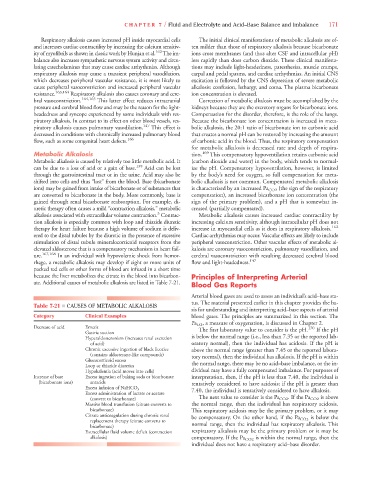
                   Table 7-21 ■ CAUSES OF METABOLIC ALKALOSIS
                                                                       sis for understanding and interpreting acid–base aspects of arterial
                   Category         Clinical Examples                  blood gases. The principles are summarized in this section. The
                                                                       Pa O2 , a measure of oxygenation, is discussed in Chapter 2.
                   Decrease of acid  Emesis                                                                  170
                                    Gastric suction                      The first laboratory value to consider is the pH.  If the pH
                                    Hyperaldosteronism (increases renal excretion  is below the normal range (i.e., less than 7.35 or the reported lab-
                                     of acid)                          oratory normal), then the individual has acidosis. If the pH is
                                    Chronic excessive ingestion of black licorice  above the normal range (greater than 7.45 or the reported labora-
                                      (contains aldosterone-like compounds)  tory normal), then the individual has alkalosis. If the pH is within
                                    Glucocorticoid excess
                                    Loop or thiazide diuretics         the normal range, there may be no acid–base imbalance, or the in-
                                    Hypokalemia (acid moves into cells)  dividual may have a fully compensated imbalance. For purposes of
                   Increase of base   Excess ingestion of baking soda or bicarbonate  interpretation, then, if the pH is less than 7.40, the individual is
                     (bicarbonate ions)  antacids                      tentatively considered to have acidosis; if the pH is greater than
                                    Excess infusion of NaHCO 3         7.40, the individual is tentatively considered to have alkalosis.
                                    Excess administration of lactate or acetate
                                     (convert to bicarbonate)            The next value to consider is the Pa CO2 . If the Pa CO2 is above
                                    Massive blood transfusion (citrate converts to   the normal range, then the individual has respiratory acidosis.
                                     bicarbonate)                      This respiratory acidosis may be the primary problem, or it may
                                    Citrate anticoagulation during chronic renal  be compensatory. On the other hand, if the Pa CO2 is below the
                                     replacement therapy (citrate converts to
                                     bicarbonate)                      normal range, then the individual has respiratory alkalosis. This
                                    Extracellular fluid volume deficit (contraction  respiratory alkalosis may be the primary problem or it may be
                                     alkalosis)                        compensatory. If the Pa CO2 is within the normal range, then the
                                                                       individual does not have a respiratory acid–base disorder.

