


Page 368 - Cardiac Nursing
P. 368
q
                           xd
                          q
                          q
                           xd
                                           g
                                           g
                                            e 3
                                           g
                                            e 3
                                                 p
                                                 p
                                                  t
                                                 p
                                                A
                                              44
                                              44
                                                A
                                              44
                                /09
                                /09
                                   1
                                    1
                                /09
                             6
                              /30
                              /30
                             6
                                   1
                                          Pa
                                        M
                                          Pa
                                          Pa
                                        M
                                   2:1
                                   2:1
                                     6 A
                                     6 A
                                                  t
                      3-3
                                                      c.
                        87.
                      3-3
                        87.
                    33
                    33
                                                     In
                                                      c.
                                                     In
                                                   a
         LWB K34 0-c 16_ p p pp333-387.qxd  6/30/09  12:16 AM  Page 344 Aptara Inc.
                                                   a
                                                  ara
                                                  ara
               0-c
                 16_
            K34
         LWBK340-c16_
         LWB
                  344    P A R T  III / Assessment of Heart Disease
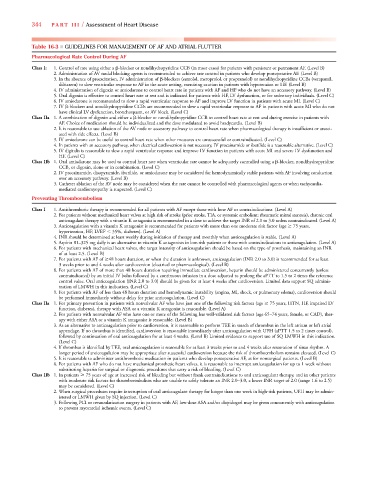
                  Table 16-3 ■ GUIDELINES FOR MANAGEMENT OF AF AND ATRIAL FLUTTER
                  Pharmacological Rate Control During AF
                  Class I:  1. Control of rate using either a  -blocker or nondihydropyridine CCB (in most cases) for patients with persistent or permanent AF. (Level B)
                          2. Administration of AV nodal blocking agents is recommended to achieve rate control in patients who develop postoperative AF. (Level B)
                          3. In the absence of preexcitation, IV administration of  -blockers (esmolol, metoprolol, or propranolol) or nondihydropyridine CCBs (verapamil,
                           diltiazem) to slow ventricular response to AF in the acute setting, exercising caution in patients with hypotension or HF. (Level B)
                          4. IV administration of digoxin or amiodarone to control heart rate in patients with AF and HF who do not have an accessory pathway. (Level B)
                          5. Oral digoxin is effective to control heart rate at rest and is indicated for patients with HF, LV dysfunction, or for sedentary individuals. (Level C)
                          6. IV amiodarone is recommended to slow a rapid ventricular response to AF and improve LV function in patients with acute MI. (Level C)
                          7. IV  -blockers and nondihydropyridine CCBs are recommended to slow a rapid ventricular response to AF in patients with acute MI who do not
                           have clinical LV dysfunction, bronchospasm, or AV block. (Level C)
                  Class IIa 1. A combination of digoxin and either a  -blocker or nondihydropyridine CCB to control heart rate at rest and during exercise in patients with
                           AF. Choice of medication should be individualized and the dose modulated to avoid bradycardia. (Level B)
                          2. It is reasonable to use ablation of the AV node or accessory pathway to control heart rate when pharmacological therapy is insufficient or associ-
                           ated with side effects. (Level B)
                          3. IV amiodarone can be useful to control heart rate when other measures are unsuccessful or contraindicated. (Level C)
                          4. In patients with an accessory pathway, when electrical cardioversion is not necessary, IV procainamide or ibutilide is a reasonable alternative. (Level C)
                          5. IV digitalis is reasonable to slow a rapid ventricular response and improve LV function in patients with acute MI and severe LV dysfunction and
                           HF. (Level C)
                  Class IIb 1. Oral amiodarone may be used to control heart rate when ventricular rate cannot be adequately controlled using a  -blocker, nondihydropyridine
                           CCB, or digoxin, alone or in combination. (Level C)
                          2. IV procainamide, disopyramide, ibutilide, or amiodarone may be considered for hemodynamically stable patients with AF involving conduction
                           over an accessory pathway. (Level B)
                          3. Catheter ablation of the AV node may be considered when the rate cannot be controlled with pharmacological agents or when tachycardia-
                           mediated cardiomyopathy is suspected. (Level C)
                  Preventing Thromboembolism
                  Class I  1. Antithrombotic therapy is recommended for all patients with AF except those with lone AF or contraindications. (Level A)
                          2. For patients without mechanical heart valves at high risk of stroke (prior stroke, TIA, or systemic embolism; rheumatic mitral stenosis), chronic oral
                           anticoagulant therapy with a vitamin K antagonist is recommended in a dose to achieve the target INR of 2.0 to 3.0 unless contraindicated. (Level A)
                          3. Anticoagulation with a vitamin K antagonist is recommended for patients with more than one moderate risk factor (age   75 years,
                           hypertension, HF, LVEF   35%, diabetes). (Level A)
                          4. INR should be determined at least weekly during initiation of therapy and monthly when anticoagulation is stable. (Level A)
                          5. Aspirin 81–325 mg daily is an alternative to vitamin K antagonists in low-risk patients or those with contraindications to anticoagulation. (Level A)
                          6. For patients with mechanical heart valves, the target intensity of anticoagulation should be based on the type of prosthesis, maintaining an INR
                           of at least 2.5. (Level B)
                          7. For patients with AF of  48 hours duration, or when the duration is unknown, anticoagulation (INR 2.0 to 3.0) is recommended for at least
                           3 weeks prior to and 4 weeks after cardioversion (electrical or pharmacological). (Level B)
                          8. For patients with AF of more than 48 hours duration requiring immediate cardioversion, heparin should be administered concurrently (unless
                           contraindicated) by an initial IV bolus followed by a continuous infusion in a dose adjusted to prolong the aPTT to 1.5 to 2 times the reference
                           control value. Oral anticoagulation (INR 2.0 to 3.0) should be given for at least 4 weeks after cardioversion. Limited data support SQ adminis-
                           tration of LMWH in this indication. (Level C)
                          9. For patients with AF of less than 48 hours duration and hemodynamic instability (angina, MI, shock, or pulmonary edema), cardioversion should
                           be performed immediately without delay for prior anticoagulation. (Level C)
                  Class IIa 1. For primary prevention in patients with nonvalvular AF who have just one of the following risk factors (age   75 years, HTN, HF, impaired LV
                           function, diabetes), therapy with ASA or a vitamin K antagonist is reasonable. (Level A)
                          2. For patients with nonvalvular AF who have one or more of the following less well-validated risk factors (age 65–74 years, female, or CAD), ther-
                           apy with either ASA or a vitamin K antagonist is reasonable. (Level B)
                          3. As an alternative to anticoagulation prior to cardioversion, it is reasonable to perform TEE in search of thrombus in the left atrium or left atrial
                           appendage. If no thrombus is identified, cardioversion is reasonable immediately after anticoagulation with UFH (aPTT 1.5 to 2 times control),
                           followed by continuation of oral anticoagulation for at least 4 weeks. (Level B) Limited evidence to support use of SQ LMWH in this indication.
                           (Level C)
                          4. If thrombus is identified by TEE, oral anticoagulation is reasonable for at least 3 weeks prior to and 4 weeks after restoration of sinus rhythm. A
                           longer period of anticoagulation may be appropriate after successful cardioversion because the risk of thromboembolism remains elevated. (Level C)
                          5. It is reasonable to administer antithrombotic medication in patients who develop postoperative AF, as for nonsurgical patients. (Level B)
                          6. For patients with AF who do not have mechanical prosthetic heart valves, it is reasonable to interrupt anticoagulation for up to 1 week without
                           substituting heparin for surgical or diagnostic procedures that carry a risk of bleeding. (Level C)
                  Class IIb 1. In patients   75 years of age at increased risk of bleeding but without frank contraindications to oral anticoagulant therapy, and in other patients
                           with moderate risk factors for thromboembolism who are unable to safely tolerate an INR 2.0–3.0, a lower INR target of 2.0 (range 1.6 to 2.5)
                           may be considered. (Level C)
                          2. When surgical procedures require interruption of oral anticoagulant therapy for longer than one week in high-risk patients, UFH may be admin-
                           istered or LMWH given by SQ injection. (Level C)
                          3. Following PCI or revascularization surgery in patients with AF, low-dose ASA and/or clopidogrel may be given concurrently with anticoagulation
                           to prevent myocardial ischemic events. (Level C)

