


Page 582 - Cardiac Nursing
P. 582
LWBK340-c24_p555-594.qxd  30/06/2009  01:43 PM  Page 558 Aptara


                  558    PA R T  IV / Pathophysiology and Management of Heart Disease

                                                                      cease replicating and dividing early in life. Myocardial insult and
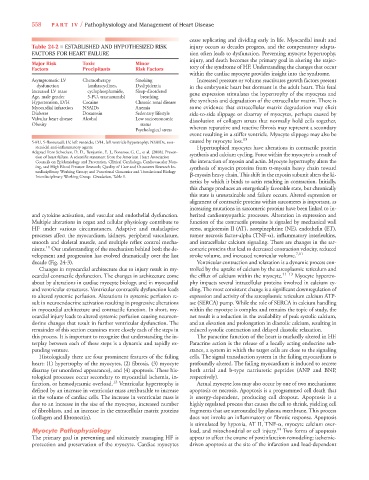
                  Table 24-2 ■ ESTABLISHED AND HYPOTHESIZED RISK      injury occurs as decades progress, and the compensatory adapta-
                  FACTORS FOR HEART FAILURE                           tion often leads to dysfunction. Preventing myocyte hypertrophy,
                                                                      injury, and death becomes the primary goal in altering the trajec-
                  Major Risk       Toxic            Minor
                  Factors          Precipitants     Risk Factors      tory of the syndrome of HF. Understanding the changes that occur
                                                                      within the cardiac myocyte provides insight into the syndrome.
                  Asymptomatic LV   Chemotherapy    Smoking             Increased pressure or volume reactivates growth factors present
                    dysfunction      (anthracyclines,  Dyslipidemia   in the embryonic heart but dormant in the adult heart. This fetal
                  Increased LV mass  cyclophosphamide,  Sleep-disordered
                  Age, male gender   5-FU, trastuzumab)  breathing    gene expression stimulates the hypertrophy of the myocytes and
                  Hypertension, LVH  Cocaine        Chronic renal disease  the synthesis and degradation of the extracellular matrix. There is
                  Myocardial infarction  NSAIDs     Anemia            some evidence that extracellular matrix degradation may elicit
                  Diabetes         Doxazosin        Sedentary lifestyle  side-to-side slippage or disarray of myocytes, perhaps caused by
                  Valvular heart disease  Alcohol   Low socioeconomic  dissolution of collagen struts that normally hold cells together,
                  Obesity                             status
                                                    Psychological stress  whereas reparative and reactive fibrosis may represent a secondary
                                                                      event resulting in a stiffer ventricle. Myocyte slippage may also be
                  5-FU, 5-florouracil; LV, left ventricle; LVH, left ventricle hypertrophy; NSAIDs, non-  caused by myocyte loss. 13
                    steroidal anti-inflammatory agents.                  Hypertrophied myocytes have alterations in contractile protein
                  Adapted from Schocken, D. D., Benjamin, E. J., Fonarow, G. C., et al. [2008]. Preven-
                    tion of heart failure. A scientific statement from the American Heart Association  synthesis and calcium cycling. Force within the myocyte is a result of
                    Councils on Epidemiology and Prevention, Clinical Cardiology, Cardiovascular Nurs-  the interaction of myosin and actin. Myocyte hypertrophy alters the
                    ing, and High Blood Pressure Research; Quality of Care and Outcomes Research In-  synthesis of myocin proteins from  -myosin heavy chain toward
                    terdisciplinary Working Group; and Functional Genomics and Translational Biology
                    Interdisciplinary Working Group. Circulation, Table 1.   -myosin heavy chain. This shift in the myosin subunit alters the ki-
                                                                      netics by which it binds to actin resulting in contraction. Initially,
                                                                      this change produces an energetically favorable state, but chronically
                                                                      this state is unsustainable and failure occurs. Altered expression or
                                                                      alignment of contractile proteins within sarcomeres is important, as
                                                                      increasing mutations in sarcomeric proteins have been linked to in-
                  and cytokine activation, and vascular and endothelial dysfunction.  herited cardiomyopathic processes. Alteration in expression and
                  Multiple alterations in organ and cellular physiology contribute to  function of the contractile proteins is signaled by mechanical wall
                  HF under various circumstances. Adaptive and maladaptive  stress, angiotensin II (AT), norepinephrine (NE), endothelin (ET),
                  processes affect the myocardium, kidneys, peripheral vasculature,  tumor necrosis factor-alpha (TNF- ), inflammatory interleukins,
                  smooth and skeletal muscle, and multiple reflex control mecha-  and intracellular calcium signaling. There are changes in the sar-
                       11
                  nisms. Our understanding of the mechanism behind both the de-  comeric proteins that lead to decreased contraction velocity, reduced
                  velopment and progression has evolved dramatically over the last  stroke volume, and increased ventricular volume. 7,11
                  decade (Fig. 24-3).                                   Ventricular contraction and relaxation is a dynamic process con-
                     Changes in myocardial architecture due to injury result in my-  trolled by the uptake of calcium by the sarcoplasmic reticulum and
                  ocardial contractile dysfunction. The changes in architecture come  the efflux of calcium within the myocyte. 11–13  Myocyte hypertro-
                  about by alterations in cardiac myocyte biology, and in myocardial  phy impacts several intracellular proteins involved in calcium cy-
                  and ventricular structures. Ventricular contractile dysfunction leads  cling. The most consistent change is a significant downregulation of
                  to altered systemic perfusion. Alterations in systemic perfusion re-  expression and activity of the sarcoplasmic reticulum calcium ATP-
                  sult in neuroendocrine activation resulting in progressive alterations  ase (SERCA) pump. While the role of SERCA in calcium handling
                  in myocardial architecture and contractile function. In short, my-  within the myoctye is complex and remains the topic of study, the
                  ocardial injury leads to altered systemic perfusion causing neuroen-  net result is a reduction in the availability of peak systolic calcium,
                  dorine changes that result in further ventricular dysfunction. The  and an elevation and prolongation in diastolic calcium, resulting in
                  remainder of this section examines more closely each of the steps in  reduced systolic contraction and delayed diastolic relaxation.
                  this process. It is important to recognize that understanding the in-  The paracrine function of the heart is markedly altered in HF.
                  terplay between each of these steps is a dynamic and rapidly ex-  Paracrine action is the release of a locally acting endocrine sub-
                  panding venture.                                    stance, a system in which the target cells are close to the signaling
                     Histologically there are four prominent features of the failing  cells. The signal transduction system in the failing myocardium is
                  heart: (1) hypertrophy of the myocytes, (2) fibrosis, (3) myocyte  profoundly altered. The failing myocardium is induced to secrete
                  disarray (or unordered appearance), and (4) apoptosis. These his-  both atrial and b-type natriuretic peptides (ANP and BNP,
                  tological processes occur secondary to myocardial ischemia, in-  respectively).
                  farction, or hemodynamic overload. 12  Ventricular hypertrophy is  Actual myocyte loss may also occur by one of two mechanisms:
                  defined by an increase in ventricular mass attributable to increase  apoptosis or necrosis. Apoptosis is a programmed cell death that
                  in the volume of cardiac cells. The increase in ventricular mass is  is energy-dependent, producing cell dropout. Apoptosis is a
                  due to an increase in the size of the myocytes, increased number  highly regulated process that causes the cell to shrink, yielding cell
                  of fibroblasts, and an increase in the extracellular matrix proteins  fragments that are surrounded by plasma membrane. This process
                  (collagen and fibronectin).                          does not invoke an inflammatory or fibrotic response. Apoptosis
                                                                      is stimulated by hypoxia, AT II, TNF- , myocyte calcium over-
                  Myocyte Pathophysiology                             load, and mitochondrial or cell injury. 14  Two forms of apoptosis
                  The primary goal in preventing and ultimately managing HF is  appear to affect the course of postinfarction remodeling: ischemic-
                  protection and preservation of the myocyte. Cardiac myocytes  driven apoptosis at the site of the infarction and load-dependent

