


Page 632 - Cardiac Nursing
P. 632
LWBK340-c25_p595-622.qxd  06/30/2009  17:45  Page 608 Aptara


                  608    PA R T  IV / Pathophysiology and Management of Heart Disease


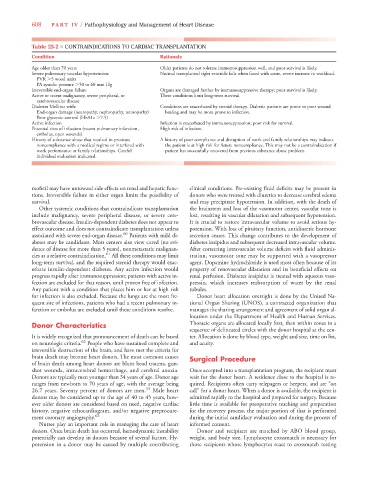
                  Table 25-2 ■ CONTRAINDICATIONS TO CARDIAC TRANSPLANTATION
                  Condition                                 Rationale
                  Age older than 70 years                   Older patients do not tolerate immunosuppression well, and poor survival is likely.
                  Severe pulmonary vascular hypertension:   Normal transplanted right ventricle fails when faced with acute, severe increase in workload.
                    PVR  5 wood units
                    PA systolic pressure  50 to 60 mm Hg
                  Irreversible end-organ failure            Organs are damaged further by immunosuppressive therapy; poor survival is likely.
                  Active or recent malignancy, severe peripheral, or   These conditions limit long-term survival.
                    cerebrovascular disease
                  Diabetes Mellitus with:                   Conditions are exacerbated by steroid therapy. Diabetic patients are prone to poor wound
                    End-organ damage (neuropathy, nephropathy, retinopathy)  healing and may be more prone to infection.
                    Poor glycemic control (HbA1c  7.5)
                  Active infection                          Infection is exacerbated by immunosuppression; poor risk for survival.
                  Potential sites of infection (recent pulmonary infarction,   High risk of infection.
                    embolus, open wounds)
                  History of substance abuse that resulted in previous   A history of poor compliance and disruption of work and family relationships may indicate
                    noncompliance with a medical regime or interfered with   the patient is at high risk for future noncompliance. This may not be a contraindication if
                    work performance or family relationships. Careful   patient has successfully recovered from previous substance abuse problem.
                    individual evaluation indicated.


                  mofetil may have untoward side effects on renal and hepatic func-  clinical conditions. Pre-existing fluid deficits may be present in
                  tions. Irreversible failure in either organ limits the possibility of  donors who were treated with diuretics to decrease cerebral edema
                  survival.                                           and may precipitate hypotension. In addition, with the death of
                     Other systemic conditions that contraindicate transplantation  the brainstem and loss of the vasomotor center, vascular tone is
                  include malignancy, severe peripheral  disease, or severe cere-  lost, resulting in vascular dilatation and subsequent hypotension.
                  brovascular disease. Insulin-dependent diabetes does not appear to  It is crucial to restore intravascular volume to avoid serious hy-
                  effect outcome and does not contraindicate transplantation unless  potension. With loss of pituitary function, antidiuretic hormone
                  associated with severe end-organ disease. 60  Patients with mild di-  secretion ceases. This change contributes to the development of
                  abetes may be candidates. Most centers also view cured (no evi-  diabetes insipidus and subsequent decreased intravascular volume.
                  dence of disease for more than 5 years), nonmetastatic malignan-  After correcting intravascular volume deficits with fluid adminis-
                                           61
                  cies as a relative contraindication. All these conditions may limit  tration, vasomotor tone may be supported with a vasopressor
                  long-term survival, and the required steroid therapy would exac-  agent. Dopamine hydrochloride is used most often because of its
                  erbate insulin-dependent diabetes. Any active infection would  property of renovascular dilatation and its beneficial effects on
                  progress rapidly after immunosuppression; patients with active in-  renal perfusion. Diabetes insipidus is treated with aqueous vaso-
                  fection are excluded for that reason, until proven free of infection.  pressin, which increases reabsorption of water by the renal
                  Any patient with a condition that places him or her at high risk  tubules.
                  for infection is also excluded. Because the lungs are the most fre-  Donor heart allocation oversight is done by the United Na-
                  quent site of infections, patients who had a recent pulmonary in-  tional Organ Sharing (UNOS), a contracted organization that
                  farction or embolus are excluded until these conditions resolve.  manages the sharing arrangement and agreement of solid organ al-
                                                                      location under the Department of Health and Human Services.
                  Donor Characteristics                               Thoracic organs are allocated locally first, then within zones in a
                                                                      sequence of delineated circles with the donor hospital at the cen-
                  It is widely recognized that pronouncement of death can be based  ter. Allocation is done by blood type, weight and size, time on list,
                  on neurologic criteria. 62  People who have sustained complete and  and acuity.
                  irreversible destruction of the brain, and have met the criteria for
                  brain death may become heart donors. The most common causes  Surgical Procedure
                  of brain death among heart donors are blunt head trauma, gun-
                  shot wounds, intracerebral hemorrhage, and cerebral anoxia.  Once accepted into a transplantation program, the recipient must
                  Donors are typically men younger than 34 years of age. Donor age  wait for the donor heart. A residence close to the hospital is re-
                  ranges from newborn to 70 years of age, with the average being  quired. Recipients often carry telepagers or beepers, and are “on
                  26.7 years. Seventy percent of donors are men.  55  Male heart  call” for a donor heart. When a donor is available, the recipient is
                  donors may be considered up to the age of 40 to 45 years, how-  admitted rapidly to the hospital and prepared for surgery. Because
                  ever older donors are considered based on need, negative cardiac  little time is available for preoperative teaching and preparation
                  history, negative echocardiogram, and/or negative preprocure-  for the recovery process, the major portion of that is performed
                  ment coronary angiography. 63                       during the initial candidacy evaluation and during the process of
                     Nurses play an important role in managing the care of heart  informed consent.
                  donors. Once brain death has occurred, hemodynamic instability  Donor and recipient are matched  by ABO  blood group,
                  potentially can develop in donors because of several factors. Hy-  weight, and body size. Lymphocyte crossmatch is necessary for
                  potension in a donor may be caused by multiple contributing  those recipients whose lymphocytes react to crossmatch testing

