


Page 161 - ACCCN's Critical Care Nursing
P. 161
138  P R I N C I P L E S   A N D   P R A C T I C E   O F   C R I T I C A L   C A R E


                        PATIENT EVALUATION           DAY 1     DAY 2    DAY 3     DAY 4    DAY 5
                        Altered level of consciousness* (A-E)
                                                      If A or B do not complete patient evaluation for the period
                        Inattention
                        Disorientation
                        Hallucination – delusion – psychosis
                        Psychomotor agitation or retardation
                        Inappropriate speech or mood
                        Sleep/wake cycle disturbance
                        Symptom fluctuation
                        TOTAL SCORE (0-8)
                                                                                            Score
                         Level of consciousness*: A: no response                            none
                                           B: response to intense and repeated stimulation (loud voice and pain)  none
                                           C: response to mild or moderate stimulation        1
                                           D: normal wakefulness                              0
                                           E: exaggerated response to normal stimulation      1
                        SCORING SYSTEM:
                        The scale is completed based on information collected from each entire 8-hour shift or from the previous 24 hours,
                        Obvious manifestation of an item = 1 point. Nomanifestation of an item or no assessment possible = 0 point.
                        The score of each item is entered in the corresponding empty box and is 0 or 1.
                        1. Altered level of consciousness:
                        A) No response or B) the need for vigorous stimulation in order to obtain any response signified a severe alteration in
                             the level of consciousness precluding evaluation. If there is coma (A) or stupor (B) most of the time period than a
                             dash (-) is entered and there is no further evaluation during that period.
                        C) Drowsiness or requirement of a mild to moderate stimulation for a response implies an altered level of
                             consciousness and scores 1 point.
                        D) Wakefulness or sleeping state that could easily be aroused is considered normal and scores no point.
                        E) Hypervigilance is rated as an abnormal level of consciousness and scores 1 point.
                        2. Inattention: Difficulty in following a conversation or instructions. Easily distracted by external stimuli
                           Difficulty in shifting focuses. Any of these scores 1 point.
                        3. Disorientation: Any obvious mistake in time, place or person scores 1 point.
                        4. Hallucination, delusion or psychosis: The unequivocal clinical manifestation of hallucination or of behaviour
                             probably due to hallucination (e.g, trying to catch a non-existent object) or delusion. Gross impairment in reality
                             testing. Any of these scores 1 point.
                        5. Psychomotor agitation or retardation: Hyperactivity requiring the use of additional sedative drugs or restraints in
                            order to control potential dangerousness (e.g, pulling out IV lines, hitting staff), Hyperactivity or clinically noticeable
                            psychomotor slowing. Any of these scores 1 point.
                        6. Inappropriate speech or mood: Inappropriate, disorganised or incoherent speech. Inappropriate display of emotion
                            related to events or situation. Any of these scores 1 point.
                        7. Sleep/wake cycle disturbance: Sleeping less than 4 hours or waking frequently at night (do not consider wakefulness
                            initiated by medical staff or loud environment). Sleeping during most of the day. Any of these scores 1 point.
                        8. Symptom fluctuation: Fluctuation of the manifestation of any item or symptom over 24 hours (e.g, from one shift to
                            another) scores 1 point.
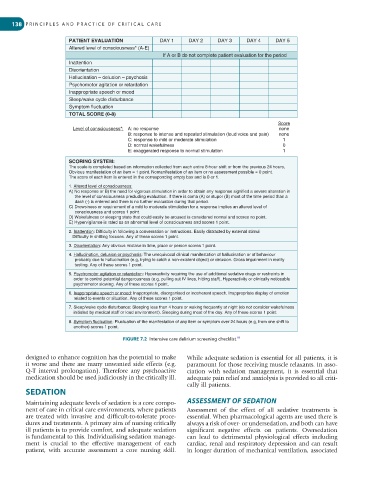
                                         FIGURE 7.2  Intensive care delirium screening checklist. 69


         designed to enhance cognition has the potential to make   While adequate sedation is essential for all patients, it is
         it worse and there are many unwanted side effects (e.g.   paramount for those receiving muscle relaxants. In asso-
         Q-T  interval  prolongation).  Therefore  any  psychoactive   ciation  with  sedation  management,  it  is  essential  that
         medication should be used judiciously in the critically ill.  adequate pain relief and anxiolysis is provided to all criti-
                                                              cally ill patients.
         SEDATION
         Maintaining adequate levels of sedation is a core compo-  ASSESSMENT OF SEDATION
         nent of care in critical care environments, where patients   Assessment  of  the  effect  of  all  sedative  treatments  is
         are  treated  with  invasive  and  difficult-to-tolerate proce-  essential. When pharmacological agents are used there is
         dures and treatments. A primary aim of nursing critically   always a risk of over- or undersedation, and both can have
         ill patients is to provide comfort, and adequate sedation   significant  negative  effects  on  patients.  Oversedation
         is fundamental to this. Individualising sedation manage-  can  lead  to  detrimental  physiological  effects  including
         ment  is  crucial  to  the  effective  management  of  each   cardiac, renal and respiratory depression and can result
         patient,  with  accurate  assessment  a  core  nursing  skill.   in longer duration of mechanical ventilation, associated

