


Page 221 - ACCCN's Critical Care Nursing
P. 221
198  P R I N C I P L E S   A N D   P R A C T I C E   O F   C R I T I C A L   C A R E

                                                                    120        Systole
                                                                  Pressure (mmHg)  110  Dicrotic notch


                                                                    100

                                                                    90
                                                                    80                          Diastole
                                                                                      Time
                                                                                                    58
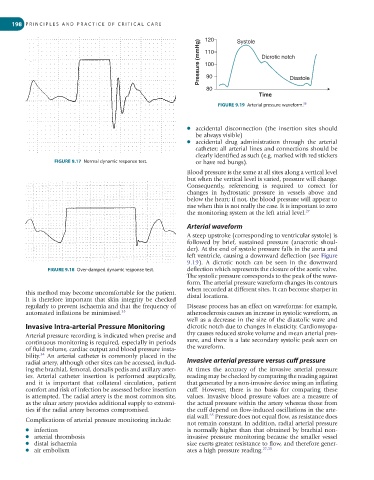
                                                                        FIGURE 9.19  Arterial pressure waveform.


                                                              ●  accidental  disconnection  (the  insertion  sites  should
                                                                 be always visible)
                                                              ●  accidental  drug  administration  through  the  arterial
                                                                 catheter; all arterial lines and connections should be
                                                                 clearly identified as such (e.g. marked with red stickers
                   FIGURE 9.17  Normal dynamic response test.    or have red bungs).
                                                              Blood pressure is the same at all sites along a vertical level
                                                              but when the vertical level is varied, pressure will change.
                                                              Consequently,  referencing  is  required  to  correct  for
                                                              changes  in  hydrostatic  pressure  in  vessels  above  and
                                                              below the heart; if not, the blood pressure will appear to
                                                              rise when this is not really the case. It is important to zero
                                                              the monitoring system at the left atrial level. 27
                                                              Arterial waveform
                                                              A steep upstroke (corresponding to ventricular systole) is
                                                              followed  by  brief,  sustained  pressure  (anacrotic  shoul-
                                                              der). At the end of systole pressure falls in the aorta and
                                                              left ventricle, causing a downward deflection (see Figure
                                                              9.19).  A  dicrotic  notch  can  be  seen  in  the  downward
                 FIGURE 9.18  Over-damped dynamic response test.   deflection which represents the closure of the aortic valve.
                                                              The systolic pressure corresponds to the peak of the wave-
                                                              form. The arterial pressure waveform changes its contours
                                                              when recorded at different sites. It can become sharper in
         this method may become uncomfortable for the patient.   distal locations.
         It  is  therefore  important  that  skin  integrity  be  checked
         regularly to prevent ischaemia and that the frequency of   Disease process has an effect on waveforms: for example,
         automated inflations be minimised. 33                atherosclerosis causes an increase in systolic waveform, as
                                                              well as a decrease in the size of the diastolic wave and
         Invasive Intra-arterial Pressure Monitoring          dicrotic notch due to changes in elasticity. Cardiomyopa-
         Arterial pressure recording is indicated when precise and   thy causes reduced stroke volume and mean arterial pres-
         continuous monitoring is required, especially in periods   sure, and there is a late secondary systolic peak seen on
         of fluid volume, cardiac output and blood pressure insta-  the waveform.
              34
         bility.   An  arterial  catheter  is  commonly  placed  in  the
         radial artery, although other sites can be accessed, includ-  Invasive arterial pressure versus cuff pressure
         ing the brachial, femoral, dorsalis pedis and axillary arter-  At  times  the  accuracy  of  the  invasive  arterial  pressure
         ies.  Arterial  catheter  insertion  is  performed  aseptically,   reading may be checked by comparing the reading against
         and  it  is  important  that  collateral  circulation,  patient   that generated by a non-invasive device using an inflating
         comfort and risk of infection be assessed before insertion   cuff.  However,  there  is  no  basis  for  comparing  these
         is attempted. The radial artery is the most common site,   values. Invasive blood pressure values are a measure of
         as the ulnar artery provides additional supply to extremi-  the actual pressure within the artery whereas those from
         ties if the radial artery becomes compromised.       the cuff depend on flow-induced oscillations in the arte-
                                                                      35
                                                              rial wall.  Pressure does not equal flow, as resistance does
         Complications of arterial pressure monitoring include:
                                                              not remain constant. In addition, radial arterial pressure
         ●  infection                                         is normally higher than that obtained by brachial non-
         ●  arterial thrombosis                               invasive pressure monitoring because the smaller vessel
         ●  distal ischaemia                                  size exerts greater resistance to flow, and therefore gener-
         ●  air embolism                                      ates a high pressure reading. 27,35

