


Page 220 - ACCCN's Critical Care Nursing
P. 220
Cardiovascular Assessment and Monitoring  197

                                                                                           Bedside monitor
                                                             Normal saline and
                                                               pressure bag


                                                                         Macrodrip
                                                                         chamber


                                                                                          Electrical
                                                                                          cable

                                                     High-
                                                     pressure                    Fluid-
                                                     tubing                      filled
                                                                                 tubing
                                                                                 for flush
                                       Invasive
                               45°     catheter
                                                                                  Roller
                                                                                  clamp
                         30°
                                                                                                   Electrical
                                                                                                   connection
                                                                               3-way
                                                                               stopcock
                                                                Disposable     (air reference)
                                                                transducer
                                                            Phlebostatic
                                                            axis              Manual
                                                                              flush
                    0°


                                               Patient with invasive catheter
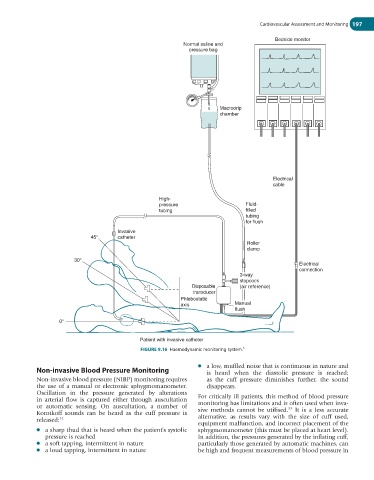
                                               FIGURE 9.16  Haemodynamic monitoring system.   5

                                                                  ●  a low, muffled noise that is continuous in nature and
             Non-invasive Blood Pressure Monitoring                  is  heard  when  the  diastolic  pressure  is  reached;
             Non-invasive blood pressure (NIBP) monitoring requires   as  the  cuff  pressure  diminishes  further,  the  sound
             the use of a manual or electronic sphygmomanometer.     disappears.
             Oscillation  in  the  pressure  generated  by  alterations
             in  arterial  flow  is  captured  either  through  auscultation    For critically ill patients, this method of blood pressure
             or  automatic  sensing.  On  auscultation,  a  number  of     monitoring has limitations and is often used when inva-
                                                                                               33
             Korotkoff  sounds  can  be  heard  as  the  cuff  pressure  is   sive  methods  cannot  be  utilised.   It  is  a  less  accurate
             released: 32                                         alternative,  as  results  vary  with  the  size  of  cuff  used,
                                                                  equipment malfunction, and incorrect placement of the
             ●  a sharp thud that is heard when the patient’s systolic   sphygmomanometer (this must be placed at heart level).
                pressure is reached                               In addition, the pressures generated by the inflating cuff,
             ●  a soft tapping, intermittent in nature            particularly those generated by automatic machines, can
             ●  a loud tapping, intermittent in nature            be high and frequent measurements of blood pressure in

