


Page 272 - Concise Pathology for Exam Preparation ( PDFDrive )
P. 272
11  Disorders of the Heart  257


             Thrombus formation is aided by:
             •	 Thromboxane A 2  and other platelet constituents
             •	 Fibrinogen
             •	 Lipoprotein (a), which inhibits fibrinolysis


             Q. Write briefly on the role of vasoconstriction in the pathogenesis
             of IHD.

             Ans.  Vasoconstriction/spasm may contribute to the pathogenesis of prinzmetal angina as
             well as acute MI. It is induced by:
             •	 Circulating adrenergics
             •	 Release of platelet contents
             •	 Impaired secretion of endothelial cell relaxing factors, eg, nitrous oxide
             •	 Release of mediators from perivascular cells like mast cells


             Q. Write briefly on the role of inflammation in the pathogenesis of IHD?
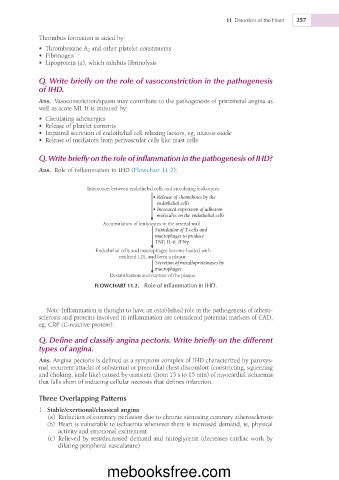
             Ans.  Role of inflammation in IHD (Flowchart 11.2):


                            Interaction between endothelial cells and circulating leukocytes
                                                •  Release of chemokines by the
                                                 endothelial cells
                                                •  Increased expression of adhesion
                                                 molecules on the endothelial cells
                                 Accumulation of leukocytes in the arterial wall
                                                  Stimulation of T cells and
                                                  macrophages to produce
                                                 TNF, IL-6, IFN γ
                              Endothelial cells and macrophages become loaded with
                                      oxidized LDL and form a plaque
                                                  Secretion of metalloproteinases by
                                                 macrophages
                                   Destabilization and rupture of the plaque
                              FLOWCHART 11.2.  Role of inflammation in IHD.


               Note: Inflammation is thought to have an established role in the pathogenesis of athero-
             sclerosis and proteins involved in inflammation are considered potential markers of CAD,
             eg, CRP (C-reactive protein).
             Q. Define and classify angina pectoris. Write briefly on the different
             types of angina.
             Ans. Angina pectoris is defined as a symptom complex of IHD characterized by paroxys-
             mal recurrent attacks of substernal or precordial chest discomfort (constricting, squeezing
             and choking, knife like) caused by transient (from 15 s to 15 min) of myocardial ischaemia
             that falls short of inducing cellular necrosis that defines infarction.

             Three Overlapping Patterns
               1.  Stable/exertional/classical	angina
                 (a)  Reduction of coronary perfusion due to chronic stenosing coronary atherosclerosis
                 (b)  Heart is vulnerable to ischaemia whenever there is increased demand, ie, physical
                   activity and emotional excitement
                 (c)  Relieved by rest/decreased demand and nitroglycerin (decreases cardiac work by
                   dilating peripheral vasculature)


                                  mebooksfree.com

