


Page 303 - Concise Pathology for Exam Preparation ( PDFDrive )
P. 303
288    SECTION II  Diseases of Organ Systems


                       2.  Morphological classification of anaemia
                         (a)  Microcytic hypochromic anaemia (MCV , 80 fL; MCH , 27 pg)
                         (b)  Macrocytic normochromic anaemia (MCV .100 fL; MCH within normal range)
                         (c)  Normocytic normochromic anaemia (MCV 80–100 fL; MCH within normal range)
                     Symptoms of Anaemia

                     Acute:
                        Shortness of breath, organ failure and shock
                     Chronic:
                     	1.	 General	symptoms	(due	to	tissue	hypoxia)
                        •  Fatigue, lassitude, dyspnoea, palpitations, dizziness, headache, syncope, tinnitus and
                          vertigo
                        •  Irritability, sleep disturbances, lack of concentration and paraesthesias
                        •  Anorexia, nausea and bowel disturbances
                        •  Symptoms of cardiac failure
                        •  Amenorrhea and polymenorrhea
                     	2.	 With	haemolysis: Skeletal abnormalities (due to expansion of marrow), growth retarda-
                        tion, jaundice and gallstones
                     	3.	 With	defective	erythropoiesis: Iron overload leading to heart and endocrine failure
                     Signs of Anaemia

                     •  Pallor of skin and mucous membranes, nail beds and palpebral conjunctivae
                     •  Tachycardia with a wide pulse pressure, ejection systolic murmur; best heard over the
                       pulmonary area
                     •  Cardiac dilatation and later, signs of cardiac failure
                     •  Oedema

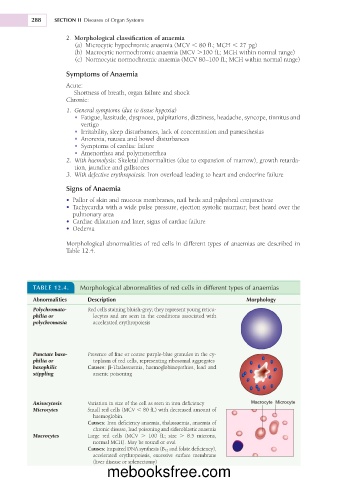
                     Morphological abnormalities of red cells in different types of anaemias are described in
                     Table 12.4.


           TABLE 12.4.    Morphological abnormalities of red cells in different types of anaemias
           Abnormalities    Description                                      Morphology
           Polychromato-    Red cells staining bluish-grey; they represent young reticu-
           philia or          locytes and are seen in the conditions associated with
           polychromasia      accelerated erythropoiesis


           Punctate baso-   Presence of fine or coarse purple-blue granules in the cy-
           philia or          toplasm of red cells, representing ribosomal aggregates
           basophilic       Causes: b-Thalassaemia, haemoglobinopathies, lead and
           stippling          arsenic poisoning


           Anisocytosis     Variation in size of the cell as seen in iron deficiency
           Microcytes       Small red cells (MCV , 80 fL) with decreased amount of
                              haemoglobin.
                            Causes: Iron deficiency anaemia, thalassaemia, anaemia of
                              chronic disease, lead poisoning and sideroblastic anaemia
           Macrocytes       Large  red  cells  (MCV  .  100  fL;  size  .  8.5  microns,
                              normal MCH). May be round or oval
                            Causes: Impaired DNA synthesis (B 12  and folate deficiency),
                              accelerated  erythropoiesis,  excessive  surface  membrane
                              (liver disease or splenectomy)
                                  mebooksfree.com

