


Page 307 - Concise Pathology for Exam Preparation ( PDFDrive )
P. 307
292    SECTION II  Diseases of Organ Systems


                     •  Percentage of total iron-binding protein to which iron is attached is called percentage
                       saturation. Normal percentage saturation is 33%.
                                                             Serum Fe
                                              %age saturation =
                                                               TIBC


                     Iron Studies
                     •  Serum iron levels in a normal adult are 0.7–1.8 mg/L.
                     •  Normal TIBC (total iron-binding capacity) is 2.5–4.0 mg/L.
                     •  Normal ferritin levels are 20–300 mcg/L in males and 15–150 mcg/L in females.
                     •  Ferritin levels are raised in acute leukaemias, inflammation and Hodgkin disease.
                     •  Ferritin levels are decreased in liver disease.

                     Iron Excretion
                     Normal average excretion of iron in urine, faeces and sweat per day is about 0.5–1 mg.
                     Another 0.5–1.0 mg is lost in menses.


                     Q. Outline the aetiopathogenesis, clinical features and blood picture
                     of iron-deficiency anaemia (IDA).
                     Ans.  IDA is the most common type of anaemia met with in clinical practice.

                     Causes
                     •  Pathological blood loss: Peptic ulcer, haemorrhoids, hiatus hernia, carcinoma stomach and
                       colon, chronic aspirin ingestion, oesophageal varices, ulcerative colitis, hookworm infesta-
                       tion, haematuria, repeated epistaxis, haemoptysis and pathological uterine bleeding.
                     •  Increased physiological demand: Growing children and women in reproductive age group
                     •  Inadequate intake
                       •  Nutritional  deficiency:  Poverty,  dietary  fads,  anorexia  and  poor  bioavailability  of
                         nonhaem iron.
                       •  Impaired absorption: Gastroenterostomy, tropical sprue, celiac disease, atransferri-
                         naemia, abnormal transferring function or antibodies to transferring receptors.
                       •  Plummer–Vinson (Paterson–Kelly) syndrome: Syndrome complex of chronic iron
                         deficiency, dysphagia due to postcricoid web and glossitis

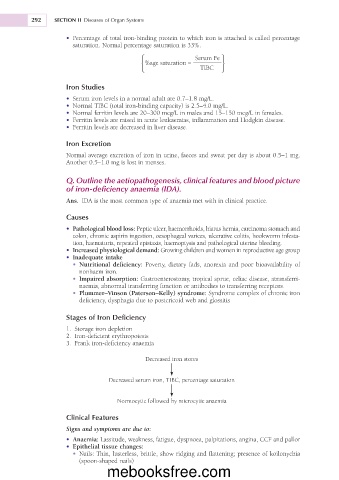
                     Stages of Iron Deficiency
                       1.  Storage iron depletion
                       2.  Iron-deficient erythropoiesis
                       3.  Frank iron-deficiency anaemia

                                              Decreased iron stores


                                   Decreased serum iron, TIBC, percentage saturation


                                     Normocytic followed by microcytic anaemia

                     Clinical Features

                     Signs	and	symptoms	are	due	to:
                     •  Anaemia: Lassitude, weakness, fatigue, dyspnoea, palpitations, angina, CCF and pallor
                     •  Epithelial tissue changes:
                       •  Nails: Thin, lusterless, brittle, show ridging and flattening; presence of koilonychia
                         (spoon-shaped nails)
                                  mebooksfree.com

