


Page 305 - Concise Pathology for Exam Preparation ( PDFDrive )
P. 305
290    SECTION II  Diseases of Organ Systems


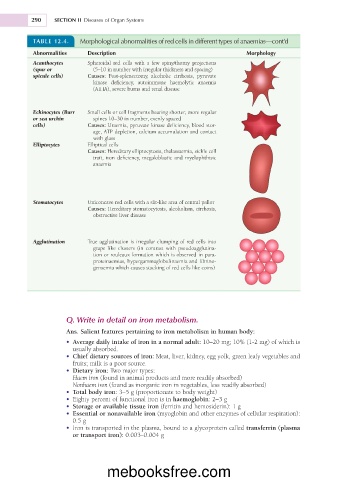
           TABLE 12.4.    Morphological abnormalities of red cells in different types of anaemias—cont’d

           Abnormalities    Description                                      Morphology
           Acanthocytes     Spheroidal  red  cells  with  a  few  spiny/thorny  projections
           (spur or           (5–10 in number with irregular thickness and spacing)
           spicule cells)   Causes:  Post-splenectomy,  alcoholic  cirrhosis,  pyruvate
                              kinase  deficiency,  autoimmune  haemolytic  anaemia
                              (AIHA), severe burns and renal disease


           Echinocytes (Burr   Small cells or cell fragments bearing shorter, more regular
           or sea urchin      spines 10–30 in number, evenly spaced
           cells)           Causes: Uraemia, pyruvate kinase deficiency, blood stor-
                              age, ATP depletion, calcium accumulation and contact
                              with glass
           Elliptocytes     Elliptical cells
                            Causes: Hereditary elliptocytosis, thalassaemia, sickle cell
                              trait, iron deficiency, megaloblastic and myelophthisic
                              anaemia


           Stomatocytes     Uniconcave red cells with a slit-like area of central pallor
                            Causes: Hereditary stomatocytosis, alcoholism, cirrhosis,
                              obstructive liver disease


           Agglutination    True agglutination is irregular clumping of red cells into
                              grape  like  clusters  (in  contrast  with  pseudoagglutina-
                              tion or rouleaux formation which is observed in para-
                              proteinaemias, hypergammaglobulinaemia and fibrino-
                              genaemia which causes stacking of red cells like coins)


                     Q. Write in detail on iron metabolism.
                     Ans. Salient features pertaining to iron metabolism in human body:
                     •  Average daily intake of iron in a normal adult: 10–20 mg; 10% (1-2 mg) of which is
                       usually absorbed.
                     •  Chief dietary sources of iron: Meat, liver, kidney, egg yolk, green leafy vegetables and
                       fruits; milk is a poor source.
                     •  Dietary iron: Two major types:
                       Haem	iron (found in animal products and more readily absorbed)
                       Nonhaem	iron (found as inorganic iron in vegetables, less readily absorbed)
                     •  Total body iron: 3–5 g (proportionate to body weight)
                     •  Eighty percent of functional iron is in haemoglobin: 2–3 g
                     •  Storage or available tissue iron (ferritin and hemosiderin): 1 g
                     •  Essential or nonavailable iron (myoglobin and other enzymes of cellular respiration):
                       0.5 g
                     •  Iron is transported in the plasma, bound to a glycoprotein called transferrin (plasma
                       or transport iron): 0.003–0.004 g


                                  mebooksfree.com

