


Page 485 - Concise Pathology for Exam Preparation ( PDFDrive )
P. 485
470    SECTION II  Diseases of Organ Systems


                                                                            Thickened basement
                                                                            membrane


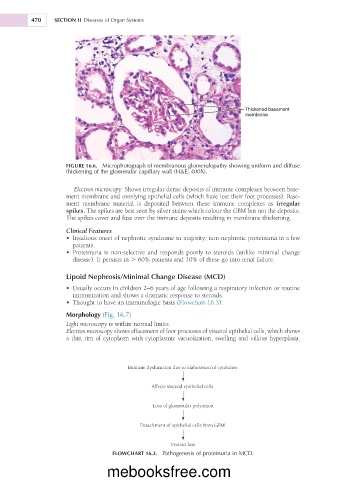
                     FIGURE 16.6.  Microphotograph of membranous glomerulopathy showing uniform and diffuse
                     thickening of the glomerular capillary wall (H&E; 400X).


                        Electron microscopy: Shows irregular dense deposits of immune complexes between base-
                     ment membrane and overlying epithelial cells (which have lost their foot processes). Base-
                     ment  membrane  material  is  deposited  between  these  immune  complexes  as  irregular
                     spikes. The spikes are best seen by silver stains which colour the GBM but not the deposits.
                     The spikes cover and fuse over the immune deposits resulting in membrane thickening.

                     Clinical Features
                     •  Insidious onset of nephrotic syndrome in majority; non-nephrotic proteinuria in a few
                       patients.
                     •  Proteinuria is non-selective and responds poorly to steroids (unlike minimal change
                       disease). It persists in . 60% patients and 10% of these go into renal failure.

                     Lipoid Nephrosis/Minimal Change Disease (MCD)

                     •  Usually occurs in children 2–6 years of age following a respiratory infection or routine
                       immunization and shows a dramatic response to steroids.
                     •  Thought to have an immunologic basis (Flowchart 16.3):

                     Morphology (Fig. 16.7)
                     Light microscopy is within normal limits.
                     Electron microscopy shows effacement of foot processes of visceral epithelial cells, which shows
                     a thin rim of cytoplasm with cytoplasmic vacuolization, swelling and villous hyperplasia.


                                        Immune dysfunction due to elaboration of cytokines


                                                Affects visceral epithelial cells

                                                Loss of glomerular polyanion


                                            Detachment of epithelial cells from GBM


                                                      Protein loss
                                    FLOWCHART 16.3.  Pathogenesis of proteinuria in MCD.


                                  mebooksfree.com

