


Page 1187 - Hematology_ Basic Principles and Practice ( PDFDrive )
P. 1187
Chapter 66  Acute Lymphoblastic Leukemia in Adults  1035


                            B-lymphoblastic leukemia/lymphoma     cytoplasmic vacuolation and need to be distinguished from leukemic
                                                                  presentation of Burkitt lymphoma (BL). Unlike ALL, BL cells are
                                                                  mature B cells with bright surface Ig expression, very strong CD20
                        Flow cytometry including CRLF2, cytogenetics  expression, and no expression of CD34. Diagnosis of BL is confirmed
                                                                  by the presence of an MYC translocation using FISH or cytogenetics.
                                                                  Other entities that require distinction from ALL depend on the age
                                                                  of presentation. In the pediatric age group, ALL blasts need to be
                      Hyper/hypodiploid,  Rearranged BCR-ABL1, MLL,  distinguished  from  hematogones.  Hematogones  are  normal  B-cell
                         other B-ALL      TCF3-PBX1 or ETV6-RUNX1  precursors present within the BM. These are more abundant in child-
                                                                  hood and decrease with increasing age. Hematogones may also be
                                                Not Ph-like       increased during hematopoietic regeneration, particularly after che-
                                                                  motherapy or BM engraftment after stem cell transplant. Hemato-
           FISH for rearrangement:  CRLF2 positive                gones possess a distinct pattern of antigen expression that recapitulates
            ABL1, ABL2, CSF1R,      by flow                       progressive B-cell maturation. This is reflected in progressive loss of
              JAK2, PDGFRB
                                                                  antigens such as CD34, TdT, and CD10 and acquisition of CD20
                                Confirm by FISH                   and surface Ig expression (Fig. 66.6). Other diseases that need to be
                                                                  morphologically  distinguished  from  ALL  include  small  blue  cell
                                                                  tumors, including Ewing sarcoma, neuroblastoma, and medulloblas-
                  Ph-like if rearrangement present                toma. Ancillary studies, including immunophenotyping and cytoge-
                                                                  netics, are helpful in making the distinction. In older adults, entities
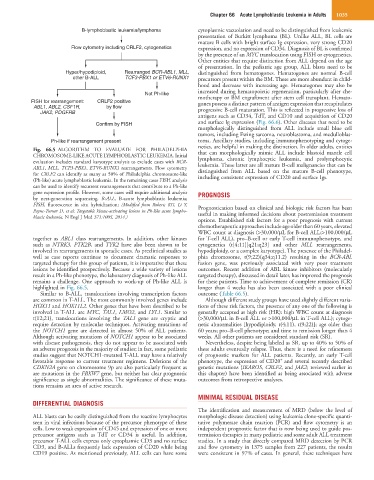
            Fig.  66.5  ALGORITHM  TO  EVALUATE  FOR  PHILADELPHIA   that  can  morphologically  mimic  ALL  include  blastoid  mantle  cell
            CHROMOSOME-LIKE ACUTE LYMPHOBLASTIC LEUKEMIA. Initial   lymphoma,  chronic  lymphocytic  leukemia,  and  prolymphocytic
            evaluation includes standard karyotype analysis to exclude cases with BCR-  leukemia. These latter are all mature B-cell malignancies that can be
            ABL1, MLL, TCF3-PBX1, ETV6-RUNX1 rearrangements. Flow cytometry   distinguished  from  ALL  based  on  the  mature  B-cell  phenotype,
            for CRLF2 can identify as many as 50% of Philadelphia chromosome-like   including consistent expression of CD20 and surface Igs.
            (Ph-like) acute lymphoblastic leukemia. In the remaining cases FISH analysis
            can be used to identify recurrent rearrangements that contribute to a Ph-like
            gene expression profile. However, some cases will require additional analysis   PROGNOSIS
            by  next-generation  sequencing.  B-ALL,  B-acute  lymphoblastic  leukemia;
            FISH,  fluorescence  in  situ  hybridization;  (Modified  from  Roberts  KG,  Li  Y,   Prognostication based on clinical and biologic risk factors has been
            Payne-Turner D, et al: Targetable kinase-activating lesions in Ph-like acute lympho-  useful in making informed decisions about postremission treatment
            blastic leukemia. N Engl J Med 371:1005, 2014.)
                                                                  options. Established risk factors for a poor prognosis with current
                                                                  chemotherapeutic approaches include age older than 60 years, elevated
                                                                  WBC count at diagnosis (>30,000/µL for B-cell ALL;>100,000/µL
            together  as  ABL1  class  rearrangements.  In  addition,  other  kinases   for T-cell ALL), pro–B-cell or early T-cell immunophenotype, and
            such  as  NTRK3,  PTK2B,  and  TYK2  have  also  been  shown  to  be   cytogenetics  (t[4;11][q21;q23]  and  other  MLL  rearrangements,
            involved in rearrangements in sporadic cases. As preclinical studies as   hypodiploidy, or a complex karyotype). The presence of the Philadel-
            well  as  case  reports  continue  to  document  dramatic  responses  to   phia  chromosome,  t(9;22)(q34;q11.2)  resulting  in  the  BCR-ABL
            targeted therapy for this group of patients, it is imperative that these   fusion  gene,  was  previously  associated  with  very  poor  treatment
            lesions be identified prospectively. Because a wide variety of lesions   outcomes.  Recent  addition  of  ABL  kinase  inhibitors  (molecularly
            result in a Ph-like phenotype, the laboratory diagnosis of Ph-like ALL   targeted therapy), discussed in detail later, has improved the prognosis
            remains  a  challenge.  One  approach  to  work-up  of  Ph-like  ALL  is   for these patients. Time to achievement of complete remission (CR)
            highlighted in Fig. 66.5.                             longer  than  4  weeks  has  also  been  associated  with  a  poor  clinical
              Similar to B-ALL, translocations involving transcription factors   outcome (Table 66.5).
            are common in T-ALL. The most commonly involved genes include   Although different study groups have used slightly different varia-
            HOX11 and HOX11L2. Other genes that have been described to be   tions of these risk factors, the presence of any one of the following is
            involved in T-ALL are MYC, TAL1, LMO2, and LYL1. Similar to   generally accepted as high risk (HR): high WBC count at diagnosis
            t(12;21),  translocations  involving  the  TAL1  gene  are  cryptic  and   (>30,000/µL in B-cell ALL or >100,000/µL in T-cell ALL); cytoge-
            require detection by molecular techniques. Activating mutations of   netic abnormalities [hypodiploidy, t(4;11), t(9;22)]; age older than
            the  NOTCH1  gene  are  detected  in  almost  50%  of  ALL  patients.   60 years; pro–B-cell phenotype; and time to remission longer than 4
            Although activating mutations of NOTCH1 appear to be associated   weeks. All other patients are considered standard risk (SR).
            with disease pathogenesis, they do not appear to be associated with   Nevertheless, despite being labeled as SR, up to 40% to 50% of
            an adverse prognosis in the majority of studies; in fact, some pediatric   these adults eventually relapse. Thus, there is a need for refinement
            studies suggest that NOTCH1-mutated T-ALL may have a relatively   of  prognostic  markers  for  ALL  patients.  Recently,  an  early  T-cell
                                                                                             +
            favorable response to current treatment regimens. Deletions of the   phenotype, the expression of CD20  and several recently described
            CDKN2A gene on chromosome 9p are also particularly frequent as   genetic mutations (IKAROS, CRLF2, and JAK2; reviewed earlier in
            are mutations in the FBXW7 gene, but neither has clear prognostic   this chapter) have been identified as being associated with adverse
            significance as single abnormalities. The significance of these muta-  outcomes from retrospective analyses.
            tions remains an area of active research.
                                                                  MINIMAL RESIDUAL DISEASE
            DIFFERENTIAL DIAGNOSIS
                                                                  The  identification  and  measurement  of  MRD  (below  the  level  of
            ALL blasts can be easily distinguished from the reactive lymphocytes   morphologic disease detection) using leukemia clone-specific quanti-
            seen in viral infections because of the precursor phenotype of these   tative  polymerase  chain  reaction  (PCR)  and  flow  cytometry  is  an
            cells. Low to weak expression of CD45 and expression of one or more   independent prognostic factor that is now being used to guide pos-
            precursor  antigens  such  as  TdT  or  CD34  is  useful.  In  addition,   tremission therapies in many pediatric and some adult ALL treatment
            precursor T-ALL cells express only cytoplasmic CD3 and no surface   studies. In a study that directly compared MRD detection by PCR
            CD3, and B-ALLs frequently lack expression of CD20 while being   and flow cytometry in 1375 samples from 227 patients, the results
            CD19 positive. As mentioned previously, ALL cells can have some   were consistent in 97% of cases. In general, these techniques have

