


Page 1192 - Hematology_ Basic Principles and Practice ( PDFDrive )
P. 1192
1040   Part VII  Hematologic Malignancies


                       A                         B                           C
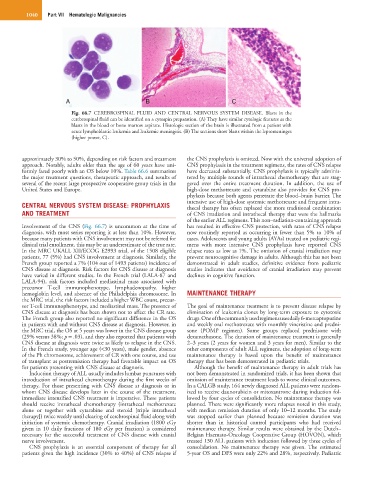
                        Fig.  66.7  CEREBROSPINAL  FLUID  AND  CENTRAL  NERVOUS  SYSTEM  DISEASE.  Blasts  in  the
                        cerebrospinal fluid can be identified on a cytospin preparation. (A) They have similar cytologic features as the
                        blasts in the blood or bone marrow aspirate. Histologic section of the brain is illustrated from a patient with
                        acute lymphoblastic leukemia and leukemic meningitis. (B) The sections show blasts within the leptomeninges
                        (higher power, C).


        approximately 30% to 50%, depending on risk factors and treatment   the CNS prophylaxis is omitted. Now with the universal adoption of
        approach. Notably, adults older than the age of 60 years have uni-  CNS prophylaxis in the treatment regimens, the rates of CNS relapse
        formly fared poorly with an OS below 10%. Table 66.6 summarizes   have decreased substantially. CNS prophylaxis is typically adminis-
        the major treatment questions, therapeutic approach, and results of   tered by multiple rounds of intrathecal chemotherapy that are stag-
        several of the recent large prospective cooperative group trials in the   gered  over  the  entire  treatment  duration.  In  addition,  the  use  of
        United States and Europe.                             high-dose methotrexate and cytarabine also provides for CNS pro-
                                                              phylaxis because both agents penetrate the blood–brain barrier. The
        CENTRAL NERVOUS SYSTEM DISEASE: PROPHYLAXIS           intensive use of high-dose systemic methotrexate and frequent intra-
                                                              thecal therapy has often replaced the more traditional combination
        AND TREATMENT                                         of CNS irradiation and intrathecal therapy that were the hallmarks
                                                              of the earlier ALL regimens. This non–radiation-containing approach
        Involvement of the CNS (Fig. 66.7) is uncommon at the time of   has resulted in effective CNS protection, with rates of CNS relapse
        diagnosis, with most series reporting it at less than 10%. However,   now routinely reported as occurring in fewer than 5% to 10% of
        because many patients with CNS involvement may not be referred for   cases. Adolescents and young adults (AYAs) treated on pediatric regi-
        clinical trial enrollment, this may be an underestimate of the true rate.   mens  with  more  intensive  CNS  prophylaxis  have  reported  CNS
        In the MRC UKALL XII/ECOG E2993 trial, of the 1508 eligible   relapse rates as low as 1%. The omission of cranial irradiation may
        patients, 77 (5%) had CNS involvement at diagnosis. Similarly, the   prevent neurocognitive damage in adults. Although this has not been
        French group reported a 7% (104 out of 1493 patients) incidence of   demonstrated  in  adult  studies,  definitive  evidence  from  pediatric
        CNS disease at diagnosis. Risk factors for CNS disease at diagnosis   studies  indicates  that  avoidance  of  cranial  irradiation  may  prevent
        have varied in different studies. In the French trial (LALA-87 and   declines in cognitive function.
        LALA-94),  risk  factors  included  mediastinal  mass  associated  with
        precursor  T-cell  immunophenotype,  lymphadenopathy,  higher
        hemoglobin level, and absence of the Philadelphia chromosome. In   MAINTENANCE THERAPY
        the MRC trial, the risk factors included a higher WBC count, precur-
        sor T-cell immunophenotype, and mediastinal mass. The presence of   The goal of maintenance treatment is to prevent disease relapse by
        CNS disease at diagnosis has been shown not to affect the CR rate.   elimination of leukemia clones by long-term exposure to cytotoxic
        The French group also reported no significant difference in the OS   drugs. One of the commonly used regimens uses daily 6-mercaptopurine
        in patients with and without CNS disease at diagnosis. However, in   and weekly oral methotrexate with monthly vincristine and predni-
        the MRC trial, the OS at 5 years was lower in the CNS disease group   sone  (POMP  regimen).  Some  groups  replaced  prednisone  with
        (29% versus 38%; p = .03), and they also reported that patients with   dexamethasone. The duration of maintenance treatment is generally
        CNS disease at diagnosis were twice as likely to relapse in the CNS.   2–3 years (2 years for women and 3 years for men). Similar to the
        In the French study, younger age (<30 years), male gender, absence   other components of adult ALL regimens, the adoption of long-term
        of the Ph chromosome, achievement of CR with one course, and use   maintenance  therapy  is  based  upon  the  benefit  of  maintenance
        of transplant as postremission therapy had favorable impact on OS   therapy that has been demonstrated in pediatric trials.
        for patients presenting with CNS disease at diagnosis.   Although the benefit of maintenance therapy in adult trials has
           Induction therapy of ALL usually includes lumbar punctures with   not been demonstrated in randomized trials, it has been shown that
        introduction of intrathecal chemotherapy during the first weeks of   omission of maintenance treatment leads to worse clinical outcomes.
        therapy. For those presenting with CNS disease at diagnosis or in   In a CALGB study, 164 newly diagnosed ALL patients were random-
        whom  CNS  disease  develops  later  in  the  course  of  the  treatment,   ized to receive daunorubicin or mitoxantrone during induction fol-
        immediate intensified CNS treatment is imperative. These patients   lowed by four cycles of consolidation. No maintenance therapy was
        should  receive  intrathecal  chemotherapy  (intrathecal  methotrexate   planned. There were significantly more relapses noted in this study,
        alone  or  together  with  cytarabine  and  steroid  [triple  intrathecal   with median remission duration of only 10–12 months. The study
        therapy]) twice weekly until clearing of cerebrospinal fluid along with   was  stopped  earlier  than  planned  because  remission  duration  was
        initiation of systemic chemotherapy. Cranial irradiation (1800 cGy   shorter  than  in  historical  control  participants  who  had  received
        given  in  10  daily  fractions  of  180  cGy  per  fraction)  is  considered   maintenance therapy. Similar results were obtained by the Dutch–
        necessary for the successful treatment of CNS disease with cranial   Belgian Haemato-Oncology Cooperative Group (HOVON), which
        nerve involvement.                                    treated 130 ALL patients with induction followed by three cycles of
           CNS  prophylaxis  is  an  essential  component  of  therapy  for  all   consolidation.  No  maintenance  therapy  was  given. The  estimated
        patients given the high incidence (30% to 40%) of CNS relapse if   5-year OS and DFS were only 22% and 28%, respectively. Pediatric

