


Page 1188 - Hematology_ Basic Principles and Practice ( PDFDrive )
P. 1188
1036   Part VII  Hematologic Malignancies


                                            +
                                        CD19  gate
                                        hematogones             B-ALL at diagnosis      Minimal residual disease


                                     CD20


         A                                       CD10
                                    B
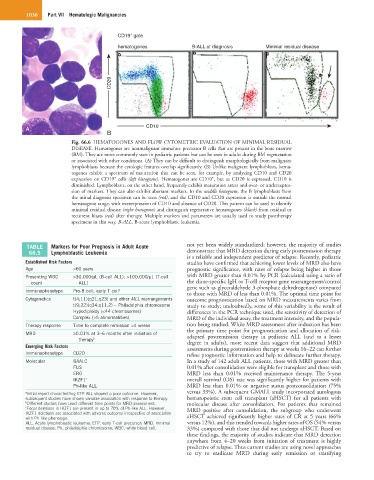
                        Fig. 66.6  HEMATOGONES AND FLOW CYTOMETRIC EVALUATION OF MINIMAL RESIDUAL
                        DISEASE. Hematogones are nonmalignant immature precursor B cells that are present in the bone marrow
                        (BM). They are more commonly seen in pediatric patients but can be seen in adults during BM regeneration
                        or associated with other conditions. (A) They can be difficult to distinguish morphologically from malignant
                        lymphoblasts because the cytologic features overlap significantly. (B) Unlike malignant lymphoblasts, hema-
                        togones  exhibit  a  spectrum  of  maturation  that  can  be  seen,  for  example,  by  analyzing  CD10  and  CD20
                                      +
                                                                      +
                        expression on CD19  cells (left histogram). Hematogones are CD10 , but as CD20 is expressed, CD10 is
                        diminished. Lymphoblasts, on the other hand, frequently exhibit maturation arrest and over- or underexpres-
                        sion of markers. They can also exhibit aberrant markers. In the middle histogram, the B lymphoblasts from
                        the initial diagnosis specimen can be seen (red), and the CD10 and CD20 expression is outside the normal
                        hematogone range, with overexpression of CD10 and absence of CD20. This pattern can be used to identify
                        minimal residual disease (right histogram) and distinguish regenerative hematogones (black) from residual or
                        recurrent blasts (red) after therapy. Multiple markers and parameters are usually used to study posttherapy
                        specimens in this way. B-ALL, B-acute lymphoblastic leukemia.


          TABLE   Markers for Poor Prognosis in Adult Acute   not yet been widely standardized; however, the majority of studies
          66.5    Lymphoblastic Leukemia                      demonstrate that MRD detection during early postremission therapy
                                                              is a reliable and independent predictor of relapse. Recently, pediatric
         Established Risk Factors                             studies have confirmed that achieving lower levels of MRD also have
         Age             >60 years                            prognostic significance, with rates of relapse being higher in those
         Presenting WBC   >30,000/µL (B-cell ALL); >100,000/µL (T-cell   with MRD greater than 0.01% by PCR (calculated using a ratio of
           count           ALL)                               the clone-specific IgH or T-cell receptor gene rearrangement/control
                                                              gene such as glyceraldehyde 3-phosphate dehydrogenase) compared
         Immunophenotype  Pro-B cell; early T cell a
                                                              to those with MRD of less than 0.01%. The optimal time point for
         Cytogenetics    t(4;11)(q21;q23) and other MLL rearrangements  outcome prognostication based on MRD measurements varies from
                         t(9;22)(q34;q11.2) – Philadelphia chromosome  study to study; undoubtedly, some of this variability is the result of
                         Hypodiploidy (<44 chromosomes)       differences in the PCR technique used, the sensitivity of detection of
                         Complex (>5 abnormalities)           MRD of the individual assay, the treatment intensity, and the popula-
         Therapy response  Time to complete remission >4 weeks  tion being studied. While MRD assessment after induction has been
                                                              the primary time point for prognostication and allocation of risk-
         MRD             ≥0.01% at 3–6 months after initiation of   adapted  postremission  therapy  in  pediatric  ALL  (and  to  a  lesser
                           therapy b                          degree  in  adults),  more  recent  data  suggest  that  additional  MRD
         Emerging Risk Factors                                assessments during postremission therapy at weeks 16–22 can further
         Immunophenotype  CD20                                refine prognostic information and help to delineate further therapy.
         Molecular       BAALC                                In a study of 142 adult ALL patients, those with MRD greater than
                         FUS                                  0.01% after consolidation were eligible for transplant and those with
                         ERG                                  MRD  less  than  0.01%  received  maintenance  therapy. The  5-year
                         IKZF1 c                              overall survival (OS) rate was significantly higher for patients with
                         Ph-like ALL                          MRD  less  than  0.01%  or  negative  status  postconsolidation  (75%
         a Initial report characterizing ETP ALL showed a poor outcome. However,   versus 33%). A subsequent GMALL study incorporated autologous
         subsequent studies have shown variable association with response to therapy.  hematopoietic  stem  cell  transplant  (aHSCT)  for  all  patients  with
         b Different studies have used different time points for MRD assessment.  molecular  disease  after  consolidation.  For  patients  that  remained
         c Focal deletions in IKZF1 are present in up to 70% of Ph-like ALL. However,   MRD  positive  after  consolidation,  the  subgroup  who  underwent
         IKZF1 deletions are associated with adverse outcome irrespective of association   aHSCT achieved significantly higher rates of CR at 5 years (66%
         with Ph-like phenotype.
         ALL, Acute lymphoblastic leukemia; ETP, early T-cell precursor; MRD, minimal   versus 12%), and this trended towards higher rates of OS (54% versus
         residual disease; Ph, philadelphia chromosome; WBC, white blood cell.  33%) compared with those that did not undergo aHSCT. Based on
                                                              these findings, the majority of studies indicate that MRD detection
                                                              anywhere  from  4–20  weeks  from  initiation  of  treatment  is  highly
                                                              predictive of relapse. Thus current studies are using novel approaches
                                                              to  try  to  eradicate  MRD  during  early  remission  or  stratifying

