


Page 2016 - Hematology_ Basic Principles and Practice ( PDFDrive )
P. 2016
Chapter 118  Hemapheresis  1787


                                                                  pretransplant plasmapheresis, immunosuppressive medications, and
                                            Cerebrosides          low-dose  cytomegalovirus  immune  globulin  effectively  reduces
                                            Dihexosylceramides    donor-specific  antibody  and  isoagglutinin  titers  with  and  without
                                            Trihexosyceramides
                                            Globosides            posttransplant splenectomy and anti-CD20 treatment. The strength
                                                                  of donor-specific antibodies is also important and can be determined
                        Plasma             Plasma                 by titration, but greater sensitivity and specificity may be obtained
                       exchange           exchange                using  Luminex  flow-bead  technology.  Patients  with  strong  HLA
             Nanomole/mL                                          likely to have acute rejection; however, the introduction of peritrans-
                                                                  antibodies  have  increased  mean  bead  fluorescence  and  were  more
                                                                                                                23
                                                                  plantation apheresis reduced acute rejection from 66% to 7%.
                                                                    Plasma exchange has also been used to treat patients with focal
                                                                  segmental glomerulosclerosis, both for primary disease refractory to
                                                                  standard immunosuppressive therapy and for treatment of patients
                                                                  with recurrent disease after renal transplantation.
                                                                    Two  immunoadsorption  columns  have  been  approved  in  the
                                                                  United States for removal of autoantibodies to factor VIII or factor
                                                                  IX  (Immunosorba  staphylococcal  protein  A–agarose  column)  and
                                                                  treatment of ITP and rheumatoid arthritis (Prosorba staphylococcal
                                                                  protein  A–silica  column).  Several  case  series  describe  the  use  of
                                                                  immunoadsorption  for  patients  with  immune  inhibitors  to  factor
                            0   2     4    6    8    10   12      VIII or factor IX. A phase III, multicenter, sham-controlled random-
                                          Days                    ized study of staphylococcal protein A column immunoadsorption
                                                                  shows a significant increase in clinical response in adult patients with
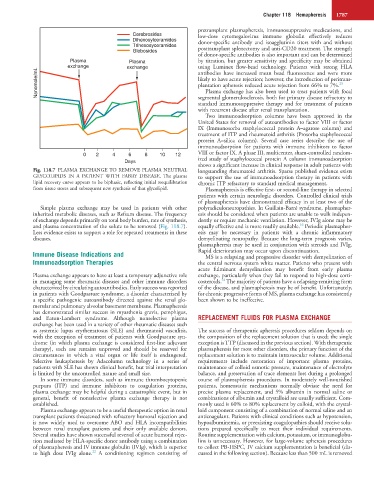
            Fig. 118.7  PLASMA EXCHANGE TO REMOVE PLASMA NEUTRAL   longstanding rheumatoid arthritis. Sparse published evidence exists
            GLYCOLIPIDS  IN  A  PATIENT  WITH  FABRY  DISEASE. The  plasma   to support the use of immunoadsorption therapy in patients with
            lipid recovery curve appears to be biphasic, reflecting initial reequilibration   chronic ITP refractory to standard medical management.
            from tissue stores and subsequent new synthesis of that glycolipid.   Plasmapheresis is effective first- or second-line therapy in selected
                                                                  patients with certain neurologic disorders. Controlled clinical trials
                                                                  of plasmapheresis have demonstrated efficacy in at least two of the
              Simple  plasma  exchange  may  be  used  in  patients  with  other   polyradiculoneuropathies. In Guillain-Barré syndrome, plasmapher-
            inherited metabolic diseases, such as Refsum disease. The frequency   esis should be considered when patients are unable to walk indepen-
            of exchange depends primarily on total body burden, rate of synthesis,   dently or require mechanic ventilation. However, IVIg alone may be
                                                                                                   16
            and plasma concentration of the solute to be removed (Fig. 118.7).   equally effective and is more readily available.  Periodic plasmapher-
            Less evidence exists to support a role for repeated treatments in these   esis  may  be  necessary  in  patients  with  a  chronic  inflammatory
            diseases.                                             demyelinating neuropathy. Because the long-term prognosis varies,
                                                                  plasmapheresis may be used in conjunction with steroids and IVIg.
            Immune Disease Indications and                        Rapid deterioration may occur upon discontinuation.
                                                                    MS is a relapsing and progressive disorder with demyelination of
            Immunoadsorption Therapies                            the central nervous system white matter. Patients who present with
                                                                  acute  fulminant  demyelination  may  benefit  from  early  plasma
            Plasma exchange appears to have at least a temporary adjunctive role   exchange, particularly when they fail to respond to high-dose corti-
                                                                          24
            in managing some rheumatic diseases and other immune disorders   costeroids.  The majority of patients have a relapsing-remitting form
            characterized by circulating autoantibodies. Early success was reported   of the disease, and plasmapheresis may be of benefit. Unfortunately,
            in patients with Goodpasture syndrome, a disorder characterized by   for chronic progressive forms of MS, plasma exchange has consistently
            a  specific  pathogenic  autoantibody  directed  against  the  renal  glo-  been shown to be ineffective.
            merular and pulmonary alveolar basement membrane. Plasmapheresis
            has demonstrated similar success in myasthenia gravis, pemphigus,
            and  Eaton-Lambert  syndrome.  Although  nonselective  plasma   REPLACEMENT FLUIDS FOR PLASMA EXCHANGE
            exchange has been used in a variety of other rheumatic diseases such
            as  systemic  lupus  erythematosus  (SLE)  and  rheumatoid  vasculitis,   The success of therapeutic apheresis procedures seldom depends on
            with the exception of treatment of patients with Goodpasture syn-  the composition of the replacement solution that is used; the single
            drome (in which plasma exchange is considered first-line adjuvant   exception is TTP (discussed in the previous section). With therapeutic
            therapy),  such  use  remains  unproved  and  should  be  reserved  for   plasmapheresis for most other disorders, the primary function of the
            circumstances  in  which  a  vital  organ  or  life  itself  is  endangered.   replacement solution is to maintain intravascular volume. Additional
            Selective  leukapheresis  by  Adacolumn  technology  in  a  series  of   requirements  include  restoration  of  important  plasma  proteins,
            patients with SLE has shown clinical benefit, but trial interpretation   maintenance of colloid osmotic pressure, maintenance of electrolyte
            is limited by the uncontrolled nature and small size.  balance, and preservation of trace elements lost during a prolonged
              In some immune disorders, such as immune thrombocytopenic   course of plasmapheresis procedures. In moderately well-nourished
            purpura  (ITP)  and  immune  inhibitors  to  coagulation  proteins,   patients,  homeostatic  mechanisms  normally  obviate  the  need  for
            plasma exchange may be helpful during a catastrophic event, but in   precise  plasma  replacement,  and  5%  albumin  in  normal  saline  or
            general,  benefit  of  nonselective  plasma  exchange  therapy  is  not   combinations of albumin and crystalloid are usually sufficient. Com-
            established.                                          monly used is 60% to 80% replacement by colloid, with the crystal-
              Plasma exchange appears to be a useful therapeutic option in renal   loid component consisting of a combination of normal saline and an
            transplant patients threatened with refractory humoral rejection and   anticoagulant. Patients with clinical conditions such as hypotension,
            is  now  widely  used  to  overcome  ABO  and  HLA  incompatibilities   hypoalbuminemia, or preexisting coagulopathies should receive solu-
            between  renal  transplant  patients  and  their  only  available  donors.   tions  prepared  specifically  to  meet  their  individual  requirements.
            Several studies have shown successful reversal of acute humoral rejec-  Routine supplementation with calcium, potassium, or immunoglobu-
            tion mediated by HLA-specific donor antibody using a combination   lins is unnecessary. However, for large-volume apheresis procedures
            of plasmapheresis and IV immune globulin (IVIg), which is superior   to collect PB-HSPC, IV calcium supplementation is beneficial (dis-
                               22
            to  high  dose  IVIg  alone.   A  conditioning  regimen  consisting  of   cussed in the following section). Because less than 500 mL is removed

