


Page 2129 - Hematology_ Basic Principles and Practice ( PDFDrive )
P. 2129
1890   Part XII  Hemostasis and Thrombosis


                       A
                         Cell-bound cofactors
                         Thrombomodulin               Chondroitin sulfate
                                                          adducts
                            Lectin
                         6 homology 149      227        462  s
                           domain              EGF domains
                                               1 2 3 4 5 6                                   COOH


                                       Extracellular            Transmembrane   Cytoplasmic
                         1                                   499            521            557

                         Tissue Factor
                             49  57
                             s   s

                                                                              COOH

                                        s   s
                                       186 209
                                Extracellular    Transmembrane   Cytoplasmic
                         1                    220            242            263
                       B
                         Soluble plasma procofactors
                                                       Factor VIII

                       NH 2      A 1         A 2                     A 3      C 1    C 2    COOH
                                                          B


                                                        Factor V

                       NH 2      A 1         A 2                     A 3      C 1    C 2    COOH
                                                          B
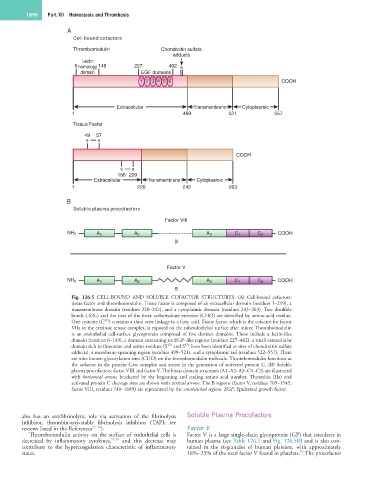
                        Fig.  126.5  CELL-BOUND  AND  SOLUBLE  COFACTOR  STRUCTURES.  (A)  Cell-bound  cofactors:
                        tissue factor and thrombomodulin. Tissue factor is composed of an extracellular domain (residues 1–219), a
                        transmembrane domain (residues 220–242), and a cytoplasmic domain (residues 243–263). Two disulfide
                        bonds (-S-S-) and the sites of the three carbohydrate moieties (CHO) are identified by amino acid residue.
                        One cysteine (C ) contains a thiol ester linkage to a fatty acid. Tissue factor, which is the cofactor for factor
                                   245
                        VIIa in the extrinsic tenase complex, is exposed on the subendothelial surface after injury. Thrombomodulin
                        is  an  endothelial  cell-surface  glycoprotein  composed  of  five  distinct  domains. These  include  a  lectin-like
                        domain (residues 6–149), a domain containing six EGF–like regions (residues 227–462), a small extracellular
                                                             474
                                                        472
                        domain rich in threonine and serine residues (S  and S  have been identified as sites of chondroitin sulfate
                        adducts), a membrane-spanning region (residues 499–521), and a cytoplasmic tail (residues 522–557). There
                        are nine known glycosylation sites (CHO) on the thrombomodulin molecule. Thrombomodulin functions as
                        the cofactor in the protein Case complex and assists in the generation of activated protein C. (B) Soluble
                        plasma procofactors: factor VIII and factor V. The linear domain structures (A1–A2–A3–C1–C2) are illustrated
                        with  horizontal  arrows  bracketed  by  the  beginning  and  ending  amino  acid  number. Thrombin  (IIa)  and
                        activated protein C cleavage sites are shown with vertical arrows. The B regions (factor V, residues 709–1545;
                        factor VIII, residues 740–1689) are represented by the crosshatched regions. EGF, Epidermal growth factor.


        also  has  an  antifibrinolytic  role  via  activation  of  the  fibrinolysis   Soluble Plasma Procofactors
        inhibitor,  thrombin-activatable  fibrinolysis  inhibitor  (TAFI;  see
        reviews listed in the References 53–56 ).             Factor V
           Thrombomodulin  activity  on  the  surface  of  endothelial  cells  is   Factor V is a large single-chain glycoprotein (GP) that circulates in
        decreased  by  inflammatory  cytokines, 57,58   and  this  decrease  may   human plasma (see Table 126.1 and Fig. 126.5B) and is also con-
        contribute  to  the  hypercoagulation  characteristic  of  inflammatory   tained  in  the  α-granules  of  human  platelets,  with  approximately
                                                                                                   59
        states.                                               18%–25% of the total factor V found in platelets.  The procofactor

