


Page 2132 - Hematology_ Basic Principles and Practice ( PDFDrive )
P. 2132
Chapter 126  Molecular Basis of Blood Coagulation  1893


                          Tissue factor pathway inhibitor
                                      FVIIa           FXa                          Heparin
                                     binding        binding                         binding

                          NH 2       Kunitz 1       Kunitz 2        Kunitz 3                     COOH
                                                                                  Cell-binding
                                                                                    domain
                          Antithrombin

                                     Heparin                             Serine protease
                                     binding                               target site

                          NH 2                    CHO domain                                     COOH
                                    S       S                      S             S
                                  S                   S

                                                                    Heparin      Serine protease
                          Heparin cofactor II                       binding        target site

                          NH 2      Hirudin like – Acidic region                                 COOH

                          Protein C inhibitor
                                        Serine protease
                                          target site


                          NH 2                                COOH
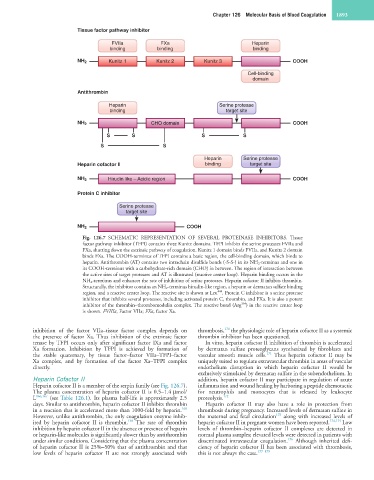
                            Fig.  126.7  SCHEMATIC  REPRESENTATION  OF  SEVERAL  PROTEINASE  INHIBITORS.  Tissue
                            factor pathway inhibitor (TFPI) contains three Kunitz domains. TFPI inhibits the serine proteases FVIIa and
                            FXa, shutting down the extrinsic pathway of coagulation. Kunitz 1 domain binds FVIIa, and Kunitz 2 domain
                            binds FXa. The COOH-terminus of TFPI contains a basic region, the cell-binding domain, which binds to
                            heparin. Antithrombin (AT) contains two intrachain disulfide bonds (-S-S-) in its NH 2-terminus and one in
                            its COOH-terminus with a carbohydrate-rich domain (CHO) in between. The region of interaction between
                            the active sites of target proteases and AT is illustrated (reactive center loop). Heparin binding occurs in the
                            NH 2-terminus and enhances the rate of inhibition of serine proteases. Heparin cofactor II inhibits thrombin.
                            Structurally, the inhibitor contains an NH 2 -terminus hirudin-like region, a heparin or dermatan sulfate binding
                                                                        444
                            region, and a reactive center loop. The reactive site is shown at Leu . Protein C inhibitor is a serine protease
                            inhibitor that inhibits several proteases, including activated protein C, thrombin, and FXa. It is also a potent
                                                                                354
                            inhibitor of the thrombin–thrombomodulin complex. The reactive bond (Arg ) in the reactive center loop
                            is shown. FVIIIa, Factor VIIa; FXa, factor Xa.

                                                                          170
            inhibition  of  the  factor  VIIa–tissue  factor  complex  depends  on   thrombosis,  the physiologic role of heparin cofactor II as a systemic
            the  presence  of  factor  Xa.  Thus  inhibition  of  the  extrinsic  factor   thrombin inhibitor has been questioned.
            tenase  by TFPI  occurs  only  after  significant  factor  IXa  and  factor   In vitro, heparin cofactor II inhibition of thrombin is accelerated
            Xa  formation.  Inhibition  by  TFPI  is  achieved  by  formation  of   by  dermatan  sulfate  proteoglycans  synthesized  by  fibroblasts  and
                                                                                        171
            the  stable  quaternary,  by  tissue  factor–factor  VIIa–TFPI–factor   vascular  smooth  muscle  cells.  Thus  heparin  cofactor  II  may  be
            Xa  complex,  and  by  formation  of  the  factor  Xa–TFPI  complex     uniquely suited to regulate extravascular thrombin in areas of vascular
            directly.                                             endothelium  disruption  in  which  heparin  cofactor  II  would  be
                                                                  exclusively stimulated by dermatan sulfate in the subendothelium. In
            Heparin Cofactor II                                   addition, heparin cofactor II may participate in regulation of acute
            Heparin cofactor II is a member of the serpin family (see Fig. 126.7).   inflammation and wound healing by harboring a peptide chemotactic
            The plasma concentration of heparin cofactor II is 0.5–1.4 µmol/  for  neutrophils  and  monocytes  that  is  released  by  leukocyte
            L 166,167   (see Table  126.1).  Its  plasma  half-life  is  approximately  2.5   proteolysis. 172
            days. Similar to antithrombin, heparin cofactor II inhibits thrombin   Heparin  cofactor  II  may  also  have  a  role  in  protection  from
                                                            168
            in a reaction that is accelerated more than 1000-fold by heparin.    thrombosis during pregnancy. Increased levels of dermatan sulfate in
                                                                                           173
            However, unlike antithrombin, the only coagulation enzyme inhib-  the  maternal  and  fetal  circulation   along  with  increased  levels  of
                                           169
            ited  by  heparin  cofactor  II  is  thrombin.   The  rate  of  thrombin   heparin cofactor II in pregnant women have been reported. 174,175  Low
            inhibition by heparin cofactor II in the absence or presence of heparin   levels  of  thrombin–heparin  cofactor  II  complexes  are  detected  in
            or heparin-like molecules is significantly slower than by antithrombin   normal plasma samples; elevated levels were detected in patients with
                                                                                               176
            under similar conditions. Considering that the plasma concentration   disseminated  intravascular  coagulation.   Although  inherited  defi-
            of heparin cofactor II is 25%–50% that of antithrombin and that   ciency of heparin cofactor II has been associated with thrombosis,
            low  levels  of  heparin  cofactor  II  are  not  strongly  associated  with   this is not always the case. 177–179

