


Page 2131 - Hematology_ Basic Principles and Practice ( PDFDrive )
P. 2131
1892   Part XII  Hemostasis and Thrombosis


                                                                         Kallikrein
                 Factor XII

                 NH 2  Fibronectin II  EGF1  Fibronectin I  EGF2  K   Catalytic domain  COOH
                                                                      S           S


                 Prekallikrein                     R371 – I372

                 NH 2   Apple 1  Apple 2  Apple 3  Apple 4  Catalytic domain  COOH
                                                   S        S

                 Kininogen         L362 – R363       R371 – S372


                 NH 2    D1   D2   D3          D4                 D5                   D6           COOH
                                            “Bradykinin”  “Surface-binding domain”  “PK and FXI binding”
                 1      S                                                                      S
                                                                              HMW
                                                         1                  Light chain              254
                       LMW and HMW
                 1                     362               1    LMW    37
                        Heavy chain
                 Factor XI
                                                  R369 – I370

                 NH 2   Apple 1  Apple 2  Apple 3  Apple 4  Catalytic domain  COOH
                                                   S        S                   2
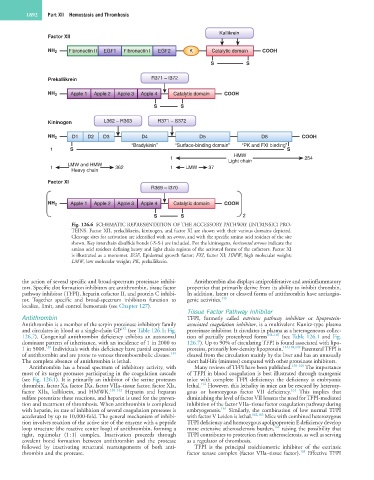
                        Fig. 126.6  SCHEMATIC REPRESENTATION OF THE ACCESSORY PATHWAY (INTRINSIC) PRO-
                        TEINS. Factor XII, prekallikrein, kininogen, and factor XI are shown with their various domains depicted.
                        Cleavage sites for activation are identified with an arrow, and with the specific amino acid residues of the site
                        shown. Key interchain disulfide bonds (-S-S-) are included. For the kininogens, horizontal arrows indicate the
                        amino acid residues defining heavy and light chain regions of the activated forms of the cofactors. Factor XI
                        is illustrated as a monomer. EGF, Epidermal growth factor; FXI, factor XI; HMW, high molecular weight;
                        LMW, low molecular weight; PK, prekallikrein.


        the action of several specific and broad-spectrum proteinase inhibi-  Antithrombin also displays antiproliferative and antiinflammatory
        tors. Specific clot formation inhibitors are antithrombin, tissue factor   properties that primarily derive from its ability to inhibit thrombin.
        pathway inhibitor (TFPI), heparin cofactor II, and protein C inhibi-  In addition, latent or cleaved forms of antithrombin have antiangio-
        tor.  Together  specific  and  broad-spectrum  inhibitors  function  to   genic activities. 143
        localize, limit, and control hemostasis (see Chapter 127).
                                                              Tissue Factor Pathway Inhibitor
        Antithrombin                                          TFPI,  formerly  called  extrinsic  pathway  inhibitor  or  lipoprotein-
        Antithrombin is a member of the serpin proteinase inhibitory family   associated coagulation inhibitor, is a multivalent Kunitz-type plasma
                                         137
        and circulates in blood as a single-chain GP  (see Table 126.1; Fig.   proteinase inhibitor. It circulates in plasma as a heterogeneous collec-
        126.7).  Congenital  antithrombin  deficiency  exhibits  an  autosomal   tion  of  partially  proteolyzed  forms 144–147   (see Table  126.1  and  Fig.
        dominant pattern of inheritance, with an incidence of 1 in 2000 to   126.7). Up to 90% of circulating TFPI is found associated with lipo-
                138
        1 in 5000.  Individuals with this deficiency have partial expression   proteins, primarily low-density lipoprotein. 144,148,149  Parenteral TFPI is
                                                         139
        of antithrombin and are prone to venous thromboembolic disease.    cleared from the circulation mainly by the liver and has an unusually
        The complete absence of antithrombin is lethal.       short half-life (minutes) compared with other proteinase inhibitors.
           Antithrombin has a broad spectrum of inhibitory activity, with   Many reviews of TFPI have been published. 150–160  The importance
        most of its target proteases participating in the coagulation cascade   of TFPI in blood coagulation is best illustrated through transgenic
        (see Fig. 126.1). It is primarily an inhibitor of the serine proteases   mice  with  complete TFPI  deficiency;  the  deficiency  is  embryonic
                                                                   154
        thrombin, factor Xa, factor IXa, factor VIIa–tissue factor, factor XIa,   lethal.  However, this lethality in mice can be rescued by heterozy-
                                                                                                161
        factor  XIIa,  kallikrein,  and  HMWK. 140–142   Heparin  and  heparan   gous  or  homozygous  factor  VII  deficiency.   This  implies  that
        sulfate potentiate these reactions, and heparin is used for the preven-  diminishing the level of factor VII lessens the need for TFPI-mediated
        tion and treatment of thrombosis. When antithrombin is complexed   inhibition of the factor VIIa–tissue factor coagulation pathway during
                                                                         161
        with heparin, its rate of inhibition of several coagulation proteases is   embryogenesis.   Similarly,  the  combination  of  low  normal TFPI
        accelerated by up to 10,000-fold. The general mechanism of inhibi-  with factor V Leiden is lethal. 162,163  Mice with combined heterozygous
        tion involves reaction of the active site of the enzyme with a peptide   TFPI deficiency and homozygous apolipoprotein E deficiency develop
                                                                                           164
        loop structure (the reactive center loop) of antithrombin, forming a   more extensive atherosclerosis burden,  raising the possibility that
        tight,  equimolar  (1 : 1)  complex.  Inactivation  proceeds  through   TFPI contributes to protection from atherosclerosis, as well as serving
        covalent  bond  formation  between  antithrombin  and  the  protease   as a regulator of thrombosis.
        followed  by  inactivating  structural  rearrangements  of  both  anti-  TFPI  is  the  principal  stoichiometric  inhibitor  of  the  extrinsic
                                                                                                   165
        thrombin and the protease.                            factor tenase complex (factor VIIa–tissue factor).  Effective TFPI

