


Page 2134 - Hematology_ Basic Principles and Practice ( PDFDrive )
P. 2134
Chapter 126  Molecular Basis of Blood Coagulation  1895


                                                       Undisturbed Endothelium
                         A
                              Anticoagulant: Thrombin↓      Fibrinolysis↓
                                                         PAI-1: Antifibrinolytic  Antiplatelet:
                                      TFPI                                                 NO
                                                                               Aggregation  Prostacyclin
                                               HCII
                             AT
                                      Protein S                                 Activation
                         Heparan sulfate TM  Dermatan sulfate                              ectoADPase

                                                            Endothelium
                                                      vWf


                                                        Disturbed Endothelium

                         B                                 Fibrinolysis: ↑↓
                           Procoagulant: ↑Thrombin       PAI-1: Antifibrinolytic ↑       Activated platelets
                                                       u-PA, t-PA: Profibrinolytic ↑
                                                                                     P-selectin
                          “PS”            Factor V
                                                            Endothelium
                                   TF
                                    TF                    vWF                TF

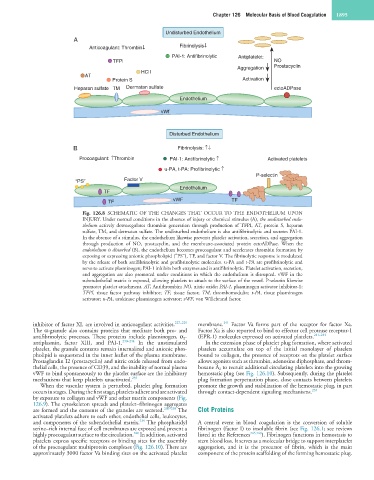
                            Fig.  126.8  SCHEMATIC  OF THE  CHANGES THAT  OCCUR TO THE  ENDOTHELIUM  UPON
                            INJURY. Under normal conditions in the absence of injury or chemical stimulus (A), the undisturbed endo-
                            thelium  actively  downregulates  thrombin  generation  through  production  of TFPI,  AT,  protein  S,  heparan
                            sulfate, TM, and dermatan sulfate. The undisturbed endothelium is also antifibrinolytic and secretes PAI-1.
                            In the absence of a stimulus, the endothelium likewise prevents platelet activation, secretion, and aggregation
                            through  production  of  NO,  prostacyclin,  and  the  membrane-associated  protein  ectoADPase.  When  the
                            endothelium is disturbed (B), the endothelium becomes procoagulant and accelerates thrombin formation by
                            exposing or expressing anionic phospholipid (“PS”), TF, and factor V. The fibrinolytic response is modulated
                            by the release of both antifibrinolytic and profibrinolytic molecules. u-PA and t-PA are profibrinolytic and
                            serve to activate plasminogen; PAI-1 inhibits both enzymes and is antifibrinolytic. Platelet activation, secretion,
                            and  aggregation  are  also  promoted  under  conditions  in  which  the  endothelium  is  disrupted.  vWF  in  the
                            subendothelial matrix is exposed, allowing platelets to attach to the surface of the vessel. P-selectin likewise
                            promotes platelet attachment. AT, Antithrombin; NO, nitric oxide; PAI-1, plasminogen activator inhibitor-1;
                            TFPI,  tissue  factor  pathway  inhibitor;  TF,  tissue  factor;  TM,  thrombomodulin;  t-PA,  tissue  plasminogen
                            activator; u-PA, urokinase plasminogen activator; vWF, von Willebrand factor.


                                                                          241
            inhibitor of factor XI, are involved in anticoagulant activities. 227–229    membrane.   Factor  Va  forms  part  of  the  receptor  for  factor  Xa.
            The α-granule also contains proteins that meditate both pro- and   Factor Xa is also reported to bind to effector cell protease receptor-1
            antifibrinolytic  processes. These  proteins  include  plasminogen,  α 2 -  (EPR-1) molecules expressed on activated platelets. 241–244
            antiplasmin,  factor  XIII,  and  PAI-1. 230–234   In  the  unstimulated   In the extension phase of platelet plug formation, where activated
            platelet, the granule contents remain internalized and anionic phos-  platelets  accumulate  on  top  of  the  initial  monolayer  of  platelets
            pholipid is sequestered in the inner leaflet of the plasma membrane.   bound to collagen, the presence of receptors on the platelet surface
            Prostaglandin I2 (prostacyclin) and nitric oxide released from endo-  allows agonists such as thrombin, adenosine diphosphate, and throm-
            thelial cells, the presence of CD39, and the inability of normal plasma   boxane A 2  to recruit additional circulating platelets into the growing
            vWF to bind spontaneously to the platelet surface are the inhibitory   hemostatic plug (see Fig. 126.10). Subsequently, during the platelet
            mechanisms that keep platelets unactivated. 235       plug formation perpetuation phase, close contacts between platelets
              When the vascular system is perturbed, platelet plug formation   promote the growth and stabilization of the hemostatic plug, in part
            occurs in stages. During the first stage, platelets adhere and are activated   through contact-dependent signaling mechanisms. 235
            by exposure to collagen and vWF and other matrix components (Fig.
            126.9). The cytoskeleton spreads and platelet–fibrinogen aggregates
            are formed and the contents of the granules are secreted. 236–238  The   Clot Proteins
            activated platelets adhere to each other, endothelial cells, leukocytes,
                                               239
            and components of the subendothelial matrix.  The phosphatidyl   A  central  event  in  blood  coagulation  is  the  conversion  of  soluble
            serine–rich internal face of cell membranes are exposed and present a   fibrinogen (factor I) to insoluble fibrin (see Fig. 126.1; see reviews
                                             240
            highly procoagulant surface to the circulation.  In addition, activated   listed in the References 245,246 ). Fibrinogen functions in hemostasis to
            platelets express specific receptors or binding sites for the assembly   stem blood loss. It serves as a molecular bridge to support interplatelet
            of the procoagulant multiprotein complexes (Fig. 126.10). There are   aggregation,  and  it  is  the  precursor  of  fibrin,  which  is  the  main
            approximately 3000 factor Va binding sites on the activated platelet   component of the protein scaffolding of the forming hemostatic plug.

