


Page 2140 - Hematology_ Basic Principles and Practice ( PDFDrive )
P. 2140
Chapter 126  Molecular Basis of Blood Coagulation  1901


            inert  from  the  catalytic  perspective  and  thus  impervious  to  the   The extrinsic tenase complex is under tight supervision by TFPI,
                                         289
            abundant protease inhibitors in plasma.  Factor VII also competes   which can bind both the complex and the product factor Xa (see Fig.
            with factor VIIa for tissue factor binding, thus serving as a negative   126.13). 300,301  TFPI, present in low abundance in blood, is released
                                                                                         302
            regulator that buffers the overall reaction. 290,291  Factor VII–activating   from the vasculature by heparin.  If the initiating procoagulant stimu-
            protease (FSAP) has also been shown to activate factor VII in the   lus is sufficient to overcome the level of this anticoagulant response,
            absence of tissue factor. 292–294  The physiologic function of FSAP still   a threshold is exceeded and downstream complexes can be formed.
            is unclear, but most recently has been suggested to be involved in   The limited amounts of factor Xa that escapes inhibition by TFPI
                                                  295
            inflammation (see the review listed in the References ). The extrinsic   and antithrombin bind to available membrane sites and can activate
                                                                                                               303
            tenase complex (tissue factor–factor VIIa) activates low levels of the   tiny amounts of prothrombin to thrombin (see Fig. 126.13).  The
            zymogens factor X and factor IX to their respective serine protease   time period in which factor Xa directly generates picomolar amounts
                                                                           304
            enzymes factor Xa (≈10 pM) and factor IXa (≈1 pM). 296,297  Factor X   of thrombin  is referred to as the initiation phase of blood coagula-
            is the more efficient and abundant substrate. 298,299  tion (Fig. 126.14). During the initiation phase, circulating blood cells
                                        Intravascular                         Extracellular
                                         fibrinolysis                       matrix degradation
                               TAFIa                    FXIIIa

                                       Crosslinked fibrin
                                                          α 2 AP
                                 PAI                                 Plasminogen and
                                     t-PA          Plasminogen      uPAR cell receptors
                                            t-PA
                                         Plasminogen                                    Pro-MMP
                                            α 2 AP                            u-PA
                                       Cross linked fibrin              PAI
                                           TAFIa                                     α 2 AP
                                                                               Plasmin
                                                                                                    +
                                                        Endothelial cell layer
                                           Plasmin
                                            α 2 AP                                        MMP
                                       Crosslinked fibrin
                                                                                             TIMP


                                      Fibrin clot dissolution
                                                                                      ECM degradation
                                        YY       DD                    Legend
                                  DY                   YXY                Enzymes
                                       Fibrin degradation                 Inhibitors
                              DXD                         XY
                                          products
                                                                          Zymogens
                                  YXD                 XX                  Complexes
                                        XXD      XD
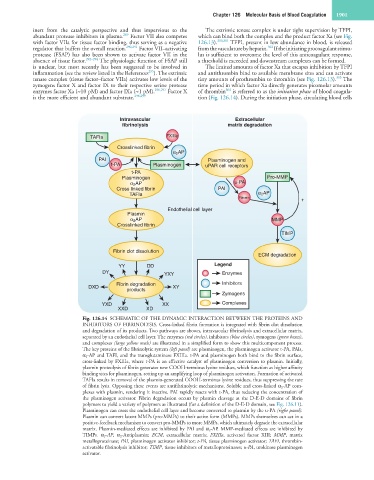
                            Fig. 126.14  SCHEMATIC OF THE DYNAMIC INTERACTION BETWEEN THE PROTEINS AND
                            INHIBITORS OF FIBRINOLYSIS. Cross-linked fibrin formation is integrated with fibrin clot dissolution
                            and degradation of its products. Two pathways are shown, intravascular fibrinolysis and extracellular matrix,
                            separated by an endothelial cell layer. The enzymes (red circles), inhibitors (blue circles), zymogens (green boxes),
                            and complexes (large yellow ovals) are illustrated in a simplified form to show this multicomponent process.
                            The key proteins of the fibrinolytic system (left panel) are plasminogen, the plasminogen activator t-PA, PAIs,
                            α 2 -AP and TAFI, and the transglutaminase FXIIIa. t-PA and plasminogen both bind to the fibrin surface,
                            cross-linked by FXIIIa, where t-PA is an effective catalyst of plasminogen conversion to plasmin. Initially,
                            plasmin proteolysis of fibrin generates new COOH-terminus lysine residues, which function as higher affinity
                            binding sites for plasminogen, setting up an amplifying loop of plasminogen activation. Formation of activated
                            TAFIa results in removal of the plasmin-generated COOH-terminus lysine residues, thus suppressing the rate
                            of fibrin lysis. Opposing these events are antifibrinolytic mechanisms. Soluble and cross-linked α 2 -AP com-
                            plexes with plasmin, rendering it inactive. PAI rapidly reacts with t-PA, thus reducing the concentration of
                            the plasminogen activator. Fibrin degradation occurs by plasmin cleavage at the D-E-D domains of fibrin
                            polymers to yield a variety of polymers as illustrated (for a definition of the D-E-D domain, see Fig. 126.11).
                            Plasminogen can cross the endothelial cell layer and become converted to plasmin by the u-PA (right panel).
                            Plasmin can convert latent MMPs (pro-MMPs) to their active form (MMPs). MMPs themselves can act in a
                            positive-feedback mechanism to convert pro-MMPs to more MMPs, which ultimately degrade the extracellular
                            matrix. Plasmin-mediated effects are inhibited by PAI and α 2 -AP. MMP-mediated effects are inhibited by
                            TIMPs.  α 2 -AP,  α 2 -Antiplasmin;  ECM,  extracellular  matrix;  FXIIIa,  activated  factor  XIII;  MMP,  matrix
                            metalloproteinase; PAI, plasminogen activator inhibitor; t-PA, tissue plasminogen activator; TAFI, thrombin-
                            activatable fibrinolysis inhibitor; TIMP, tissue inhibitors of metalloproteinases; u-PA, urokinase plasminogen
                            activator.

