


Page 2572 - Hematology_ Basic Principles and Practice ( PDFDrive )
P. 2572
Chapter 158  Hematologic Aspects of Parasitic Diseases  2295


            or thin Giemsa-stained blood films are made as for malaria diagnosis.   this variant antigen. Further versions of this assay have been developed
            The sensitivity may be increased by microcentrifugation. 196  to  use  dried  blood  on  filter  paper,  namely  the  micro-CATT  and
              More recent methods used to detect the low levels of parasitemia   macro-CATT, but these are less sensitive than the whole-blood assay.
            seen in T. b. gambiense include quantitative examination of the buffy   In  T.  b.  gambiense,  serologic  tests  are  not  widely  available,  and
                                197
            coat  using  acridine  orange   and  small-scale  ion-anion  exchange   direct examination of blood and CSF for parasites is the first line of
                        198
            chromatography.  Erythrocytes are retained in the column, whereas   investigation. The  card  indirect  agglutination  trypanosomiasis  test
            trypanosomes are eluted and are visible after concentration by cen-  (TrypTect CIATT) can detect circulating antigens in T. b. gambiense
            trifugation. The sensitivity of detection with these methods ranges   and T. b. rhodesiense infection by latex agglutination. The sensitivities
                  4
                                      2
            from 10 /mL for wet smears to 10 /mL for ion-exchange columns   of the test are 95.8% for T. b. gambiense and 97.7% for T. b. rhodesiense,
            and centrifugation. In T. b. rhodesiense, examination of the blood is   and therefore significantly higher than that of lymph node puncture,
            more likely than aspiration of lymph nodes to yield a positive result.  microhematocrit centrifugation, and CSF examination after single-
              Inoculation of the aspirate or samples into susceptible animals or   and double-centrifugation. 204
            in vitro culture has been used to detect low-level parasitemia. Mice   A rapid latex agglutination test (LATEX/T. b. gambiense) contains
            and rats were used to detect T. b. rhodesiense, whereas the multimam-  a mixture of three variable surface antigens of the bloodstream form
            mate rat (Mastomys natalensis) and guinea pigs were used for T. b.   of trypanosomes and has been used to detect antibodies in patients
            gambiense.  PCR  of  the  18S  rRNA  gene  can  detect  parasites  with   infected with T. b. gambiense. At 1 : 16 serum dilution, test specificity
            sensitivity similar to that of parasitologic and serologic methods. 199  was 99%, whereas sensitivity ranged from 83.8% to 100%, depend-
                                                                  ing on the geographic origin of the samples. The test sensitivity falls
                                                                                                         205
                                                                  to 66% for CSF samples from second-stage patients.  A rapid latex
            Cerebrospinal Fluid                                   agglutination test, LATEX/IgM, for the semiquantitative detection
                                                                                     206
                                                                  of IgM in CSF is available.  Finally, immunofluorescence assays and
            Trypanosomes  may  be  found  in  the  CSF  as  disease  progresses,   ELISA tests for antibodies using whole parasites are highly sensitive
            although  a  double-centrifugation  technique  may  be  required  to   and specific, although they are less practical for mass screening. A
            demonstrate  organisms.  In  this  technique,  5  to  10 mL  of  CSF  is   series of new approaches is being evaluated for control and elimina-
            centrifuged, and the sediment is taken up into a capillary tube and   tion of trypanosomiasis, including tiny targets for tsetse fly control,
            recentrifuged before the capillary tube is examined under a coverslip   use of RDTs, and oral treatment with fexinidazole or oxaboroles. 207
                      200
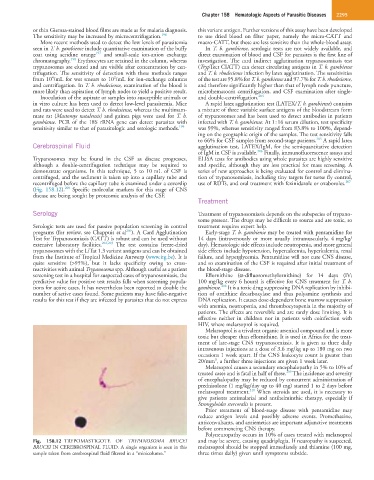
            (Fig. 158.12).  Specific molecular markers for this stage of CNS
            disease are being sought by proteomic analysis of the CSF.
                                                                  Treatment
            Serology                                              Treatment of trypanosomiasis depends on the subspecies of trypano-
                                                                  some present. The drugs may be difficult to source and are toxic, so
            Serologic tests are used for passive population screening in control   treatment requires expert help.
                                          201
            programs (for review, see Chappuis et al ). A Card Agglutination   Early-stage T. b. gambiense may be treated with pentamidine for
            Test for Trypanosomiasis (CATT) is robust and can be used without   14  days  (intravenously  or  more  usually  intramuscularly,  4 mg/kg/
            extensive  laboratory  facilities. 202,203   The  test  contains  freeze-dried   day). Hematologic side effects include neutropenia, and more general
            trypanosomes with the LiTat 1.3 variant antigens and can be obtained   side effects include hypotension, hypercalcemia, hyperkalemia, renal
            from the Institute of Tropical Medicine Antwerp (www.itg.be). It is   failure, and hyperglycemia. Pentamidine will not cure CNS disease,
            quite  sensitive  (>95%),  but  it  lacks  specificity  owing  to  cross-  and so examination of the CSF is required after initial treatment of
            reactivities with animal Trypanosoma spp. Although useful as a patient   the blood-stage disease.
            screening test in a hospital for suspected cases of trypanosomiasis, the   Eflornithine  (α-difluoromethylornithine)  for  14  days  (IV;
            predictive value for positive test results falls when screening popula-  100 mg/kg every 6 hours) is effective for CNS treatment for T. b.
                                                                         208
            tions for active cases. It has nevertheless been reported to double the   gambiense.  It is a toxic drug suppressing DNA replication by inhibi-
            number of active cases found. Some patients may have false-negative   tion  of  ornithine  decarboxylase  and  thus  polyamine  synthesis  and
            results for this test if they are infected by parasites that do not express   DNA replication. It causes dose-dependent bone marrow suppression
                                                                  with anemia, neutropenia, and thrombocytopenia in the majority of
                                                                  patients. The effects are reversible and are rarely dose limiting. It is
                                                                  effective  neither  in  children  nor  in  patients  with  coinfection  with
                                                                  HIV, where melarsoprol is required.
                                                                    Melarsoprol is a trivalent organic arsenical compound and is more
                                                                  toxic but cheaper than eflornithine. It is used in Africa for the treat-
                                                                  ment  of  late-stage  CNS  trypanosomiasis.  It  is  given  as  three  daily
                                                                  intravenous injections at a dose of 3.6 mg/kg up to 180 mg on two
                                                                  occasions 1 week apart. If the CNS leukocyte count is greater than
                                                                       3
                                                                  20/mm , a further three injections are given 1 week later.
                                                                    Melarsoprol causes a secondary encephalopathy in 5% to 10% of
                                                                                               209
                                                                  treated cases and is fatal in half of these.  The incidence and severity
                                                                  of encephalopathy may be reduced by concurrent administration of
                                                                  prednisolone (1 mg/kg/day up to 40 mg) started 1 to 2 days before
                                                                                   210
                                                                  melarsoprol treatment.  When steroids are used, it is necessary to
                                                                  give  patients  antimalarial  and  antihelminthic  therapy,  especially  if
                                                                  Strongyloides stercoralis is present.
                                                                    Prior  treatment  of  blood-stage  disease  with  pentamidine  may
                                                                  reduce  antigen  levels  and  possibly  adverse  events.  Promethazine,
                                                                  anticonvulsants, and antiemetics are important adjunctive treatments
                                                                  before commencing CNS therapy.
                                                                    Polyneuropathy occurs in 10% of cases treated with melarsoprol
            Fig.  158.12  TRYPOMASTIGOTE  OF  TRYPANOSOMA  BRUCEI   and may be severe, causing quadriplegia. If neuropathy is suspected,
            BRUCEI IN CEREBROSPINAL FLUID. A single organism is seen in this   melarsoprol should be stopped immediately and thiamine (100 mg,
            sample taken from cerebrospinal fluid filtered in a “minicolumn.”   three times daily) given until symptoms subside.

