


Page 2568 - Hematology_ Basic Principles and Practice ( PDFDrive )
P. 2568
Chapter 158  Hematologic Aspects of Parasitic Diseases  2291


                                                                  should be swiftly inserted to a depth of approximately 2 or 3 cm at
                                                                  an angle of roughly 45 degrees to the skin, applying negative pressure.
                                                                  The  needle  should  be  withdrawn  immediately  while  maintaining
                                                                  negative pressure and taking only a few seconds for the entire proce-
                                                                  dure. The splenic tissue may be expelled from the needle using a small
                                                                  amount of air and by fixing the stain using standard procedures.

                                                                  Culture

                                                                  Amastigotes may be grown as motile promastigotes from aspirates on
                                                                  the classic Novy-MacNeal-Nicolle (NNN) medium or other suitable
                                                                  media at 22°C to 24°C, and populations double only every 2 to 3
                                                                  days. 163,164  Inoculation of material into the susceptible golden hamster
                                                                  is no longer used to grow parasites.
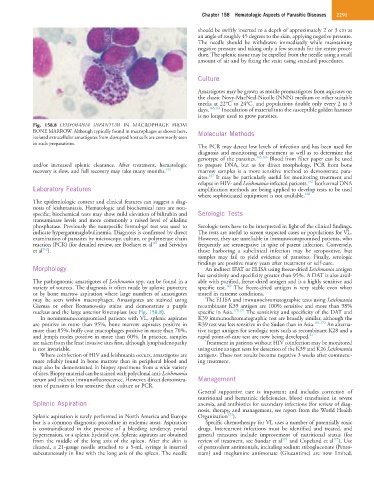
            Fig.  158.8  LEISHMANIA  INFANTUM  IN  MACROPHAGE  FROM
            BONE MARROW. Although typically found in macrophages as shown here,   Molecular Methods
            isolated extracellular amastigotes from disrupted host cells are commonly seen
            in such preparations.
                                                                  The PCR may detect low levels of infection and has been used for
                                                                  diagnosis and monitoring of treatment as well as to determine the
                                                                  genotype of the parasites. 165,166  Blood from filter paper can be used
            and/or  increased  splenic  clearance.  After  treatment,  hematologic   to  prepare  DNA,  but  as  for  direct  morphology,  PCR  from  bone
            recovery is slow, and full recovery may take many months. 155  marrow  samples  is  a  more  sensitive  method  to  demonstrate  para-
                                                                     167
                                                                  sites.  It may be particularly useful for monitoring treatment and
                                                                                                      167
                                                                  relapse in HIV- and Leishmania-infected patients.  Isothermal DNA
            Laboratory Features                                   amplification methods are being applied to develop tests to be used
                                                                  where sophisticated equipment is not available. 168
            The epidemiologic context and clinical features can suggest a diag-
            nosis of leishmaniasis. Hematologic and biochemical tests are non-
            specific; biochemical tests may show mild elevation of bilirubin and   Serologic Tests
            transaminase  levels  and  more  commonly  a  raised  level  of  alkaline
            phosphatase. Previously the nonspecific formol-gel test was used to   Serologic tests have to be interpreted in light of the clinical findings.
            indicate hypergammaglobulinemia. Diagnosis is confirmed by direct   The tests are useful to screen suspected cases or populations for VL.
            examination of parasites by microscopy, culture, or polymerase chain   However, they are unreliable in immunocompromised patients, who
                                                   161
            reaction (PCR) (for detailed review, see Boelaert et al  and Srividya   frequently are seronegative in spite of patent infection. Conversely,
               162
            et al ).                                              those  harboring  a  subclinical  infection  may  be  seropositive,  but
                                                                  samples  may  fail  to  yield  evidence  of  parasites.  Finally,  serologic
                                                                  findings are positive many years after treatment or self-cure.
            Morphology                                              An indirect IFAT or ELISA using freeze-dried Leishmania antigen
                                                                  has sensitivity and specificity greater than 95%. A DAT is also avail-
            The pathognomic amastigotes of Leishmania spp. can be found in a   able with purified, freeze-dried antigen and is a highly sensitive and
                                                                           169
            variety of sources. The diagnosis is often made by splenic puncture   specific  test.   The  freeze-dried  antigen  is  very  stable  even  when
            or by bone marrow aspiration where large numbers of amastigotes   stored in extreme conditions.
            may  be  seen  within  macrophages.  Amastigotes  are  stained  using   The ELISA and immunochromatographic tests using Leishmania
            Giemsa  or  other  Romanowsky  stains  and  demonstrate  a  purple   recombinant K39 antigen are 100% sensitive and more than 98%
            nucleus and the large anterior kinetoplast (see Fig. 158.8).  specific in Asia. 170,171  The sensitivity and specificity of the DAT and
              In nonimmunocompromised patients with VL, splenic aspirates   K39 immunochromatographic test are broadly similar, although the
            are positive in more than 95%, bone marrow aspirates positive in   K39 test was less sensitive in the Sudan than in Asia. 161,172  An alterna-
            more than 85%, buffy coat macrophages positive in more than 70%,   tive target antigen for serologic tests such as recombinant K28 and a
            and lymph nodes positive in more than 60%. In practice, samples   rapid point-of-care test are now being developed. 21
            are taken from the least invasive sites first, although lymphadenopathy   Treatment in patients without HIV coinfection may be monitored
            is not invariable.                                    using urine antigen tests for detection of the K39 and K26 Leishmania
              Where coinfection of HIV and leishmania occurs, amastigotes are   antigens. These test results become negative 3 weeks after commenc-
            more reliably found in bone marrow than in peripheral blood and   ing treatment.
            may also be demonstrated in biopsy specimens from a wide variety
            of sites. Biopsy material can be stained with polyclonal anti-Leishmania
            serum and indirect immunofluorescence. However, direct demonstra-  Management
            tion of parasites is less sensitive than culture or PCR.
                                                                  General  supportive  care  is  important  and  includes  correction  of
                                                                  nutritional  and  hematinic  deficiencies,  blood  transfusion  in  severe
            Splenic Aspiration                                    anemia, and antibiotics for secondary infections (for review of diag-
                                                                  nosis, therapy, and management, see report from the World Health
                                                                            173
            Splenic aspiration is rarely performed in North America and Europe   Organization ).
            but is a common diagnostic procedure in endemic areas. Aspiration   Specific chemotherapy for VL uses a number of potentially toxic
            is  contraindicated  in  the  presence  of  a  bleeding  tendency,  portal   drugs.  Intercurrent  infections  must  be  identified  and  treated,  and
            hypertension, or a splenic hydatid cyst. Splenic aspirates are obtained   general  measures  include  improvement  of  nutritional  status  (for
                                                                                             174
                                                                                                              175
            from  the  middle  of  the  long  axis  of  the  spleen.  After  the  skin  is   review of treatment, see Sundar et al  and Copeland et al ). Use
            cleaned,  a  21-gauge  needle  attached  to  a  5-mL  syringe  is  inserted   of pentavalent antimonials, including sodium stibogluconate (Pento-
            subcutaneously in line with the long axis of the spleen. The needle   stam)  and  meglumine  antimonate  (Glucantime)  are  now  limited,

