


Page 848 - Hematology_ Basic Principles and Practice ( PDFDrive )
P. 848
Chapter 52  Histiocytic Disorders  731


            In addition to late malignancies, patients should be monitored for
            signs of long-term disabilities, including cosmetic, orthopedic, and
            cutaneous deformities that may lead to loss of function and emotional
            disorders, loss of permanent dentition, endocrinologic disorders and
            growth failure, hearing impairment, CNS abnormalities and neuro-
            cognitive function, sclerosing cholangitis with biliary cirrhosis, and
            pulmonary fibrosis and cor pulmonale.

            Future Directions

            The  treatment  of  LCH  has  undergone  significant  refinement  over
            the  past  decade.  However,  therapy  remains  empirically  defined.
            With the recent insights into the pathophysiology of LCH, such as
            B-Raf mutations, new possibilities for more intelligently designed,
            targeted therapies are conceivable. Trials are ongoing for the assess-
            ment of B-Raf and Mek inhibitors in pediatric solid malignancies.
            It is expected that pilot trials in patients with LCH will commence
            in  the  near  future.  Future  clinical  trials  for  such  targeted  thera-
            pies  will  likely  focus  on  patients  with  therapy-resistant  risk  organ
            involvement  because  these  children  have  the  least  satisfactory
            outcomes.

            JUVENILE XANTHOGRANULOMATOUS DISEASE
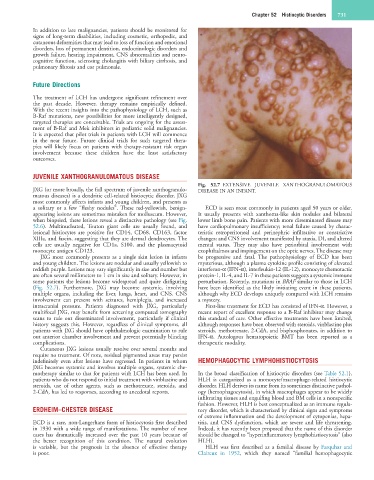
                                                                  Fig.  52.7  EXTENSIVE  JUVENILE  XANTHOGRANULOMATOUS
            JXG (or more broadly, the full spectrum of juvenile xanthogranulo-  DISEASE IN AN INFANT.
            matous diseases) is a dendritic cell-related histiocytic disorder. JXG
            most commonly affects infants and young children, and presents as
            a  solitary  or  a  few  “fleshy  nodules”. These  red-yellowish,  benign-  ECD is seen most commonly in patients aged 50 years or older.
            appearing lesions are sometimes mistaken for molluscum. However,   It  usually  presents  with  xanthoma-like  skin  nodules  and  bilateral
            when biopsied, these lesions reveal a distinctive pathology (see Fig.   lower limb bone pain. Patients with more disseminated disease may
            52.6).  Multinucleated,  Touton  giant  cells  are  usually  found,  and   have cardiopulmonary insufficiency; renal failure caused by charac-
            lesional  histiocytes  are  positive  for  CD14,  CD68,  CD163,  factor   teristic  retroperitoneal  and  perinephric  infiltrative  or  constrictive
            XIIIa, and fascin, suggesting that they are dermal dendrocytes. The   changes; and CNS involvement manifested by ataxia, DI, and altered
            cells  are  usually  negative  for  CD1a,  S100,  and  the  plasmacytoid   mental  status.  They  may  also  have  periorbital  involvement  with
            monocyte antigen CD123.                               exophthalmos and impingement on the optic nerves. The disease may
              JXG most commonly presents as a single skin lesion in infants   be  progressive  and  fatal.  The  pathophysiology  of  ECD  has  been
            and young children. The lesions are nodular and usually yellowish to   mysterious, although a plasma cytokine profile consisting of elevated
            reddish purple. Lesions may vary significantly in size and number but   interferon-α (IFN-α), interleukin-12 (IL-12), monocyte chemotactic
            are often several millimeters to 1 cm in size and solitary. However, in   protein-1, IL-4, and IL-7 in these patients suggests a systemic immune
            some patients the lesions become widespread and quite disfiguring   perturbation. Recently, mutations in BRAF similar to those in LCH
            (Fig.  52.7).  Furthermore,  JXG  may  become  systemic,  involving   have been identified as the likely initiating event in these patients,
            multiple  organs,  including  the  liver,  lungs,  heart,  and  CNS.  CNS   although why ECD develops uniquely compared with LCH remains
            involvement  can  present  with  seizures,  hemiplegia,  and  increased   a mystery.
            intracranial  pressure.  Patients  diagnosed  with  JXG,  particularly   First-line treatment for ECD has consisted of IFN-α. However, a
            multifocal JXG, may benefit from screening computed tomography   recent report of excellent response to a B-Raf inhibitor may change
            scans  to  rule  out  disseminated  involvement,  particularly  if  clinical   this standard of care. Other effective treatments have been limited,
            history suggests this. However, regardless of clinical symptoms, all   although responses have been observed with steroids, vinblastine plus
            patients with JXG should have ophthalmologic examination to rule   steroids, methotrexate, 2-CdA, and bisphosphonates, in addition to
            out anterior chamber involvement and prevent potentially blinding   IFN-α.  Autologous  hematopoietic  BMT  has  been  reported  as  a
            complications.                                        therapeutic modality.
              Cutaneous JXG lesions usually resolve over several months and
            require no treatment. Of note, residual pigmented areas may persist
            indefinitely even after lesions have regressed. In patients in whom   HEMOPHAGOCYTIC LYMPHOHISTIOCYTOSIS
            JXG becomes systemic and involves multiple organs, systemic che-
            motherapy similar to that for patients with LCH has been used. In   In the broad classification of histiocytic disorders (see Table 52.1),
            patients who do not respond to initial treatment with vinblastine and   HLH  is  categorized  as  a  monocyte/macrophage-related  histiocytic
            steroids,  use  of  other  agents,  such  as  methotrexate,  steroids,  and   disorder. HLH derives its name from its sometimes distinctive pathol-
            2-CdA, has led to responses, according to anecdotal reports.  ogy (hemophagocytosis), in which macrophages appear to be widely
                                                                  infiltrating tissues and engulfing blood and BM cells in a nonspecific
                                                                  fashion. However, HLH is best conceptualized as an immune regula-
            ERDHEIM–CHESTER DISEASE                               tory disorder, which is characterized by clinical signs and symptoms
                                                                  of extreme inflammation and the development of cytopenias, hepa-
            ECD is a rare, non-Langerhans form of histiocytosis first described   titis, and CNS dysfunction, which are severe and life threatening.
            in 1930 with a wide range of manifestations. The number of new   Indeed, it has recently been proposed that the name of this disorder
            cases  has  dramatically  increased  over  the  past  10  years  because  of   should be changed to “hyperinflammatory lymphohistiocytosis” (also
            the  better  recognition  of  this  condition.  The  natural  evolution   HLH).
            is  variable,  but  the  prognosis  in  the  absence  of  effective  therapy     HLH  was  first  described  as  a  familial  disease  by  Farquhar  and
            is poor.                                              Claireux  in  1952,  which  they  named  “familial  hemophagocytic

