


Page 922 - Hematology_ Basic Principles and Practice ( PDFDrive )
P. 922
Chapter 56  Conventional and Molecular Cytogenomic Basis of Hematologic Malignancies  805


                                                                  (10%–20%), and potential for high cure rate (>80%) if appropriate
                                                                  treatment, based on its genetic profile, is initiated. Initial workup may
                                                                  include conventional karyotyping, FISH studies, RT-PCR, and anti-
                                                                  PML antibodies. Longitudinal monitoring of disease with Q-PCR is
                                                                  currently  recommended  to  provide  early  intervention  if  relapse
                                                                  should occur.
                                                                    Less than 1% of patients with AML have the Ph chromosome (see
                          A                                       Fig. 56.26, bottom left) and it remains a controversial entity as it is
                                                                  not listed in the WHO 2016 classification as a separate entity. Ph +
                                                                  AML may be cytogenetically distinguished from the myeloid blast
                                                                  crisis of CML by monosomy 7 (also frequently found in Ph + ALL)
                                                                  and inv(16). Moreover, NPM1 mutations found in 40% to 60% of
                                                                  AML as well as in Ph + AML have not been described in Ph-positive
                                                                  CML. All Ph + AML examined to date showed a unique loss of Ig
                                                                  genes with a specific genomic signature, suggesting a distinct biologic
                                                                  entity. Both P210 BCR-ABL1  and P190 BCR-ABL1  were observed, but P190
                                                                  appears to be prevalent. Before TKI therapy, the median survival of
                                                                  the Ph chromosome +AML was 9 months and has been improved to
                                                                  a median survival of 18 months (range 6–71) with the use of imatinib
                                                                  therapy. In rare patients with AML, late appearance of a Ph chromo-
                          B                                       some either as a sole abnormality or in a clone showing t(8;21) is
                                                                  taken  as  evidence  that  the  Ph  chromosome  in  these  patients  is  a
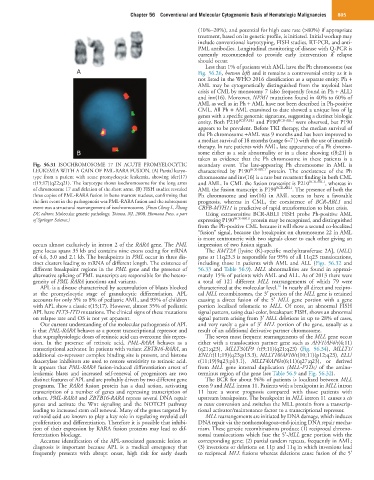
            Fig.  56.31  ISOCHROMOSOME  17  IN  ACUTE  PROMYELOCYTIC   secondary  event.  The  late-appearing  Ph  chromosome  in  AML  is
            LEUKEMIA WITH A GAIN OF PML-RARA FUSION. (A) Partial karyo-  characterized  by  P190 BCR-ABL1   protein.  The  coexistence  of  the  Ph
            type  from  a  patient  with  acute  promyelocytic  leukemia,  showing  ider(17)  chromosome and inv(16) is a rare but recurrent finding in both CML
            t(15;17)(q22;q21). The karyotype shows isochromosome for the long arms   and AML. In CML the fusion transcript is P210 BCR-ABL1 , whereas in
            of chromosome 17 and deletion of the short arms. (B) FISH studies revealed   AML the fusion transcript is P190 BCR-ABL1 . The presence of both the
            three copies of PML-RARA fusion in bone marrow nucleus, confirming that   Ph  chromosome  and  inv(16)  in  AML  seems  to  have  a  favorable
            the first event in the pathogenesis was PML-RARA fusion and the subsequent   prognosis,  whereas  in  CML,  the  coexistence  of  BCR-ABL1  and
            event was a structural rearrangement of isochromosome. (From Cheng L, Zhang   CBFB-MYH11 is predictive of rapid transformation to blast crisis.
            DY, editors: Molecular genetic pathology, Totowa, NJ, 2008, Humana Press, a part   Using  extrasensitive  BCR-ABL1  FISH  probe  Ph-positive  AML
            of Springer Science.)                                 expressing P190 BCR-ABL1  protein may be recognized, and distinguished
                                                                  from the Ph-positive CML because it will show a second co-localized
                                                                  “fusion” signal, because the breakpoint on chromosome 22 in AML
                                                                  is more centromeric with two signals closer to each other giving an
            occurs almost exclusively in intron 2 of the RARA gene. The PML   impression of two fusion signals.
            gene locus spans 35 kb and contains nine exons coding for mRNA   The  KMT2A  [lysine  (K)-specific  methyltransferase  2A],  (MLL)
            of 4.6, 3.0 and 2.1 kb. The breakpoints in PML occur in three dis-  gene at 11q23.3 is responsible for 95% of all 11q23 translocations,
            tinct clusters leading to mRNA of different length. The existence of   including  those  in  patients  with  AML  and  ALL  (Figs.  56.32  and
            different breakpoint regions in the PML gene and the presence of   56.33  and Table  56.9).  MLL  abnormalities  are  found  in  approxi-
            alternative splicing of PML transcripts are responsible for the hetero-  mately 15% of patients with AML and ALL. As of 2013 there were
            geneity of PML RARA junctions and variants.           a  total  of  121  different  MLL  rearrangements  of  which  79  were
                                                                                            16
              APL is a disease characterized by accumulation of blasts blocked   characterized at the molecular level.  In nearly all direct and recipro-
            at  the  promyelocytic  stage  of  granulocytic  differentiation.  APL   cal MLL recombinomes, the 3′ portion of the MLL gene is retained
            accounts for only 5% to 8% of pediatric AML, and 95% of children   causing  a  direct  fusion  of  the  5′  MLL  gene  portion  with  a  gene
            with APL show a classic t(15;17). However, almost 35% of pediatric   portion  localized  telomeric  to  MLL.  Of  note,  an  abnormal  FISH
            APL have FLT3-ITD mutations. The clinical signs of these mutations   signal pattern, using dual-color, breakapart FISH, shows an abnormal
            on relapse rate and OS is not yet apparent.           signal pattern arising from 3′ MLL deletions in up to 28% of cases,
              Our current understanding of the molecular pathogenesis of APL   and very rarely a gain of 3′ MLL portion of the gene, usually as a
            is that PML-RARA behaves as a potent transcriptional repressor and   result of an additional derivative partner chromosome.
            that supraphysiologic doses of retinoic acid can overcome this repres-  The seven most frequent rearrangements of the MLL gene occur
            sion.  In  the  presence  of  retinoic  acid,  PML-RARA  behaves  as  a   either with a translocation partner gene such as AFF1/AF4/t(4;11)
            transcriptional activator. In patients with variant ZBTB16-RARA, an   (q21;q23),  MLLT3/AF9  /t(9;11)(q21;q23)  (Fig.  56.34),  MLLT1/
            additional co-repressor complex binding site is present, and histone   ENL/t(11;19)(q23;p13.3), MLLT10/AF10/t(10;11)(p12;q23), ELL/
            deacetylase inhibitors are used to restore sensitivity to retinoic acid.   t(11;19)9q23;p13.1),  MLLT4/AF6/t(6;11)(q27;q23),  or  derived
            It appears that PML-RARA fusion-induced differentiation arrest of   from  MLL  gene  internal  duplication  (MLL-PTDs)  of  the  amino-
            leukemic  blasts  and  increased  self-renewal  of  progenitors  are  two   terminus region of the gene (see Table 56.9 and Fig. 56.32).
            distinct features of APL and are probably driven by two different gene   The BCR for about 96% of patients is localized between MLL
            programs. The  RARA  fusion  protein  has  a  dual  action,  activating   exon 9 and MLL intron 11. Patients with a breakpoint in MLL intron
            transcription of a number of genes and repressing transcription of   11  have  a  worse  prognosis  compared  with  those  patients  with
            others. PML-RARA and ZBTB16-RARA repress several DNA repair   upstream breakpoints. The breakpoint in MLL intron 11 causes a cis
            genes  and  activate  the  Wnt  signaling  and  the  NOTCH  pathway   to trans conversion and switches the MLL protein from a transcrip-
            leading to increased stem cell renewal. Many of the genes targeted by   tional activator/maintenance factor to a transcriptional repressor.
            retinoid acid are known to play a key role in regulating myeloid cell   MLL rearrangements are initiated by DNA damage, which induces
            proliferation and differentiation. Therefore it is possible that inhibi-  DNA repair via the nonhomologous-end-joining DNA repair mecha-
            tion of their expression by RARA fusion proteins may lead to dif-  nism. These genetic recombinations produce (1) reciprocal chromo-
            ferentiation blockage.                                somal translocations which fuse the 5′-MLL gene portion with the
              Accurate identification of the APL-associated genomic lesion at   corresponding gene; (2) partial tandem repeats, frequently in AML;
            diagnosis  is  important  because  APL  is  a  medical  emergency  that   (3) inversions or deletions on 11p and 11q in which inversions lead
            frequently  presents  with  abrupt  onset,  high  risk  for  early  death   to reciprocal MLL fusions whereas deletions cause fusion of the 5′

