


Page 1074 - Williams Hematology ( PDFDrive )
P. 1074
1048  Part VIII:  Monocytes and Macrophages  Chapter 67:  Structure, Receptors, and Functions of Monocytes and Macrophages  1049


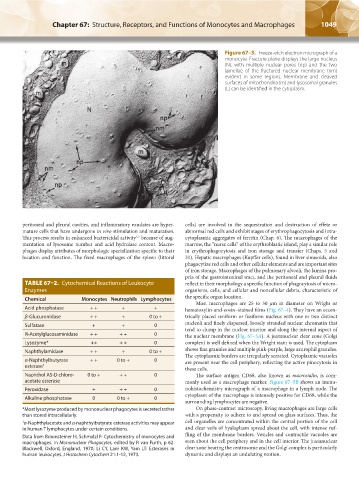
                                                                                      Figure 67–3.  Freeze-etch electron micrograph of a
                                                                                      monocyte. Fracture plane displays the large nucleus
                                                                                      (N), with multiple  nuclear  pores (np)  and the  two
                                                                                      lamellae of the fractured nuclear membrane (nm)
                                                                                      evident in some regions. Membrane and cleaved
                                                                                      surfaces of mitochondria (m) and lysosomal granules
                                                                                      (L) can be identified in the cytoplasm.


                  peritoneal and pleural cavities, and inflammatory exudates are hyper-  cells) are involved in the sequestration and destruction of effete or
                  mature cells that have undergone in vivo stimulation and maturation.   abnormal red cells and exhibit stages of erythrophagocytosis and intra-
                  This process results in enhanced bactericidal activity  because of aug-  cytoplasmic aggregates of ferritin (Chap. 6). The macrophages of the
                                                        1,2
                  mentation of lysosome number and acid hydrolase content. Macro-  marrow, the “nurse cells” of the erythroblastic island, play a similar role
                  phages display attributes of morphologic specialization specific to their   in  erythrophagocytosis  and  iron  storage  and  transfer  (Chaps.  5  and
                  location and function. The fixed macrophages of the spleen (littoral   31). Hepatic macrophages (Kupffer cells), found in liver sinusoids, also
                                                                        phagocytize red cells and other cellular elements and are important sites
                                                                        of iron storage. Macrophages of the pulmonary alveoli, the lamina pro-
                                                                        pria of the gastrointestinal tract, and the peritoneal and pleural fluids
                   TABLE 67–2.  Cytochemical Reactions of Leukocyte     reflect in their morphology a specific function of phagocytosis of micro-
                   Enzymes                                              organisms, cells, and cellular and noncellular debris, characteristic of
                   Chemical           Monocytes Neutrophils Lymphocytes  the specific organ location.
                                                                            Most macrophages are 25 to 50  μm in diameter on Wright or
                   Acid phosphatase      + +       +          +         hematoxylin-and-eosin–stained films (Fig. 67–4). They have an eccen-
                   β-Glucuronidase       + +       +        0 to +      trically placed reniform or fusiform nucleus with one or two distinct
                                                                        nucleoli and finely dispersed, loosely stranded nuclear chromatin that
                   Sulfatase             +         +          0
                                                                        tend to clump in the nuclear interior and along the internal aspect of
                   N-Acetylglucosaminidase  + +   + +         0         the nuclear membrane (Fig. 67–5A). A juxtanuclear clear zone (Golgi
                   Lysozyme*             ++       + +         0         complex) is well defined when the Wright stain is used. The cytoplasm
                   Naphthylamidase       + +       +        0 to +      shows fine granules and multiple pink-purple, large azurophil granules.
                                                                        The cytoplasmic borders are irregularly serrated. Cytoplasmic vacuoles
                   α-Naphthylbutyrate    + +      0 to +      0         are present near the cell periphery, reflecting the active pinocytosis in
                   esterase †
                                                                        these cells.
                   Naphthol AS-D chloro-  0 to +  + +         0             The surface antigen CD68, also known as  macrosialin, is com-
                   acetate esterase                                     monly used as a macrophage marker. Figure 67–5B shows an immu-
                   Peroxidase            +        + +         0         nohistochemistry micrograph of a macrophage in a lymph node. The
                                                                        cytoplasm of the macrophage is intensely positive for CD68, while the
                   Alkaline phosphatase  0        0 to +      0
                                                                        surrounding lymphocytes are negative.
                  *Most lysozyme produced by mononuclear phagocytes is secreted rather   On phase-contrast microscopy, living macrophages are large cells
                  than stored intracellularly.                          with a propensity to adhere to and spread on glass surfaces. Thus, the
                  † α-Naphthylacetate and α-naphthylbutyrate esterase activities may appear   cell organelles are concentrated within the central portion of the cell
                  in human T lymphocytes under certain conditions.      and clear veils of hyaloplasm spread about the cell, with intense ruf-
                  Data from Braunsteiner H, Schmalzl F: Cytochemistry of monocytes and   fling of the membrane borders. Vesicles and contractile vacuoles are
                  macrophages. In Mononuclear Phagocytes, edited by R van Furth, p 62.   seen about the cell periphery and in the cell interior. The juxtanuclear
                  Blackwell, Oxford, England, 1970; Li CY, Lam KW, Yam LT:  Esterases in   clear zone bearing the centrosome and the Golgi complex is particularly
                  human leukocytes. J Histochem Cytochem 21:1-12, 1973.  dynamic and displays an undulating motion.


          Kaushansky_chapter 67_p1043-1074.indd   1049                                                                  9/21/15   10:42 AM

