


Page 1076 - Williams Hematology ( PDFDrive )
P. 1076
1050  Part VIII:  Monocytes and Macrophages  Chapter 67:  Structure, Receptors, and Functions of Monocytes and Macrophages  1051


                             A                                             B
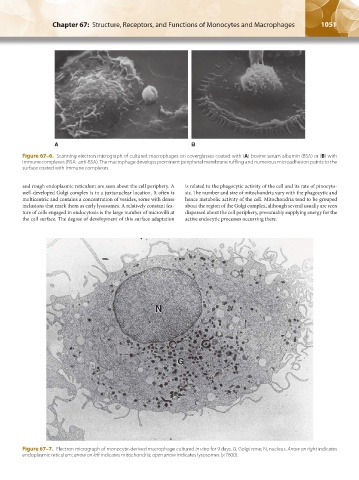
                  Figure 67–6.  Scanning electron micrograph of cultured macrophages on coverglasses coated with (A) bovine serum albumin (BSA) or (B) with
                  immune complexes (BSA–anti-BSA). The macrophage develops prominent peripheral membrane ruffling and numerous microadhesion points to the
                  surface coated with immune complexes.

                  and rough endoplasmic reticulum are seen about the cell periphery. A   is related to the phagocytic activity of the cell and its rate of pinocyto-
                  well-developed Golgi complex is in a juxtanuclear location. It often is   sis. The number and size of mitochondria vary with the phagocytic and
                  multicentric and contains a concentration of vesicles, some with dense   hence metabolic activity of the cell. Mitochondria tend to be grouped
                  inclusions that mark them as early lysosomes. A relatively constant fea-  about the region of the Golgi complex, although several usually are seen
                  ture of cells engaged in endocytosis is the large number of microvilli at   dispersed about the cell periphery, presumably supplying energy for the
                  the cell surface. The degree of development of this surface adaptation   active endocytic processes occurring there.


                                                              N N


                                                                      G G


                  Figure 67–7.  Electron micrograph of monocyte-derived macrophage cultured in vitro for 9 days. G, Golgi zone; N, nucleus. Arrow on right indicates
                  endoplasmic reticulum; arrow on left indicates mitochondria; open arrow indicates lysosomes (×7600).


          Kaushansky_chapter 67_p1043-1074.indd   1051                                                                  9/21/15   10:42 AM

